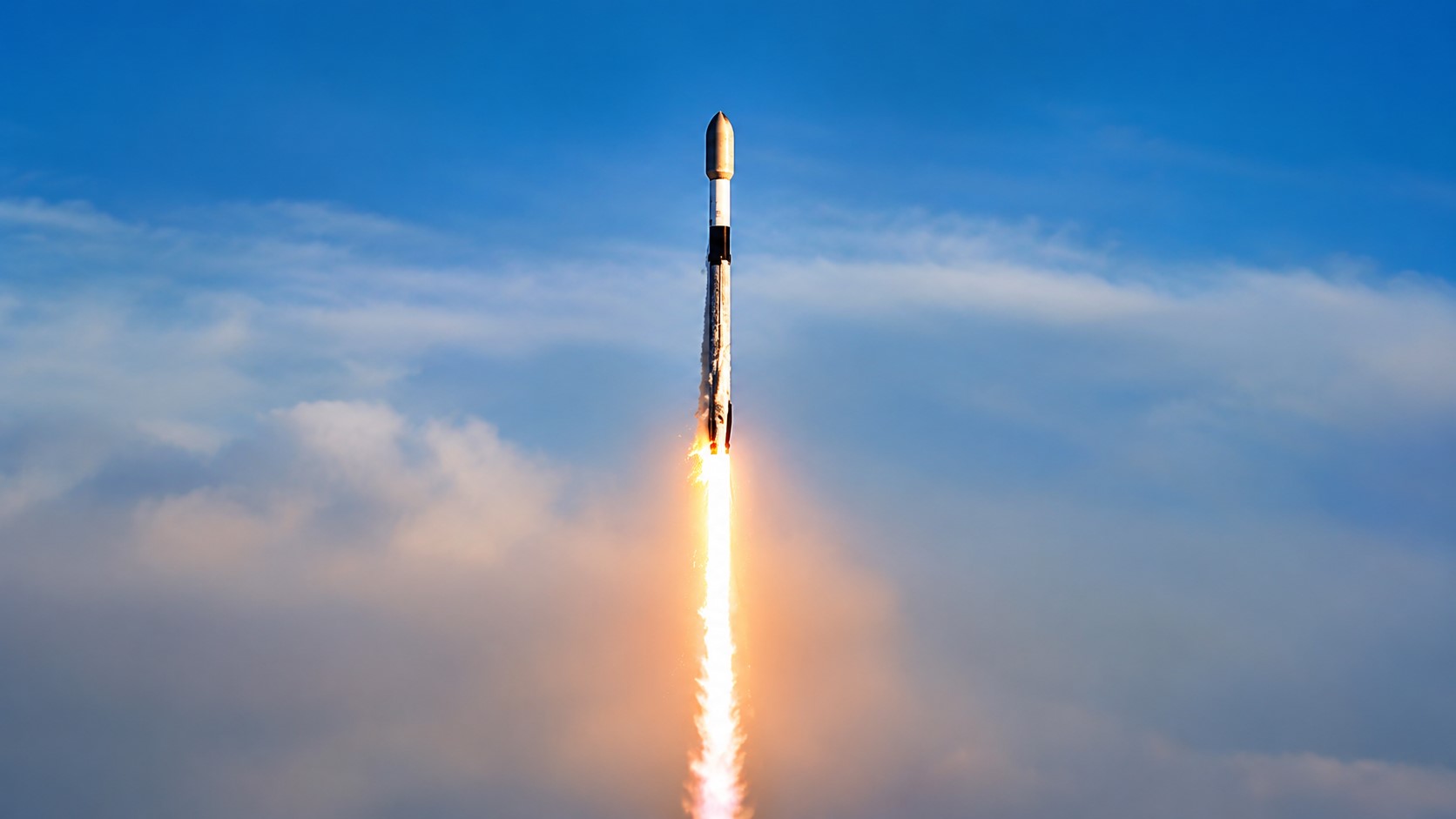
Eighteen rockets. $1.6 billion. Two months from paperwork to handshake. The U.S. Space Force awarded SpaceX a pair of task orders on July 29, 2026, for Falcon 9 launches that will loft military sensing satellites from Vandenberg Space Force Base through the end of 2027, according to Space Systems Command. The satellites belong to the Space-Based Sensing and Targeting (SBST) portfolio — the Pentagon’s orbital early-warning system designed to spot airborne threats and relay targeting data to U.S. forces in near-real-time. This contract isn’t an outlier. It’s the third significant SpaceX–Space Force deal announced this year.
What SBST Actually Does
Think of it as GPS for missile defense — quietly running overhead so the people on the ground don’t have to guess.
SBST satellites are built to detect and track threats from orbit, then push that information down to commanders fast enough to act on it. The program feeds directly into broader missile defense architectures, including the proposed Golden Dome concept, which envisions layered space-based tracking across the battlespace. You probably never think about the satellite constellation that makes your phone’s map work. SBST operates on the same principle — invisible infrastructure that only matters when everything goes wrong.
Contract details at a glance:
- Total value: $1.6 billion across two task orders
- Missions: 18 Falcon 9 launches from Vandenberg Space Force Base, California
- Timeline: All launches completed by end of 2027
- Framework: NSSL Phase 3 Lane 1, which preserves competition among SpaceX, United Launch Alliance, Blue Origin, and other U.S. providers
- Acquisition speed: Two months from requirement identification to award, per Space Systems Command
“Sensing and targeting of airborne objects from space and providing near-real-time communications across the Joint Force, are vital to the defense of our nation,” said Col. Eric Zarybnisky of Space Systems Command.
SpaceX’s Pentagon Tab Keeps Growing
Three contracts totaling over $8 billion in a single year indicates SpaceX isn’t just a vendor — it’s becoming structural.
Stack this against SpaceX’s other 2026 Space Force wins: $4.16 billion for the SB-AMTI program announced in May and $2.29 billion for the Space Data Network Backbone. The Lane 1 framework technically keeps the door open for competitors — United Launch Alliance, Blue Origin, and others remain in the pool. SpaceX keeps collecting the task orders anyway.
The procurement speed deserves a closer look. Col. Zarybnisky described the two-month acquisition timeline as “unprecedented.” In a system historically famous for decade-long procurement cycles, moving that fast signals that operational urgency overrode the usual institutional friction — not a bureaucratic accident.
These 18 launches will populate the orbital layer feeding missile defense architectures like Golden Dome with real-time threat data. The company doing the heavy lifting isn’t a legacy defense contractor. It’s a commercial rocket firm that also delivers astronauts and internet access — a distinction the Pentagon has quietly stopped treating as unusual.