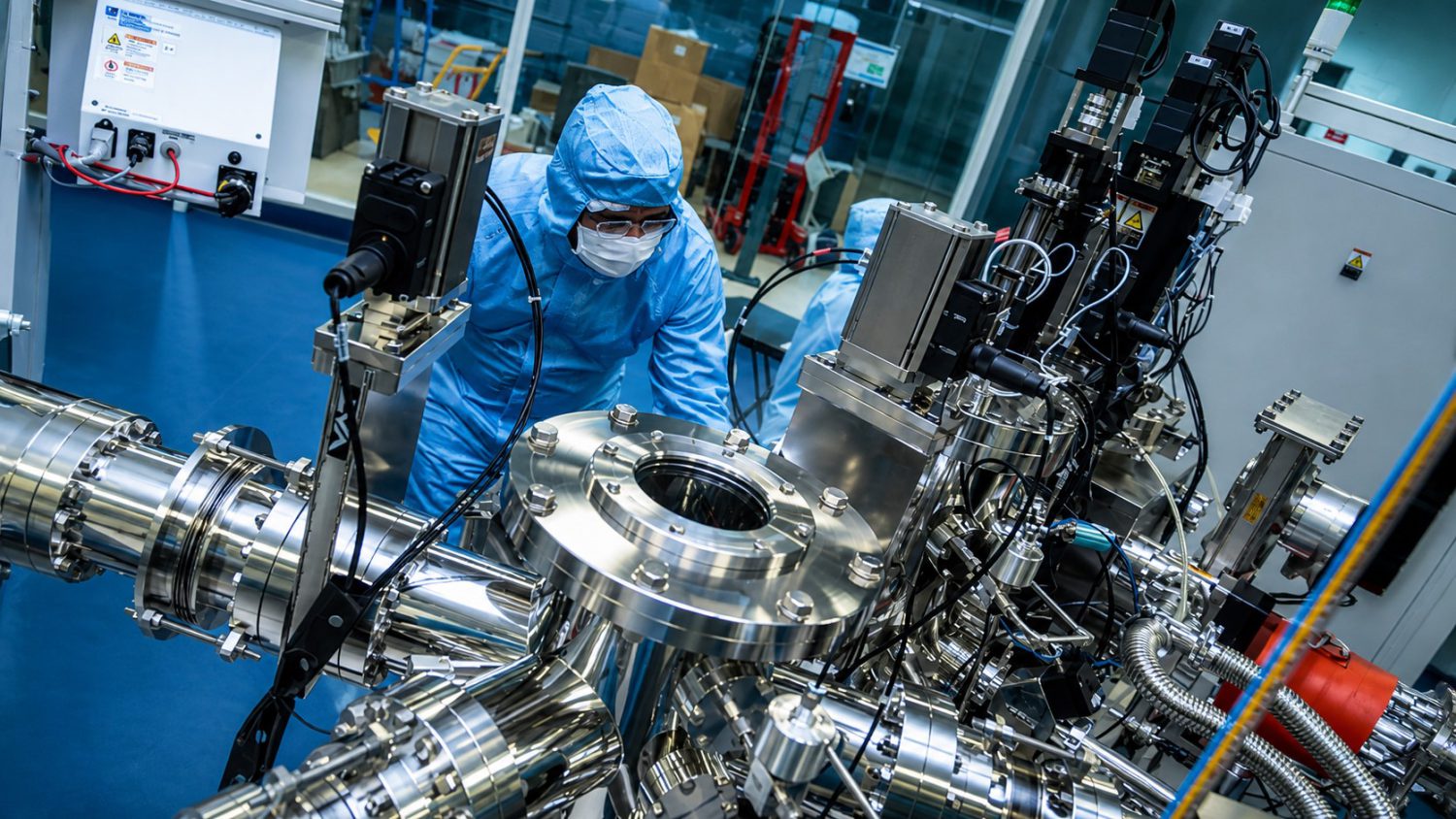
A phone still takes 45 minutes to charge on the way to the airport — a familiar small crisis that remains entirely unsolved by what follows. What CSIRO quantum scientist James Quach and his team built charges in femtoseconds — quadrillionths of a second, a timeframe so small it makes a camera flash look geological — inside a gap thinner than a strand of DNA. It is a genuine scientific milestone. It is also nowhere near your charger.
How a Mirror Sandwich Absorbs Light Faster Than You Can Think
The device is deceptively simple in concept and quietly extraordinary in what it pulls off.
Two mirrors sit roughly 100 nanometers apart, their gap filled with organic dye molecules — an optical microcavity. A laser fires in; trapped light couples with those molecules, producing hybrid light-matter states. That coupling triggers superabsorption: the molecules respond collectively rather than independently, meaning more molecules actually means faster charging — the inverse of how every conventional battery scales. The 2026 prototype added charge-transport layers extract real electrical current, completing the full charge-store-discharge cycle for the first time. And it runs at room temperature, which matters more than it might sound.
Most competing quantum battery designs rely on superconducting materials cooled below −150°C — hardware suited to a cryogenic physics lab, not any realistic product roadmap. Quach’s organic microcavity sidesteps that entirely. As he told New Atlas: “you charge it, you store energy, and you can discharge it.”
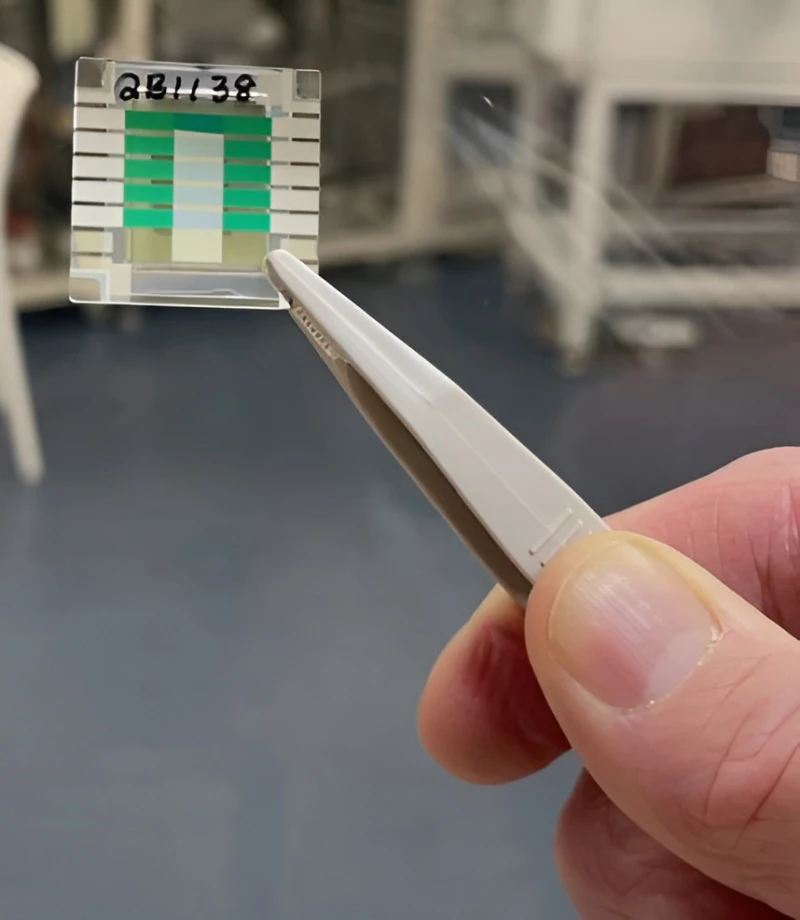
Now for the part every “battery breakthrough” headline buries. This prototype stores energy for nanoseconds and holds only a few billion electron volts — an amount so small it would embarrass a static shock. Quantum effects are fragile; they degrade rapidly the moment a system encounters the noisy, warm, chaotic real world. Physicist Dario Ferraro, speaking to BBC Future, argued that quantum batteries‘ natural domain is the quantum scale — not your EV, not your laptop.
The natural domain of this technology is quantum hardware — not your morning commute.
Where This Actually Goes Next
Quach’s team is already engineering around the current device’s limitations, with a concrete near-term target in mind.
The plan involves a hybrid design: a quantum charging layer for ultrafast energy absorption paired with classical storage layers capable of holding that energy for longer durations. The team also intends to network multiple microscopic quantum battery cells together — scaling through connection rather than brute size. The near-term target is quantum computers and cryogenic hardware, where precisely timed, ultrafast energy delivery is already an active engineering problem. Physicist Mauro Paternostro, also quoted by BBC Future, notes that extracting energy in a controlled, directed way from microcavity systems remains a major unsolved challenge.
If “solid-state battery” headlines have burned your optimism over the past decade, your skepticism is fully warranted here. But if you follow quantum computing infrastructure, this is the internet speed barrier-pushing frontier worth watching — strange physics, demonstrated at room temperature, doing something genuinely new.