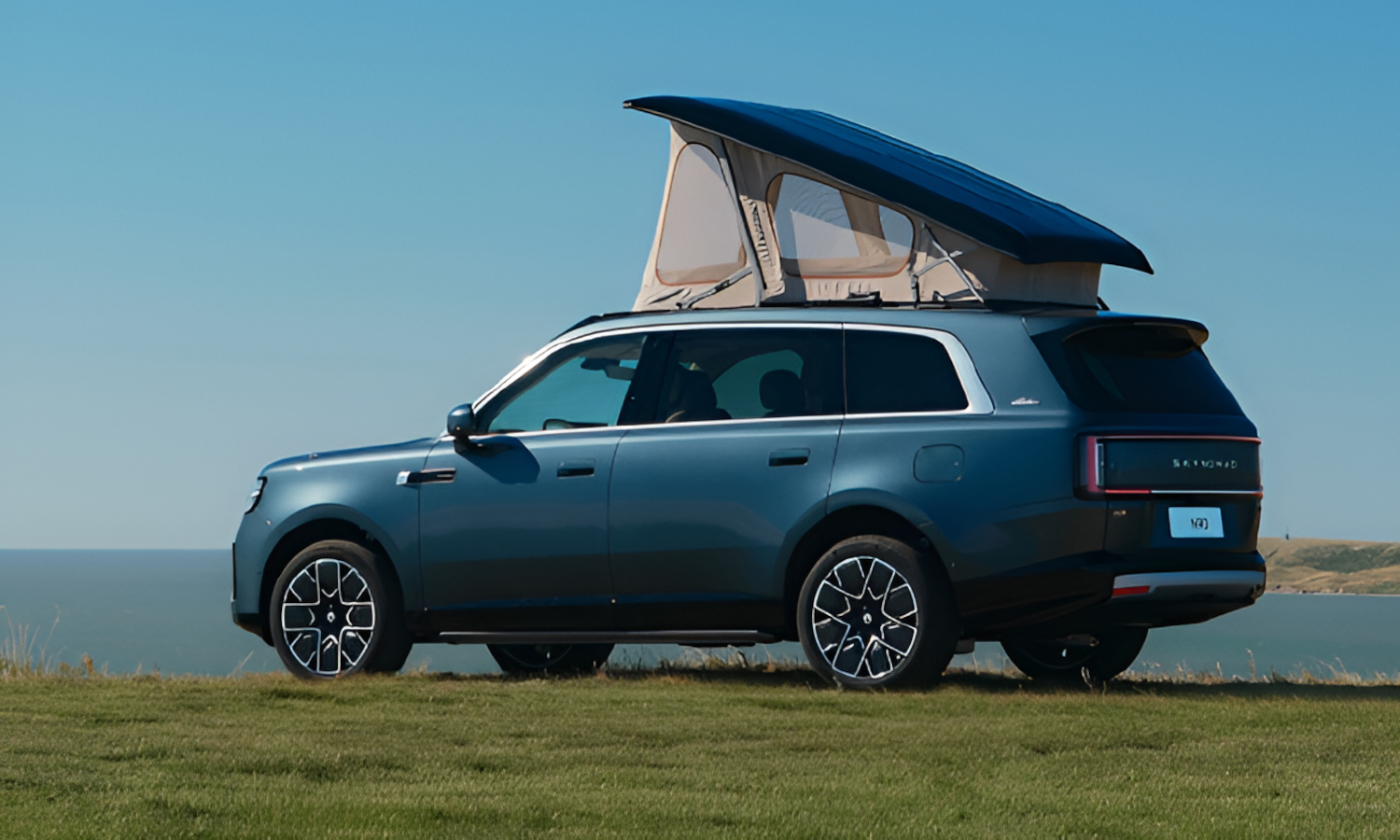
The company that sells you $12 earbuds just launched a 5,285 mm SUV with a factory-engineered roof that rises electrically to create a sleeping loft. At 299,900 yuan (~$44,100 USD), the Skynomad N90 Max Explorer Edition isn’t just a family hauler — it’s Xiaomi’s argument that the real EV battleground is how you actually live inside the vehicle, not just how far it goes.
Two Floors. One Button.
The Explorer Edition’s party trick isn’t a spec sheet item — it’s a roof that turns your SUV into a two-story camper while you’re parked.
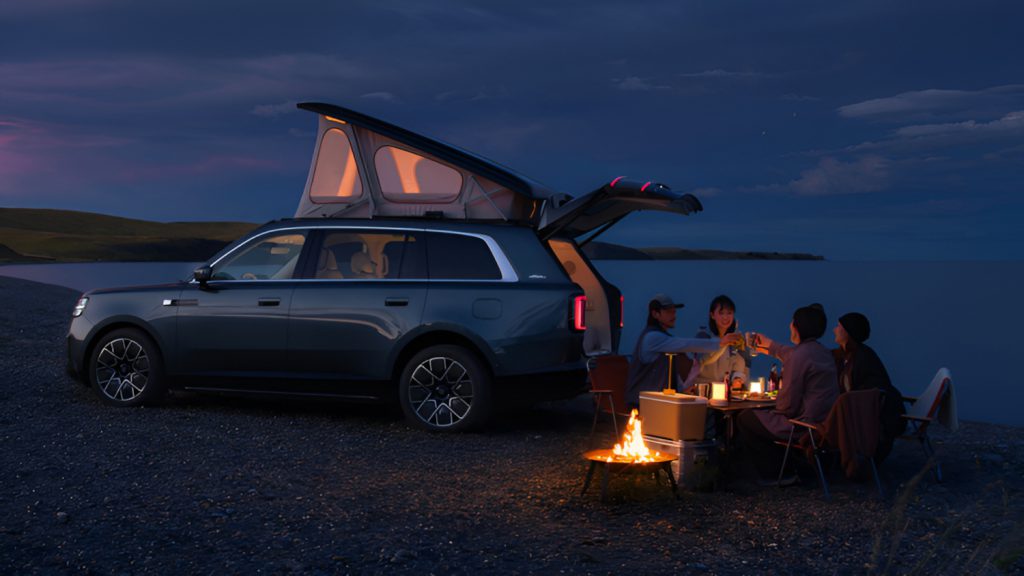
Parked at a campsite, you press a button and the roof rises. No tent poles. No aftermarket conversion invoice. The electric pop-up loft — restricted to parked use off public roads — measures roughly 2,110 mm × 985 mm, supports 200 kg, and lifts interior height to approximately 2.29 m. Five mesh windows, two A/C vents, built-in lighting, and an 18W USB-C port come standard up there. According to tarantas.news, Xiaomi tested the mechanism through 10,000 opening and closing cycles, including rollover testing. This isn’t a tent strapped to a sunroof — if you’re already exploring van life gadgets, this raises the bar considerably.
What the Explorer Edition actually offers:
- Factory-integrated electric pop-up roof — not an aftermarket conversion
- Upper loft (~2.1 m × 0.99 m) rated to 200 kg, with room for two adults
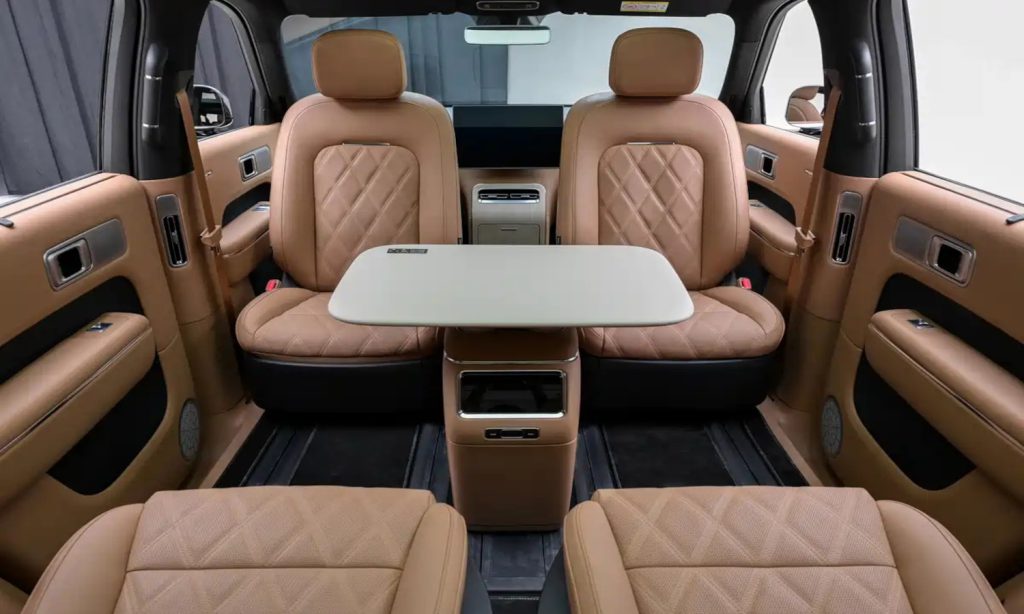
- Second-row seats fold flat to a 1.87 m × 1.24 m heated, ventilated bed
- Movable central island on rails with a 9L compressor refrigerator
- 11 interior configurations; up to 1,831 L storage capacity
The Powertrain Reality
The N90 Max pairs serious camping credentials with an EREV drivetrain that quotes 1,705 km of combined range.
The N90 Max runs an EREV architecture — a 1.5L turbocharged range-extender engine (~112 kW) charges a 76 kWh NCM “dragonscale” battery from CALB rather than driving the wheels directly. Pure-electric range hits 464 km on China’s CLTC cycle; real-world figures will vary. Fast charging adds 285 km in 15 minutes. Dual motors deliver roughly 310 kW combined, with 0–100 km/h dispatched in 5.9 seconds, according to electrive.com. That figure — 1,705 km of combined range — becomes especially striking in a vehicle equipped with a built-in refrigerator and a sleeping loft.
The Tech Stack You’re Actually Buying
Xiaomi’s connected ecosystem extends from your pocket to your dashboard, with driver-assist hardware that means business.
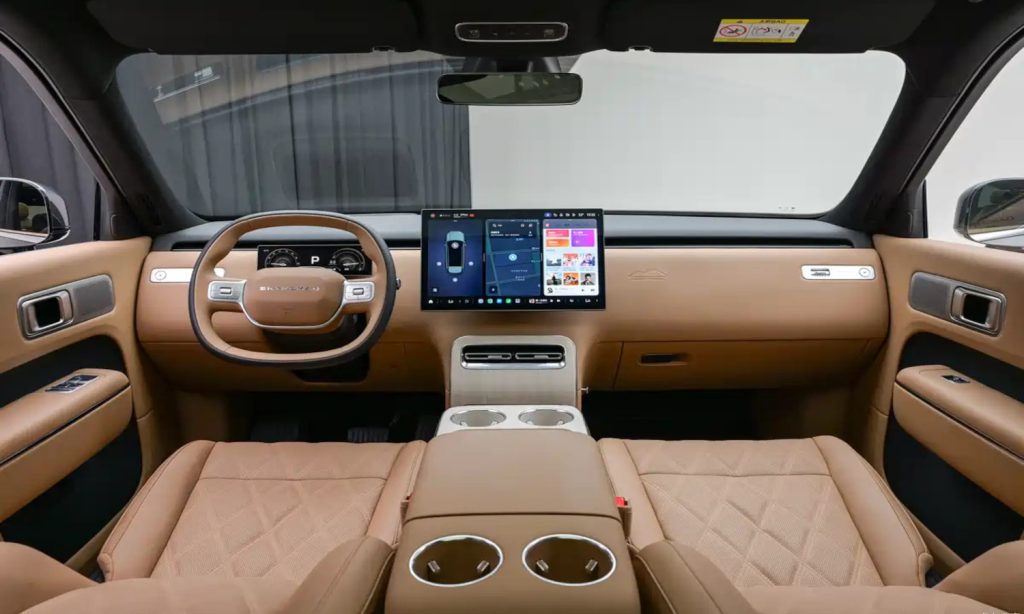
Already invested in Xiaomi’s ecosystem? The interior will feel purposefully familiar — HyperOS on a 16.1-inch screen powered by a Qualcomm 8650 chip, tying your SUV into the same software layer as your phone and home devices. Driver assistance runs on an Nvidia Thor chip at 700 TOPS, feeding data from roof-mounted LiDAR, 4D millimetre-wave radar, 11 HD cameras, and 12 ultrasonic sensors. Zero-gravity seats with massage, heating, and ventilation front and rear complete the living-room-on-wheels brief.
Custom camper van conversions routinely cost more than this entire vehicle. The standard N90 Max starts at 269,900 yuan (~$39,700). Both models are currently China-only, with no US or European launch announced. Xiaomi is still a newcomer in automotive — long-term reliability remains unproven — and launch coverage alone won’t settle that question. What it does settle: the EV wars have expanded well beyond range anxiety, and Xiaomi has drawn a new map other manufacturers will feel compelled to follow.