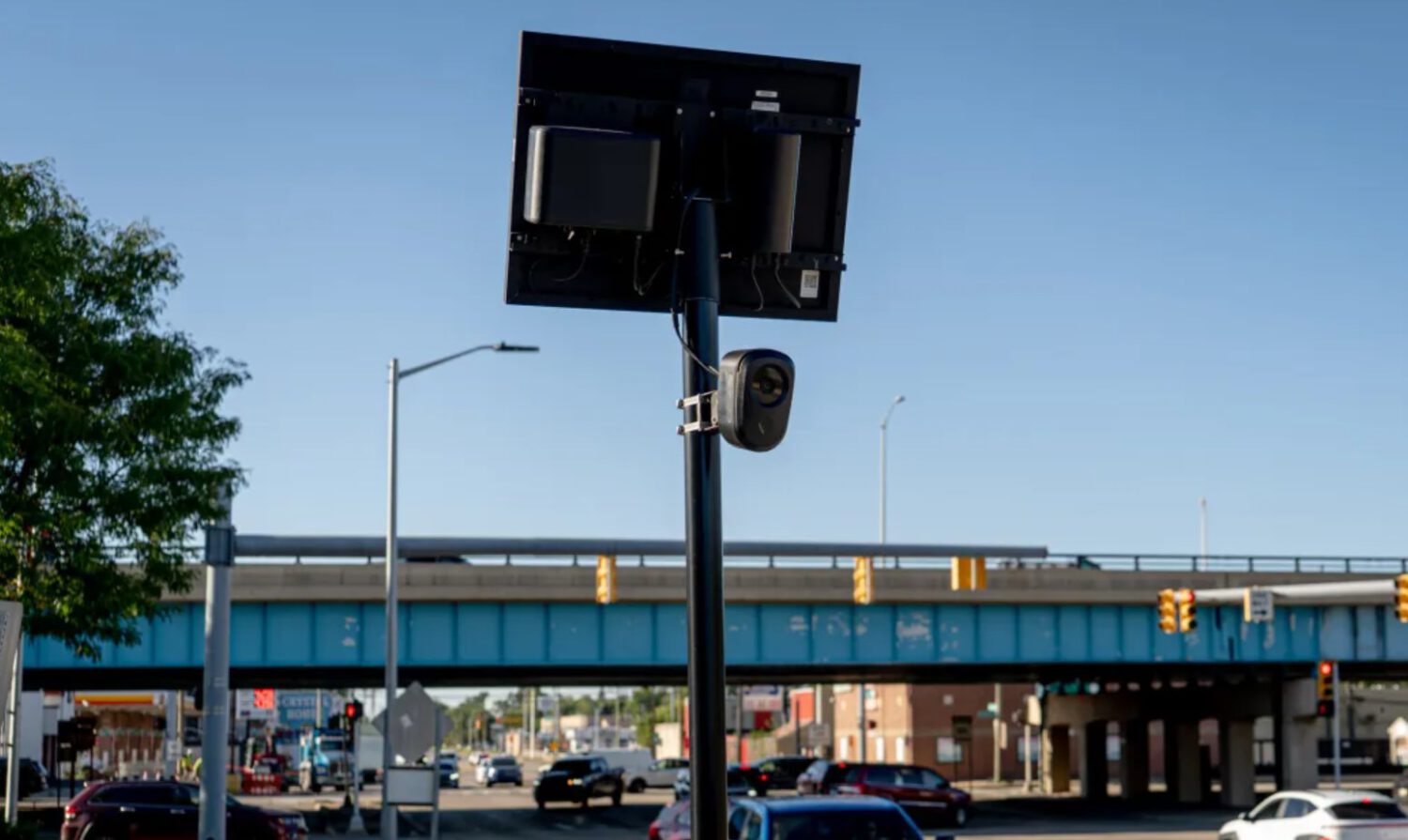
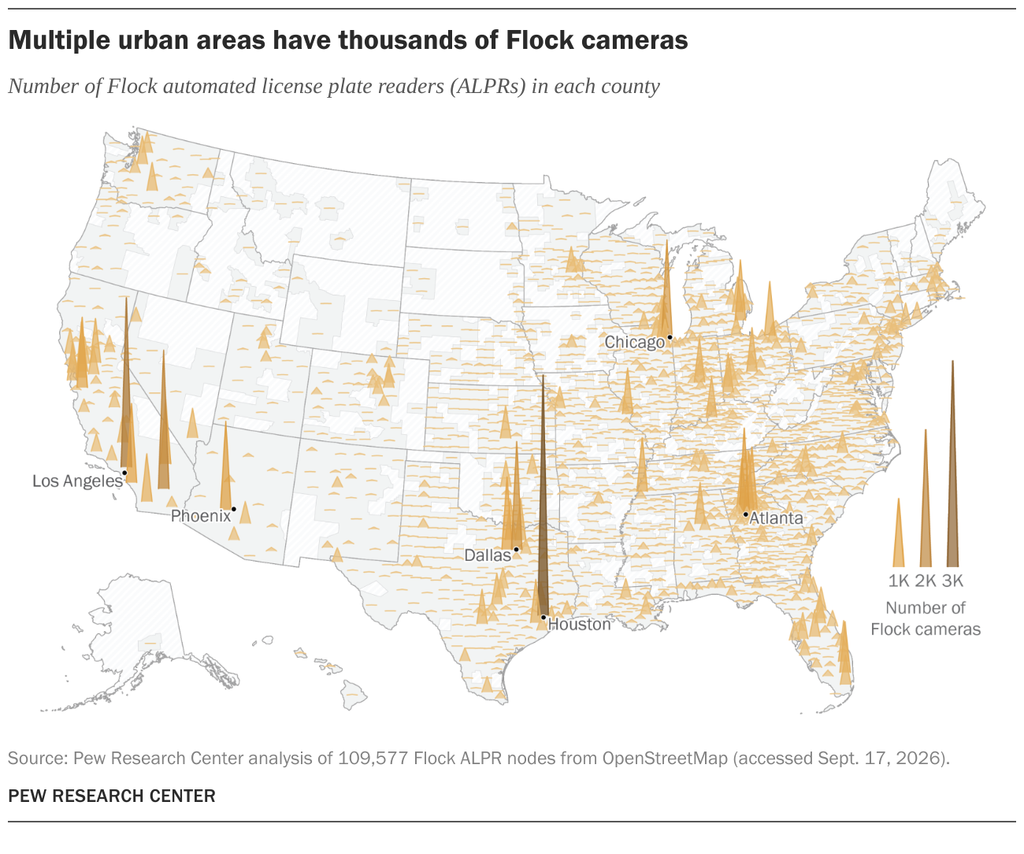
Public mapping data identified 109,577 Flock automated license plate reader nodes across the United States as of September 17, 2026, according to a Pew Research Center analysis of OpenStreetMap. Agency transparency portals tracked by a project called EyesOnFlock listed only 39,465 cameras across 1,517 agencies, roughly 36% of the mapped total. That gap, more than 70,000 cameras unaccounted for in public records, is the central finding driving calls for a mandatory national inventory.
A Network With No Agreed-Upon Size
Vendor figures, public maps and independent trackers each produce a different total, leaving the true scale of the network unclear.
Flock told The Washington Post in August 2026 that it operates more than 120,000 cameras across 6,000 communities. An independent surveillance mapping project puts that number as high as 175,000. Pew noted the discrepancy directly: “The exact number varies from source to source.”
Five States, Half the Cameras
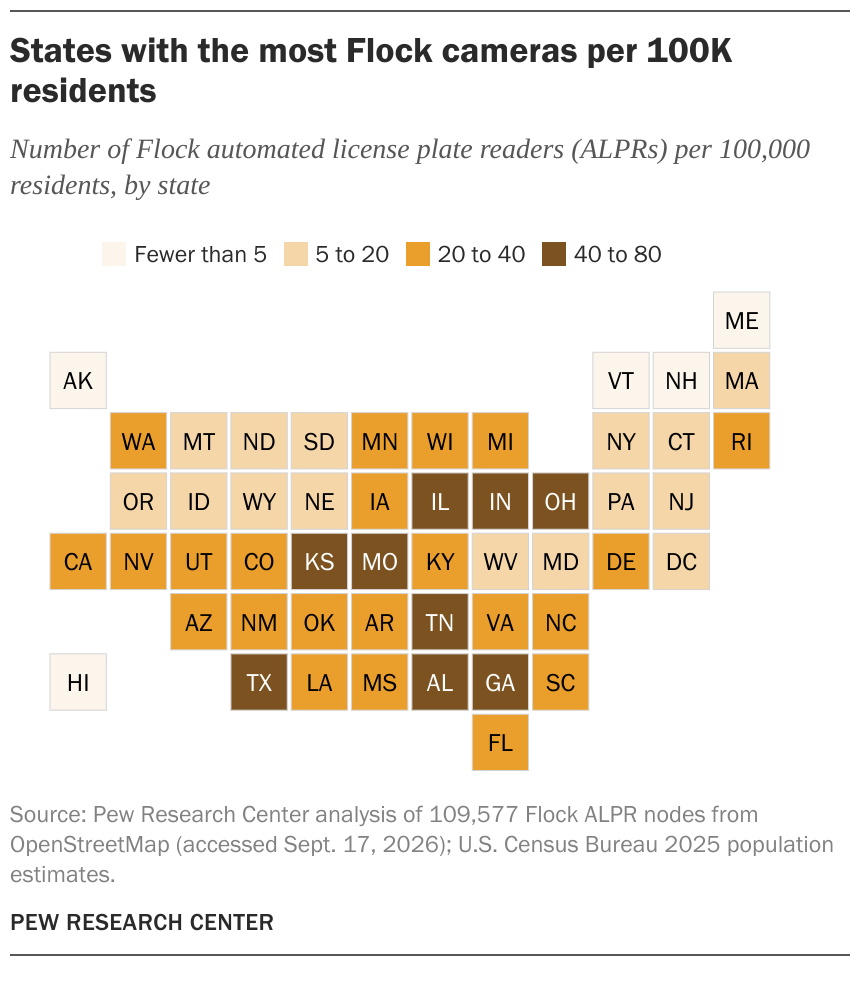
California, Texas, Georgia, Florida and Ohio together account for nearly half of all mapped Flock units.
California, Texas, Georgia, Florida and Ohio collectively account for about 53,000 mapped cameras, or approximately 49% of the OpenStreetMap total, according to analysis by carthreat.com using the Pew dataset. By cameras per 100,000 residents, Georgia ranked first at 80, followed by Ohio at 51 and Texas at 49, per Pew data. Florida’s transparency portals account for roughly 6% of that state’s mapped cameras, while Pennsylvania’s portals cover approximately 2%, according to Pew.
Portals Disclose Camera Counts but Less About How Data Is Used
Most participating agencies reported retention periods and camera totals; fewer than half disclosed details about individual searches.
Among the 1,517 agencies with active transparency portals, 96% disclosed data-retention periods and 93% disclosed the number of cameras they operate, according to Pew. About two-thirds disclosed whether they share collected data with other organizations, while only half provided information about individual searches.
Shared With Hundreds, Retained for Weeks
The median agency reported sharing data with 217 other organizations, nearly all of them law enforcement.
The median agency listed 12 cameras and retained data for 30 days, though Flock later reduced its platform default retention period to seven days, according to the analysis. Agencies that disclosed data-sharing information reported sharing with a median of 217 other organizations, primarily other law enforcement entities.
Tens of Millions of Searches, With Evidence of Misuse
A USA TODAY investigation found more than 75 million searches across records from more than 120 agencies over three and a half years, along with documented cases of alleged misuse.
USA TODAY analyzed records from more than 120 law enforcement agencies across 24 states, covering more than 75 million searches conducted between January 2023 and July 2026. Those records contained searches by officers from a far broader set of agencies, and most logs were at least partly redacted. The logs involved nearly 4 million unique license plates and roughly 59,000 searches per day. They also included evidence of alleged misuse by law enforcement personnel, with some agencies found to be secretly tracking users without documented justification. Among searches with a recorded reason, “investigation” or a related term was the most common, appearing in 19% of cases, according to Pew’s analysis of the EyesOnFlock data.
Who Owns Most of These Cameras Remains Unclear
OpenStreetMap identified an operator for only 12% of mapped cameras, leaving ownership unconfirmed for the vast majority.
Ownership is unclear for 88% of mapped cameras, since OpenStreetMap data identified an operator for only about one in eight entries, according to carthreat.com. The records do not establish that every undisclosed camera is intentionally hidden or unlawfully operated. Most cameras simply appear in the public map without a confirmed owner or disclosed agency affiliation.
Pressure for a Stronger Oversight Framework
Researchers and civil-liberties organizations are calling for mandatory inventories, standardized retention limits and documented search purposes.
The findings have intensified scrutiny of access controls, audit logs and interagency data-sharing rules. Organizations including the Electronic Frontier Foundation and the American Civil Liberties Union have called for federal legislation requiring public camera registries, standardized retention limits and documented search purposes. Without a binding inventory standard, the gap between mapped cameras and those appearing in public records is likely to grow as the network expands, a concern echoed by researchers tracking a covert surveillance app built to monitor political dissidents across borders.