Mineral and molecular remnants resembling red blood cells have been identified inside the limb bones of a dinosaur that died 115 million years ago, according to a study published in the Proceedings of the National Academy of Sciences. The structures are not liquid blood or intact hemoglobin; they are fossilized traces, and that distinction matters enormously.
The Specimen and What Was Found
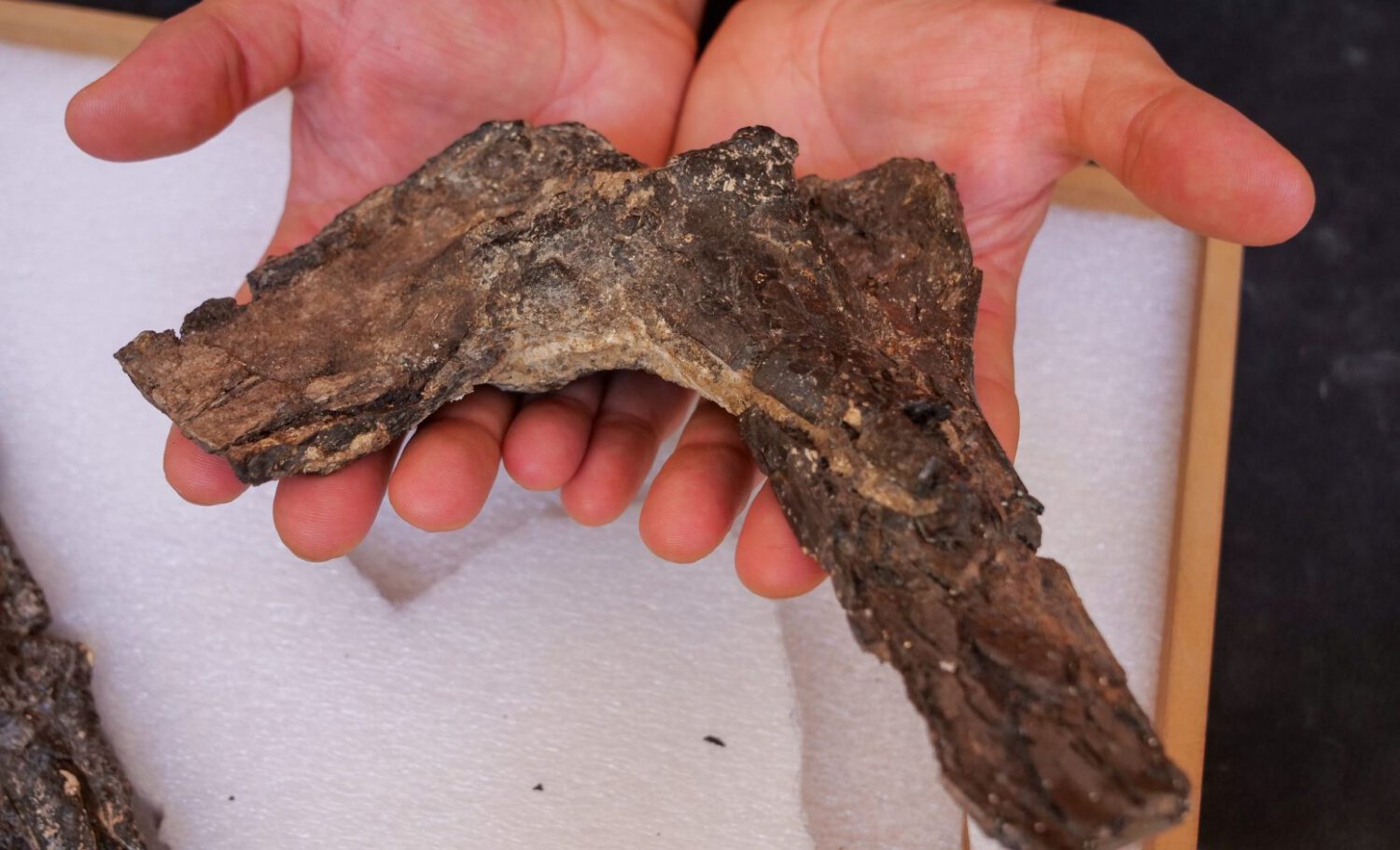
The fossil came from a juvenile theropod unearthed in northeastern Brazil.
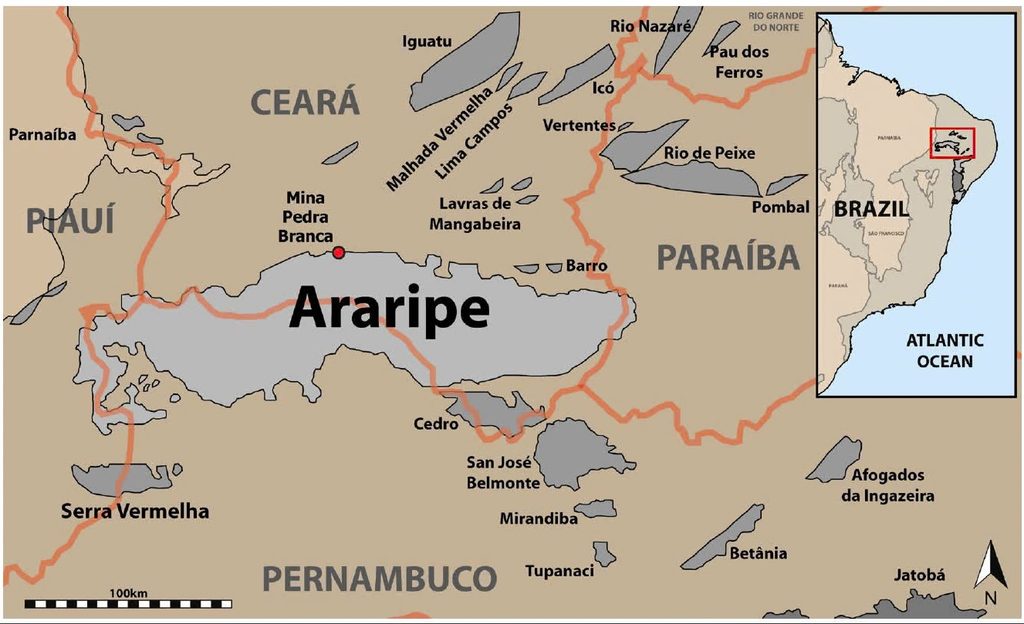
The fossil belongs to Aratasaurus museunacionali, a small theropod recovered from the Romualdo Formation in Ceará, northeastern Brazil, first discovered in 2008. The animal was a juvenile or young adult, estimated at roughly four years old at death during the Early Cretaceous period.
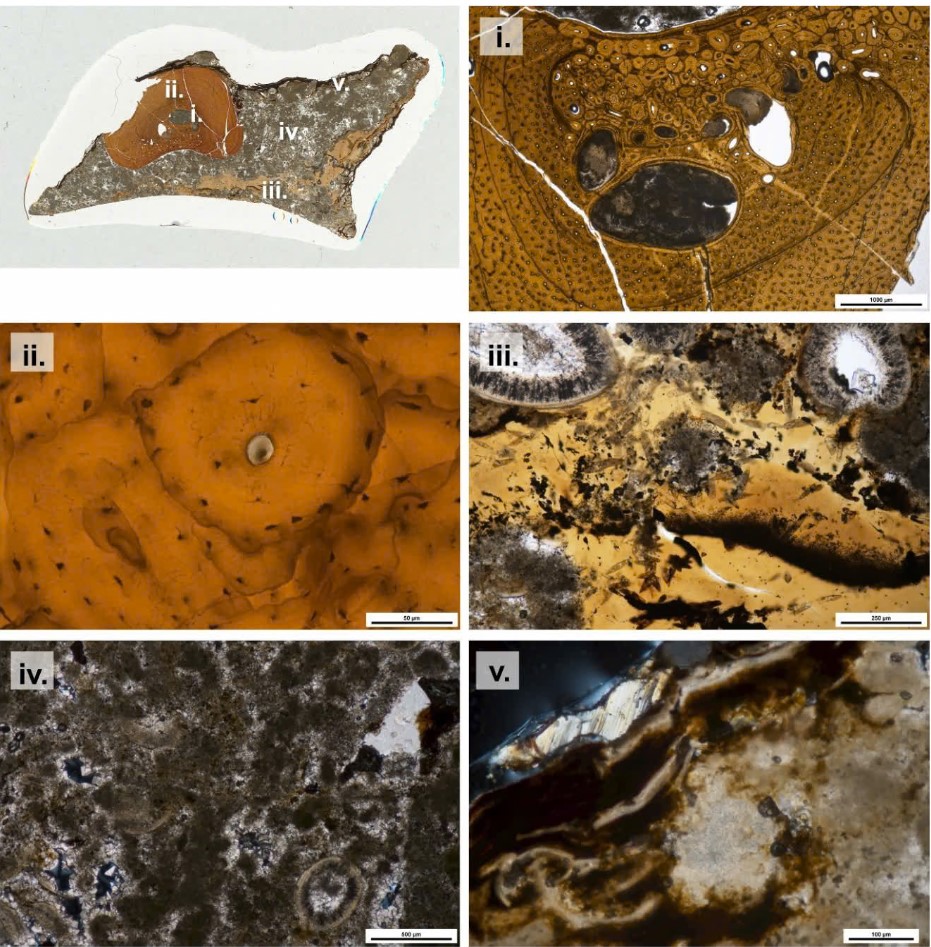
Researchers found oval and ellipsoidal structures measuring approximately 23 micrometers long and nearly 20 micrometers wide inside vascular canals. Those canals are the small internal bone pathways associated with blood vessels and nerves.
Chemical analysis detected heme B and altered heme-related compounds. Heme is the iron-containing component of hemoglobin that allows blood to transport oxygen.
The team supported its interpretation using microscopy, elemental mapping, spectroscopy, and high-performance liquid chromatography-mass spectrometry. The structures showed associations with iron, carbon, and nitrogen, elements consistent with heme-related material.
Why Shape Alone Was Not Enough
The case rests on location, morphology, and chemistry working together.
Morphology by itself would be a weak argument, since minerals can naturally form rounded or oval shapes through nonbiological processes. The researchers built their case on three converging lines of evidence: the structures’ position inside vascular canals, their size and morphology, and the detection of heme-related chemistry directly associated with them.
The cell-like structures were mineralized with hausmannite, a manganese oxide. The researchers propose that this mineral may have helped stabilize the biological remnants, acting as a protective matrix across geological time.
How Preservation Likely Happened
The team points to rapid burial and a dense microbial mat as key factors.
The researchers propose that the carcass was rapidly buried in a low-oxygen environment, which may have slowed microbial decomposition significantly. A dense microbial mat surrounding the fossil, combined with mineral formation over time, may have further stabilized the microscopic structures before they could fully degrade.
In the Researcher’s Own Words
The study’s lead researcher drew a sharp line between the finding and popular misconceptions about dinosaur blood.
“We have not found a vial of dinosaur blood,” said Kliti Grice, organic and isotope geochemist at Curtin University and the study’s lead researcher. “What we are seeing is a mineral and molecular echo of ancient biology, and that is scientifically much more interesting.”
What This Means, and What It Does Not
The discovery extends how long blood-derived chemistry may survive, while leaving meaningful questions open.
The finding challenges the assumption that deep-time fossils preserve only hard tissues such as bone and teeth. Under specific chemical and environmental conditions, microscopic structures and biomolecular traces can persist far longer than previously expected, though this discovery does not overturn earlier soft-tissue findings so much as reinforce them with unusually direct chemical evidence.
Independent researchers not involved in the study remain cautious about classifying the structures definitively as red blood cells. The identification is inferential; the evidence reflects mineralized forms and chemical remnants, not intact or living cells. The study reports heme-related chemistry, not dinosaur DNA.
What Comes Next
The findings prompt researchers to ask whether comparable heme signatures appear in other dinosaur fossils.
Researchers say the discovery raises a direct question for the field: do similar heme signatures exist in other dinosaur bones? If confirmed more broadly, that chemistry could open new lines of inquiry into ancient vertebrate physiology, oxygen transport, and metabolism, building on what scientists can now learn from fossils once assumed to have surrendered all their biological information.