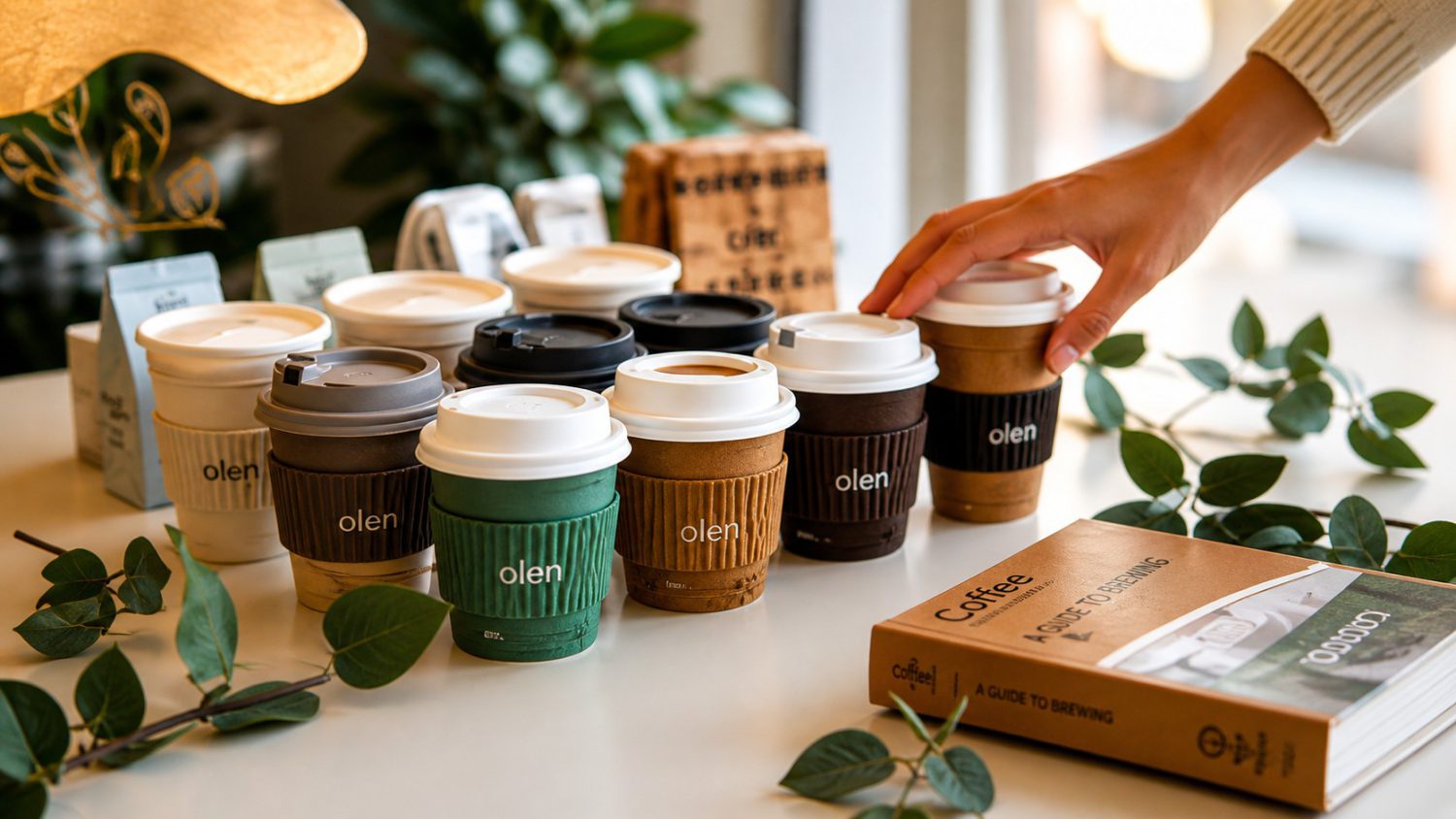
Every morning, millions of people make what feels like the responsible choice at the counter — the compostable cup, the green option, the one that doesn’t feel like planetary vandalism. New research from the University of Queensland suggests that choice comes with a catch. That biodegradable cup is shedding roughly 12 times more plastic particles into your coffee than the conventional one.
Paper Cups Aren’t What You Think They Are
The thin plastic lining inside your cup is doing far more than keeping your coffee from soaking through.
Most people assume a paper cup is mostly paper. It isn’t. Hidden inside is a thin plastic lining — either fossil-based polyethylene (PE) or biodegradable polylactic acid (PLA) — that keeps the cup from dissolving in your hand. Hot liquid causes that lining to shed particles. As Dr Elvis Okoffo of UQ’s Queensland Alliance for Environmental Health Sciences puts it: “A cup made mostly of paper does not mean that the cup is plastic-free.”
His team’s findings, published August 2026 in ACS Food Science & Technology, are specific:
- PLA-lined cups released approximately 4.3 million nanoparticles per millilitre of hot water; PE cups released around 2.7 million
- PLA shed roughly 12 times more total plastic mass than PE
- These particles are about 1,000 times thinner than a human hair — invisible and undetectable by taste
- Earlier studies found up to 25,000 micron-sized particles per 100ml within 15 minutes of hot liquid contact
- Cup linings can also release associated chemicals, including phthalates and heavy metals such as lead and chromium
Think of it as the wellness-industry equivalent of a Diet Coke with a cheeseburger — the virtue signal that doesn’t survive scrutiny.
The Regulation Hasn’t Caught Up
No current framework requires food-contact packaging to be tested for how many plastic particles it releases into your drink.
“The impact of plastic particles on human health is unclear and we know that the chemicals in plastic are not meant to be consumed,” Dr Okoffo states — while also noting these findings don’t mean anyone should stop using paper cups immediately. Exposure is confirmed. How much causes harm remains an open question that researchers haven’t yet answered.
What’s missing is any regulatory requirement to test food-contact packaging for microplastic release. In most jurisdictions, existing frameworks cover chemical migration limits but not particle-based metrics. Okoffo’s call is straightforward:
- mandatory microplastic-release testing
- clearer labelling
- better cup design that fragments less under heat
A stainless steel or glass reusable cup sidesteps this problem entirely — no plastic lining means no plastic particles. If switching isn’t realistic right now, the conventional PE cup currently releases fewer particles than its supposedly greener alternative — and you may find yourself paying too much for a product that delivers worse outcomes. The science is moving faster than the rules, and the gap is worth knowing about.