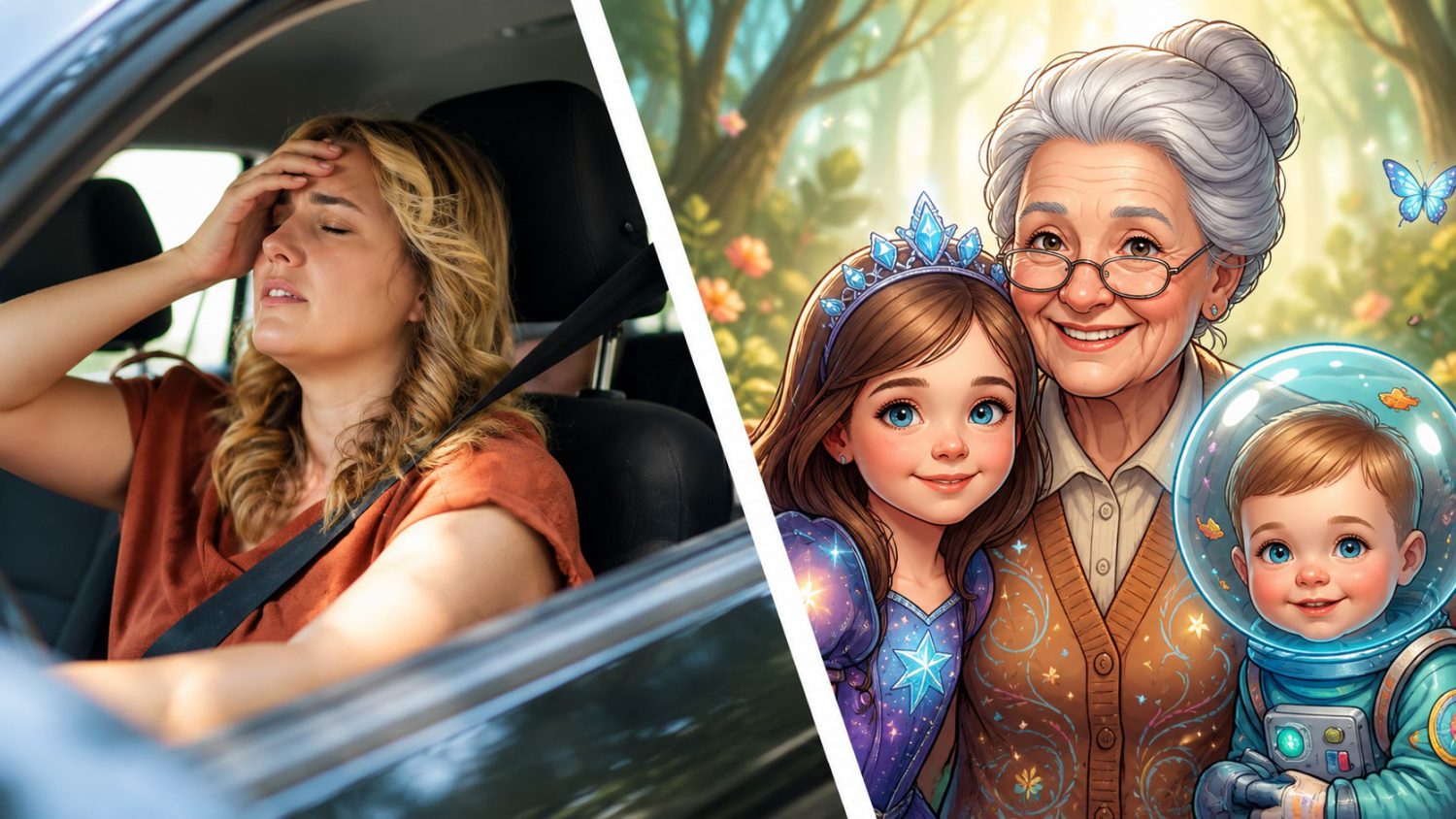
You are a parent receiving an illustrated storybook starring your child, complete with a cartoon likeness and a rhyming adventure depicting scenes that never occurred. That is “grandmaslop,” a term reported by TechRadar for AI-generated family content that grandparents are creating with tools like Gemini, Claude, and ChatGPT and sending to their adult children, often to a chilly reception.
A Memory That Never Happened
Photographs carry weight because they document events that occurred. An AI-generated family image borrows that visual grammar, with familiar faces and the feeling of a captured moment, while depicting a scene that never existed.
Reddit commenters cited by TechRadar describe receiving books with generic cartoon aesthetics, nonsensical plots, and rhymes that fall flat. Their discomfort, though, runs deeper than production quality.
According to paraphrased Reddit commentary reported by TechRadar, one commenter identified the core problem: an AI image can preserve the appearance of a memory while depicting something that never happened. That makes it a fundamentally different object than a photograph, even when it looks like one.
The generational picture is more nuanced than “older people don’t understand AI.” Randstad workplace research found that 56% of Boomers said they never used AI for work tasks. Millennials reported the highest overall AI proficiency at 50%, versus 19% for Boomers, and 25% of Millennials used AI for work-related tasks on a weekly basis.
Those figures describe workplace behavior, not family photography habits. They do point toward a real difference in familiarity with these tools, though the gap does not fully explain the backlash.
A more precise reading is that Millennials may be comfortable using AI for productivity while becoming protective of children’s identities and the authenticity of family memory. That is a hypothesis the available evidence supports but does not confirm.
Affection, or a Shortcut?
The sharper complaints reported by TechRadar go beyond aesthetics. According to Reddit accounts cited in the coverage, some parents resent that a grandparent who says they miss their grandchildren has responded with an AI book rather than a visit or a sustained effort to stay present.
These are individual accounts, not survey data, and they should not be read as representative of all grandparent behavior. They do point toward a dynamic worth noting: generative AI makes it unusually easy to produce the outward signs of intimacy, including a personalized keepsake or a custom family story, with relatively little effort.
There is also a privacy dimension that parents are raising, according to related coverage cited by Business Insider. Uploading a child’s photograph to an AI service raises questions about consent, data retention, and whether the resulting images reach unintended recipients.
No specific platform’s retention or training policies are established by the available reporting, and those policies vary by provider, account type, and jurisdiction. A parent may object even without a data breach, simply because a child’s likeness was uploaded without the family’s agreement.
Reddit commentary cited by TechRadar suggests families have not yet settled on norms around synthetic images of children. Questions likely to surface include who may upload a child’s photo, whether AI-generated images should be labeled as such before sharing, and whether children will eventually have standing to weigh in on how their likenesses are used. The reporting indicates that unresolved gap is where most of the friction lives.