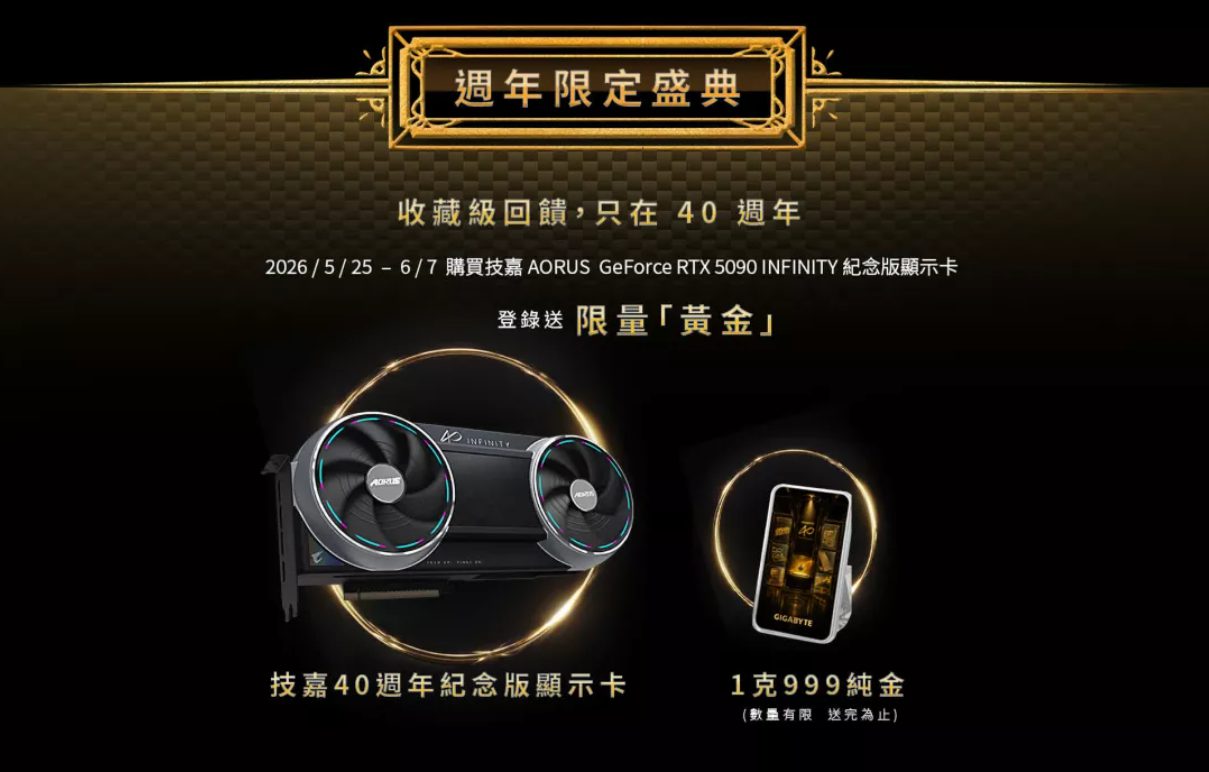
Buying Gigabyte’s AORUS RTX 5090 Infinity in Taiwan gets you more than bragging rights—it includes one gram of 999 pure gold. That sounds impressive until you realize the math: you’re paying NT$165,000 (roughly $5,254) for a graphics card and receiving $143.50 worth of precious metal. It’s like getting a free keychain with your Lamborghini purchase. The promotion celebrates Gigabyte’s 40th anniversary, but mostly it celebrates how disconnected luxury tech marketing has become from actual value.
The Bureaucratic Gauntlet
Taiwan-only eligibility requirements make buying this GPU feel like applying for citizenship.
Want that gram of gold? Better live in Taiwan and follow Gigabyte’s intricate dance of deadlines:
- Register on their website before May 10
- Pre-order between May 25 and June 7, while supplies last
- Need an authorized retailer invoice—no eBay purchases allowed
The whole process feels designed by someone who thinks exclusivity equals jumping through hoops. Most buyers willing to drop five grand on a graphics card probably value their time more than $143 worth of commemorative metal.
Underneath the Marketing Glitter
The RTX 5090 Infinity delivers legitimate flagship performance despite its gimmicky promotion.
Strip away the gold theatrics and you get serious hardware:
- 32GB of GDDR7 memory on a 512-bit interface
- WINDFORCE HYPERBURST cooling with superconducting heat pipes
- Enough processing power to make your electricity meter spin faster
Gigabyte’s targeting the ultra-high-end market where buyers already expect premium materials and four-year warranties. The card’s metal backplate and RGB Halo lighting suggest they understand their audience values aesthetics alongside performance. This positions the RTX 5090 Infinity as a flagship showcase product competing at the highest tier of the enthusiast GPU market.
The Real Message
This promotion reveals more about luxury marketing psychology than actual customer value.
The gold giveaway isn’t about savings—it’s about creating a story buyers can tell themselves and others. Like Supreme dropping a brick with their logo, Gigabyte understands that exclusivity often matters more than economics to their target market. The Taiwan-only restriction and registration requirements manufacture scarcity where none existed. It’s brilliant marketing disguised as customer appreciation, targeting enthusiasts who already decided money wasn’t the primary concern.