Communities are rejecting AI data centers over noise, grid strain, and water consumption. Freshwater fights are escalating. Coastal land near major cities costs a fortune. So some engineers made a decision that sounds either brilliant or reckless depending on your tolerance for maritime law: sink the servers into the sea.
That’s not a metaphor. It’s now commercial infrastructure.
Microsoft Tried This First – Then Quit
The world’s most famous underwater data center experiment ended not with a splash, but a firm “no.”
In 2018, Microsoft lowered a sealed steel cylinder containing 864 servers onto the seafloor near Scotland’s Orkney Islands. The results were genuinely surprising: hardware failure rates ran one-eighth those of comparable land-based facilities. Tightly controlled atmosphere, no human interference, stable temperatures.
Then in 2024, Microsoft’s head of Cloud Operations and Innovation, Noelle Walsh, ended it: “I’m not building subsea data centers anywhere in the world.”
The culprit is AI’s relentless hardware cycle. A sealed underwater pod can’t be cracked open to swap in new accelerators. Fixing a single failed component means recovering the entire unit from the seafloor — less IT strategy, more archaeological dig.
What’s Actually Being Built Right Now
From Shanghai’s seafloor to Singapore’s harbor, ocean-based data centers are moving from concept to construction across four continents.
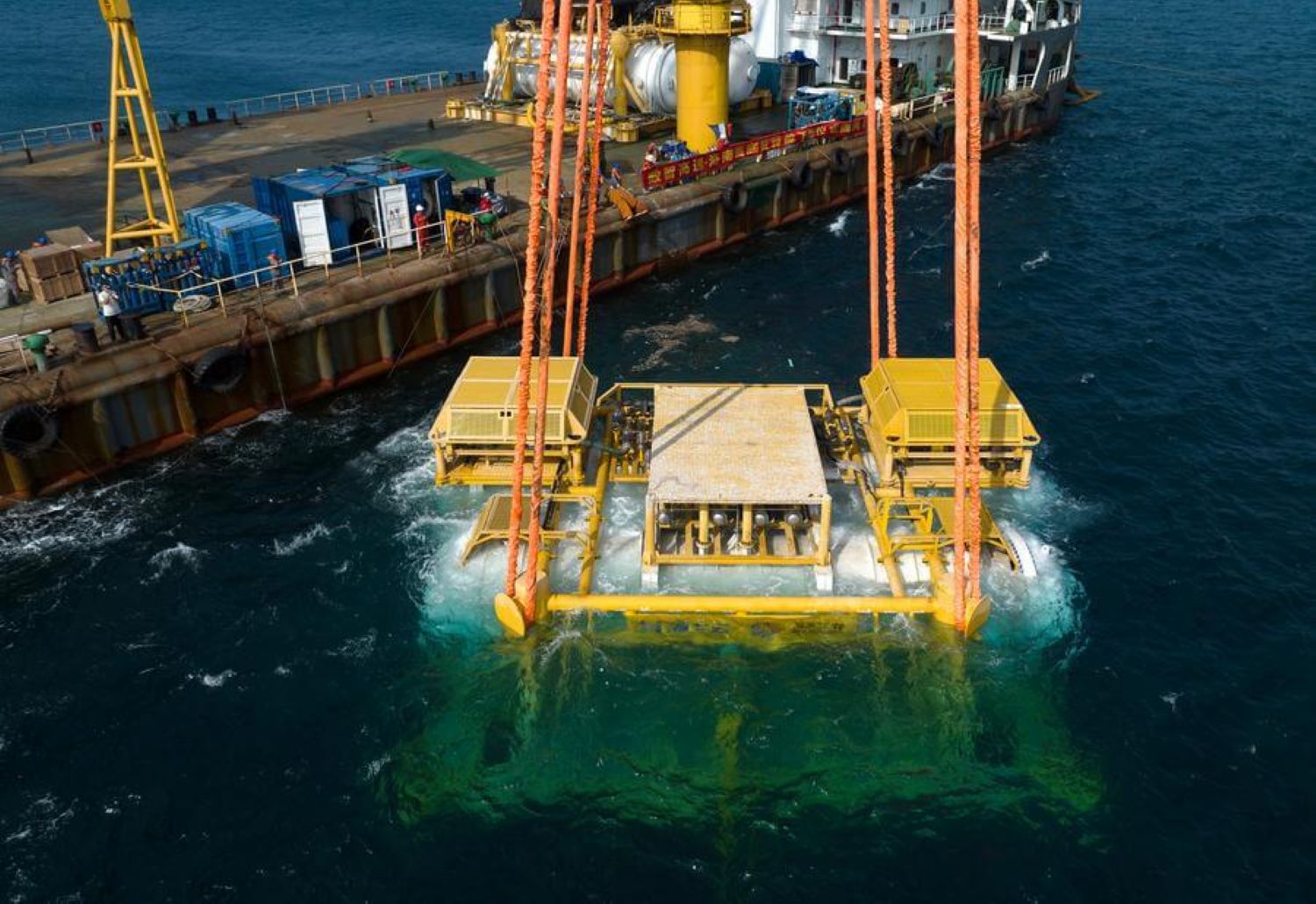
- China (Shanghai Lingang): A 24 MW subsea AI facility sits 10 meters underwater, powered by offshore wind via subsea cable. First phase: 2,000 servers, PUE below 1.15 versus the industry norm of 1.3–1.5. Cooling efficiency improves by roughly 22.8%. Total investment: approximately US$226 million.
- Singapore (Keppel): A four-story floating data center, due 2028, seawater-cooled — built for a city-state that has run out of land.
- South Korea (Ulsan): Planned underwater facility for 100,000-plus servers, with developers projecting around 30% lower power consumption than land-based equivalents.
- Japan and Maine: A solar-powered floating platform tests near Yokohama through March 2027; a tidal-powered submersible facility is proposed for Maine’s Bay of Fundy, still awaiting regulatory approvals.
The Genuine Case – and the Part Nobody’s Advertising
Seawater cooling and offshore renewables offer real efficiency gains, but the environmental ledger isn’t as clean as the press releases suggest.
The strongest argument for going offshore holds up. Seawater cooling eliminates freshwater consumption entirely — a meaningful advantage in drought-stressed regions. Over 60% of the global population lives within roughly 120 miles of a coastline, so proximity-to-users logic is sound. Shanghai’s facility reportedly runs on 90%-plus green electricity from offshore wind and reduces land footprint by over 90%. Chinese officials and HiCloud engineers describe it as a “national model for green, low-carbon innovation” — a claim worth scrutinizing before the next hundred facilities get permitted.
The part worth scrutinizing: the UN estimates around 60% of marine ecosystems are already degraded or used unsustainably. A thermal plume under 1°C sounds modest until you multiply it across dozens of facilities in already warming oceans. Regulatory frameworks — maritime law, fisheries authorities, conservation zones — were never designed for AI infrastructure. Decommissioning standards don’t exist yet.
NIMBY Went Underwater. The Problem Didn’t.
Relocating data centers offshore shifts who absorbs the cost — it doesn’t reduce the cost.
Moving AI infrastructure into the ocean doesn’t shrink its footprint. Residential communities swap out for fishing industries, marine habitats, and regulatory bodies that currently lack the tools to push back. The ocean isn’t empty space. Treating it as overflow parking for AI’s land problem won’t end well for the ecosystem — or, eventually, for the industry claiming to solve it. AI-Powered Websites and services driving this demand continue to scale, making the search for sustainable infrastructure ever more urgent.