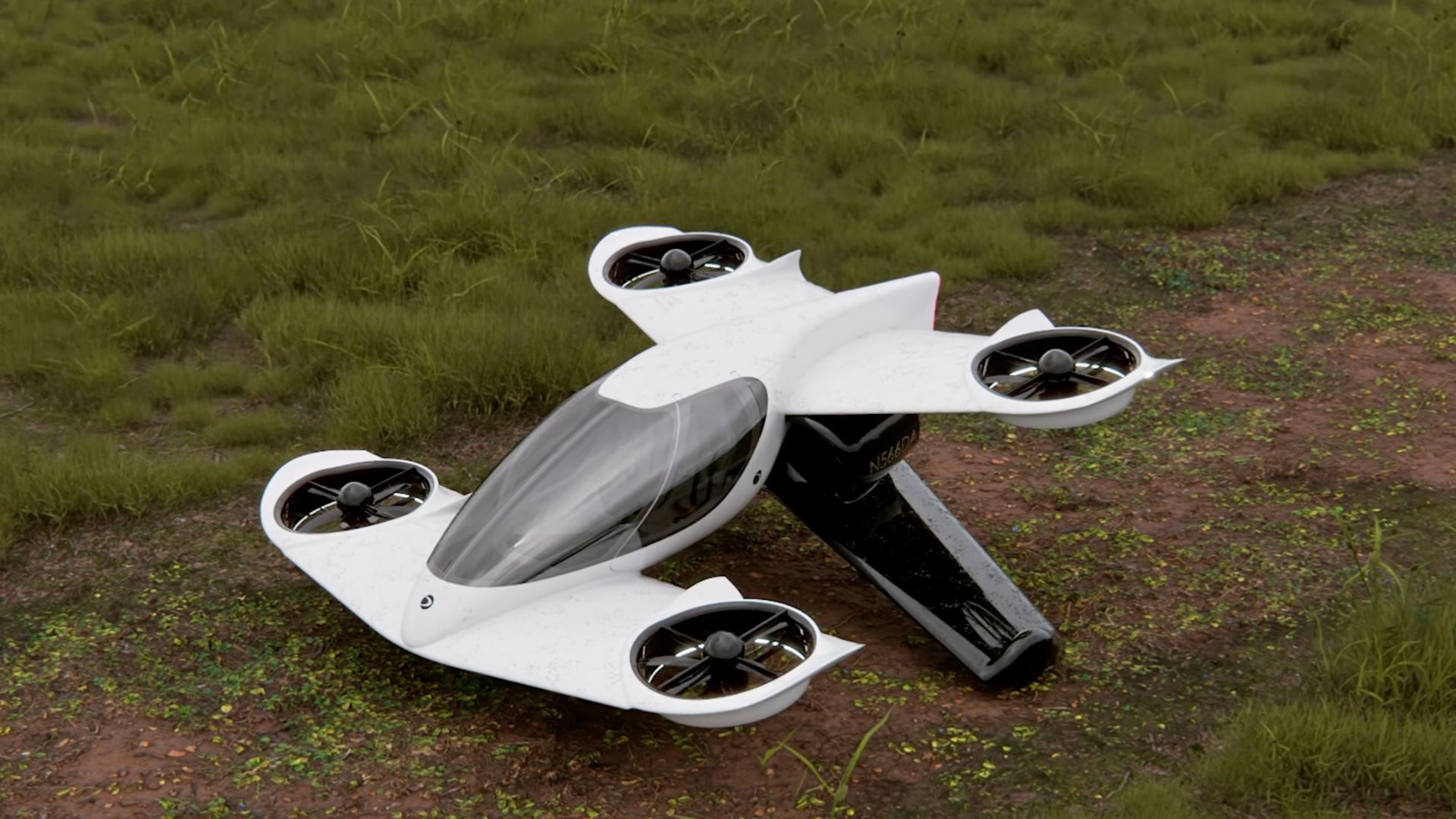
Charging an aircraft in your garage like a Tesla, then lifting off from your driveway — that’s the pitch from Florida-based Doroni Aerospace. The H1-X is a two-seat electric vertical takeoff aircraft with a 120 mph top speed, a target range of 100 miles per charge, and a price tag between $300,000 and $400,000. Unlike Archer or Joby, which are building air taxis for fleet operators, Doroni wants you to own one. The specs are legitimately interesting. The 2028 delivery target is legitimately ambitious. And FAA certification remains the wall everything runs into.
What Doroni Is Actually Building
A carbon fiber eVTOL engineered for driveways, not airport tarmacs.
Ducted fans make the H1-X more than a prettier drone. Eight enclosed vertical fans handle liftoff, while two rear fans push it forward during cruise. The tandem-wing carbon fiber airframe spans roughly 18 feet — about the footprint of a large SUV with wings. Enclosed blades run quieter and safer than open rotors, a deliberate design choice for suburban neighborhoods. That detail matters: this aircraft is engineered to leave your driveway, not a helipad.
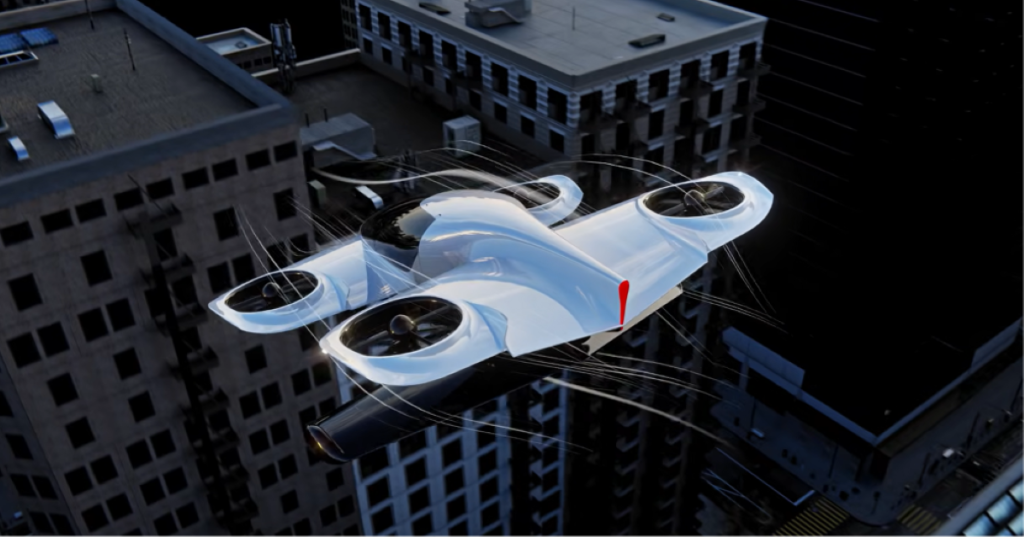
The core specs read like this:
- Top speed: 120 mph
- Cruise speed: 95 mph
- Target range: up to 100 miles per charge — though Doroni’s own earlier materials acknowledge current prototypes operate closer to 60 miles in practice
- Charge time: approximately 25 minutes via standard EV charging infrastructure
- Payload: 500 lbs for two occupants plus luggage
- Cockpit: single joystick with self-stabilizing flight software and button-initiated takeoff and landing
- Typical operating altitude: 500 to 1,500 feet above ground
Doroni’s SOUL AI™ digital co-pilot handles obstacle detection through radar, lidar, and vision sensors while continuously monitoring the flight envelope. The company says non-professional pilots could fly this with just 15 hours of ground training and 5 hours of flight time — considerably less than a traditional private pilot’s license requires. Whether regulators agree with that assessment is the question nobody can answer from a showroom floor. “Make personal flight accessible to everyone.” — Doroni Aerospace mission statement, per company materials
The 2028 Question
Holding an FAA Special Airworthiness Certificate for a prototype is a long way from a green light for mass production.
Doroni already holds an FAA Special Airworthiness Certification for its earlier H1 prototype. That permits flight testing — not sales. Full type certification for a production aircraft is a fundamentally different process, one that has humbled companies with far deeper pockets. Lilium, once among the most-funded eVTOL ventures in Europe, filed for insolvency in 2024 before completing certification. The H1-X roadmap calls for:
- Engineering completion in 2026
- Test flights and a certification push in 2027
- First deliveries in 2028
Hundreds of pre-orders reportedly in hand suggest real consumer appetite, not just press-release theater. Still, no independent performance benchmarks exist yet — every published number originates from Doroni itself.
At $300,000 to $400,000, the H1-X sits in roughly the same territory as a Robinson helicopter or a fully loaded Porsche 911 Turbo S. That is early-adopter pricing, not a mass-market play, and Doroni is not pretending otherwise. The real question is not whether wealthy tech enthusiasts will reserve one. It is whether Doroni can complete engineering, survive an FAA certification gauntlet, and hit production targets — all by a date that is currently doing enormous amounts of heavy lifting. Doroni “anticipates commencing initial deliveries of the H1-X in 2028.” — Doroni Aerospace April 2026 press release.
If you are watching this space seriously, the H1-X is the most consumer-focused personal eVTOL concept available right now — designed for garages, not heliports, and priced for early adopters willing to bet on a category that does not fully exist yet. Whether 2028 holds depends entirely on what happens between a showroom model and an FAA certificate. That is the only number worth tracking.