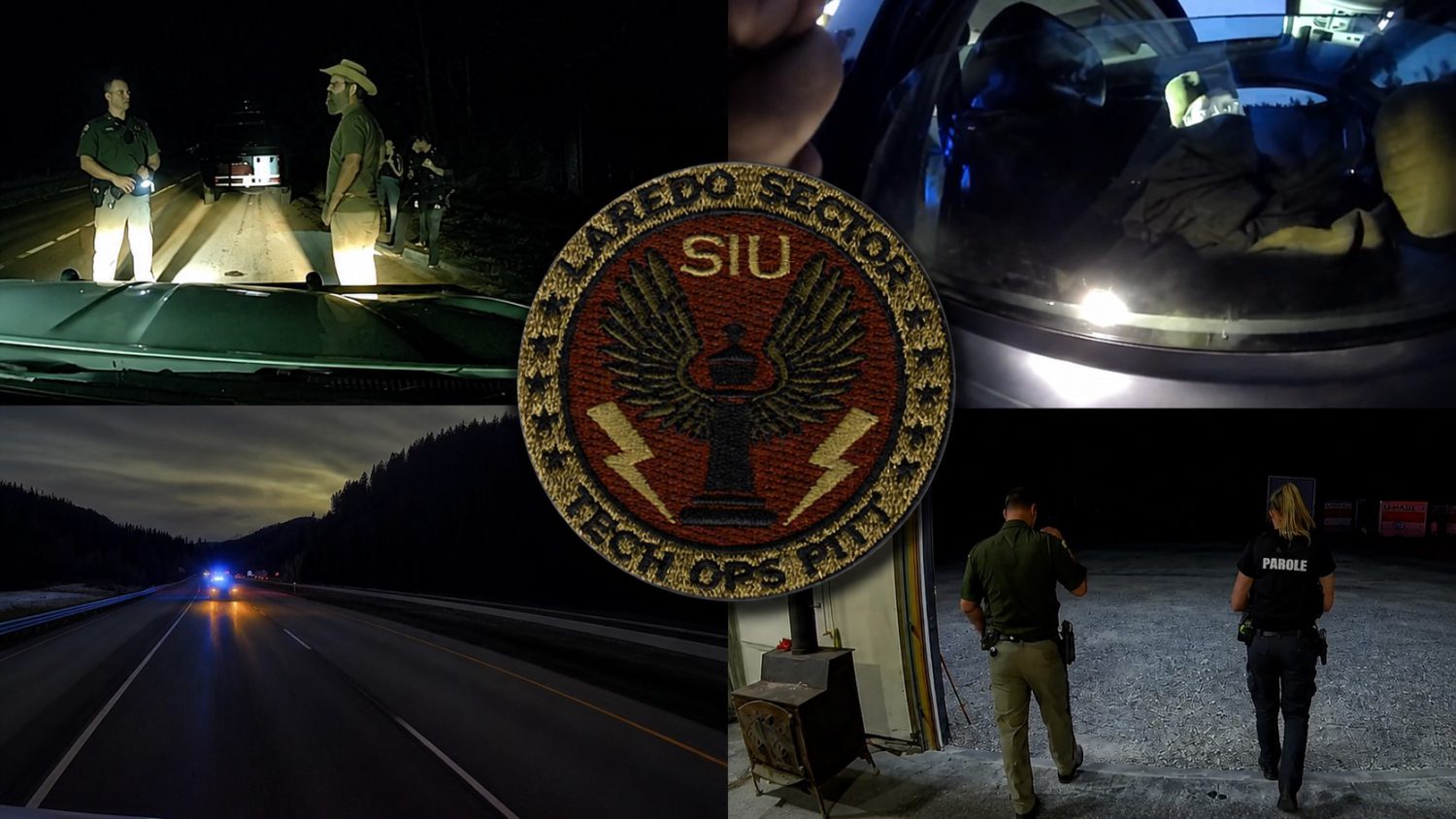
Kyle Olson was driving a black Chevy SUV across Montana on Interstate 90 — legal cannabis worker, licensed California farm, headed home to Wisconsin — when a Montana Highway Patrol sergeant hit his lights. The official reason: a slightly obstructed license plate. The real reason emerged later, buried in discovery documents. A Border Patrol agent named Matthew Phelps, operating inside something called the Predictive Intelligence Targeting Team (PITT), had already flagged Olson’s “financial activity patterns commonly associated with illicit narcotics activity” before the trooper ever touched his radio.
Spending Patterns as Probable Cause
Border Patrol’s PITT units mine financial data and license plate networks to flag drivers, then pass the intelligence to local officers who handle the actual stop.
PITT units sit inside Border Patrol’s Targeting & Intelligence Divisions, reviewing what Phelps’s own document called “law-enforcement-sensitive databases” to build targeting packages on people not suspected of any specific crime. When a target is flagged, that intelligence gets quietly passed to local law enforcement. Officers then conduct the actual stop under a minor traffic pretext — an obstructed plate, a drifting lane. This practice is known as parallel construction: the real basis for the stop never appears on the official record, and courts cannot scrutinize what they cannot see.
Here is what the underlying infrastructure actually looks like:
- PITT units are confirmed in at least the Spokane Sector (Washington) and Laredo Sector (Texas); CBP won’t say how many of Border Patrol’s 20 sectors operate them
- CMPRS (Conveyance Monitoring and Predictive Recognition System) collects license plate images and matches them against hot lists to identify travel patterns indicative of illegal border-related activities
- ALPR license plate reader networks are concealed inside ordinary roadside infrastructure; data flows in from the DEA, private vendors, and local agencies funded through Operation Stonegarden grants
- CBP’s FY 2024 budget requested over $2.7 billion to integrate AI into border surveillance systems
- “Whisper stops“: Border Patrol tips off local officers through informal channels, keeping federal involvement off the official paper trail
“The bottom line is genuine probable cause cannot be synthetically generated.” — Jake Laperruque, Center for Democracy & Technology
A Recipe for Tyranny – or National Security?
CBP insists these operations comply with the law; critics argue courts cannot meaningfully rule on programs they are never permitted to examine.
Alek Schott’s 2022 case makes the stakes concrete. A Bexar County, Texas deputy pulled him over on I-35, claimed lane drift, then tore his truck apart. Nothing found — no contraband, no charges. Discovery in the Institute for Justice (IJ) lawsuit that followed revealed Schott’s movements had been tracked in a WhatsApp group that included Border Patrol agents, one profile showing a patch reading “Laredo Sector Tech Ops PITT.” The IJ filed suit in June 2023, alleging the deputy fabricated the traffic offense entirely. That case is now a live Fourth Amendment test in federal court.
“The government’s increasing use of mass surveillance — whether that surveillance comes via ALPRs, financial records, or the like — coupled with predictive policing is a recipe for tyranny.” — Rob Frommer, Institute for Justice
CBP’s position deserves fair presentation. The agency told 404 Media its intelligence-informed analysis supports national security and is conducted under applicable law, policy, and privacy protections. CBP also declined to disclose which data sources feed PITT’s targeting criteria, citing operational security concerns. That is precisely what critics find troubling: secrecy that prevents judicial review does not function as a privacy protection — it makes meaningful accountability structurally impossible. The pattern of secretly tracking users through opaque government programs raises the same concerns that civil liberties advocates have flagged across multiple federal initiatives.
For drivers like Olson and Schott, the question is no longer hypothetical. Federal courts will soon decide whether algorithmically generated suspicion — built on travel routes, prior history, and spending patterns pulled from law-enforcement-sensitive databases — meets the constitutional bar for a traffic stop.