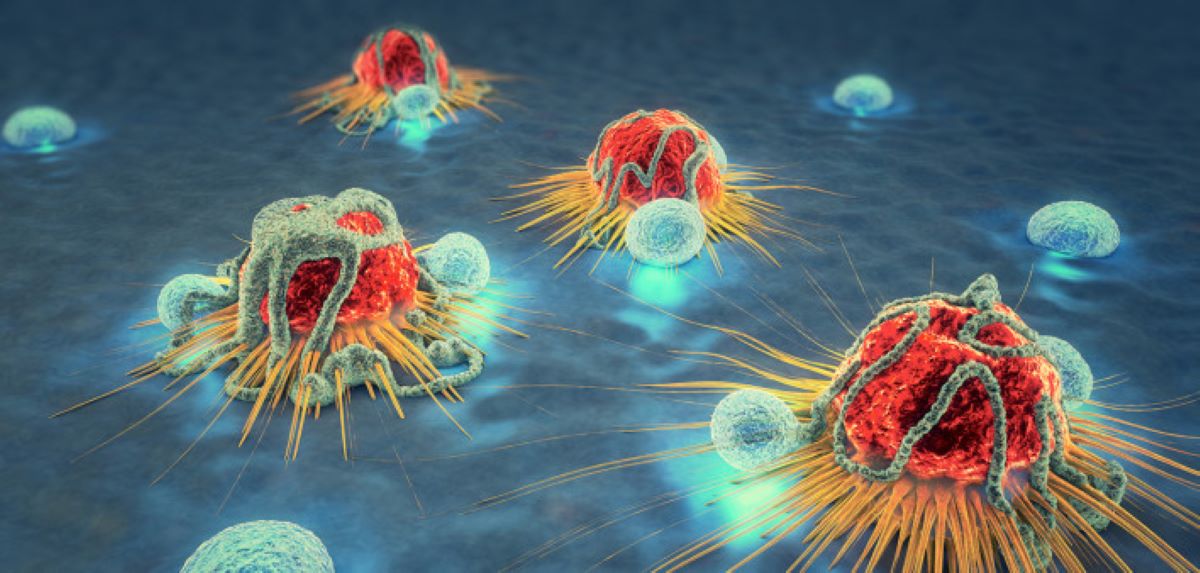
Prostate cancer has a reputation in oncology circles as a fortress. Checkpoint inhibitors — the immunotherapy drugs that transformed treatment for melanoma and lung cancer — mostly bounce off it. The tumor microenvironment stays “cold,” meaning immune cells show up but stand around doing nothing. Now a study published June 15 in Cancer Research, from researchers at Weill Cornell Medicine and Cornell Engineering, reports that sub-10-nanometer silica particles originally built for imaging can kill aggressive prostate tumors in mice while simultaneously waking up the immune system. This mirrors other recent breakthroughs, such as a man who used AI to develop a cancer vaccine that saved his dog’s life.
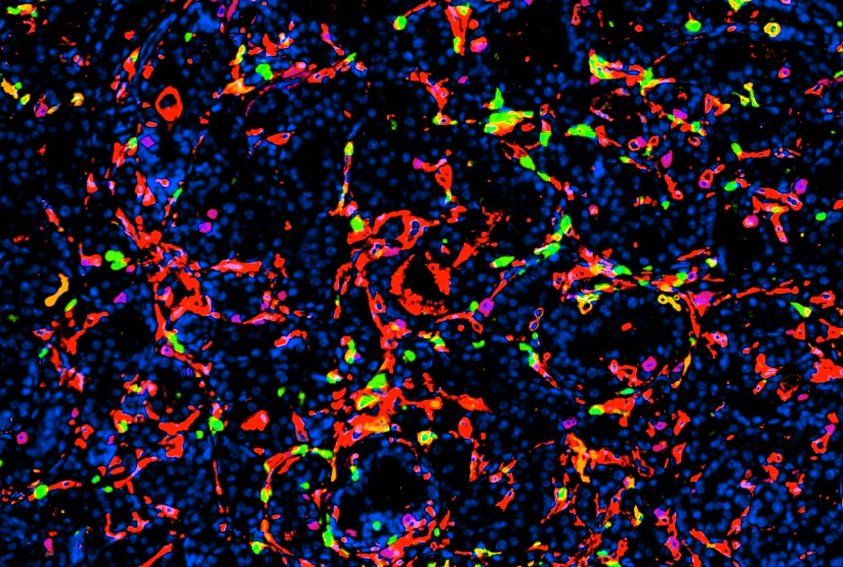
Image: Bradbury Lab.
How C’ Dots Destroy Tumors From the Inside
These particles don’t carry chemotherapy drugs — they weaponize the body’s own iron supply against cancer cells.
Cornell Prime dots (C’ dots) are made from amorphous silica — essentially, highly refined sand — and measure smaller than most viruses. Coated with ligands targeting prostate-specific membrane antigen (PSMA), they home to prostate tumors and clear through the kidneys. Once inside cancer cells, they adsorb iron from the bloodstream and trigger ferroptosis: a form of cell death where runaway lipid oxidation rusts cell membranes apart from within.
The mouse data is specific and worth noting:
- C’ dots combined with immune checkpoint blockade produced complete remissions in 4 of 10 mice with aggressive, immunotherapy-resistant prostate cancer
- Adding CSF-1R blockade, which targets tumor-supporting macrophages, pushed complete remissions to 5 of 10
- No overt toxicity outside tumors was detected
- PSMA targeting concentrated particles within prostate cancer tissue
- Separate melanoma studies showed approximately 90% tumor volume reduction when C’ dots were paired with anti-PD-1 therapy
Half the mice with a previously untreatable cancer walked away clean.
Dr. Michelle Bradbury described the approach as “a new clinical paradigm,” according to Cornell News. The particles simultaneously kill tumor cells and transform the surrounding immune landscape — flipping cold tumors hot by activating T cells, repolarizing macrophages, and shrinking suppressive immune populations. Think of it as turning on the lights in a room where the immune system had been stumbling around in the dark.
The Distance Between a Mouse Cage and Your Doctor’s Office
Existing human safety data helps, but prostate cancer therapy trials haven’t started yet.
“These particles may help unlock the full potential of immunotherapy in prostate cancer,” Dr. Jedd Wolchok told Genetic Engineering & Biotechnology News. That’s a measured statement from one of immunotherapy’s most respected figures — and the caution behind it is warranted. C’ dots have reached human trials through Elucida Oncology, but only for imaging and drug delivery in other cancers. Prostate cancer therapy requires new regulatory applications and phased clinical trials — much like how FDA approves novel medical devices only after rigorous review. Many nanoparticle platforms that produced striking mouse results have stalled before reaching patients — a pattern the field knows well, even as advances in preserving brain tissue hint at how rapidly biomedical science can surprise us.
For the roughly 300,000 American men diagnosed with prostate cancer each year, according to American Cancer Society estimates, this pipeline matters. The timeline remains years away. A nanoparticle that fights tumors, images tissue, and recruits the immune system in one package is worth tracking closely — just not worth celebrating prematurely.