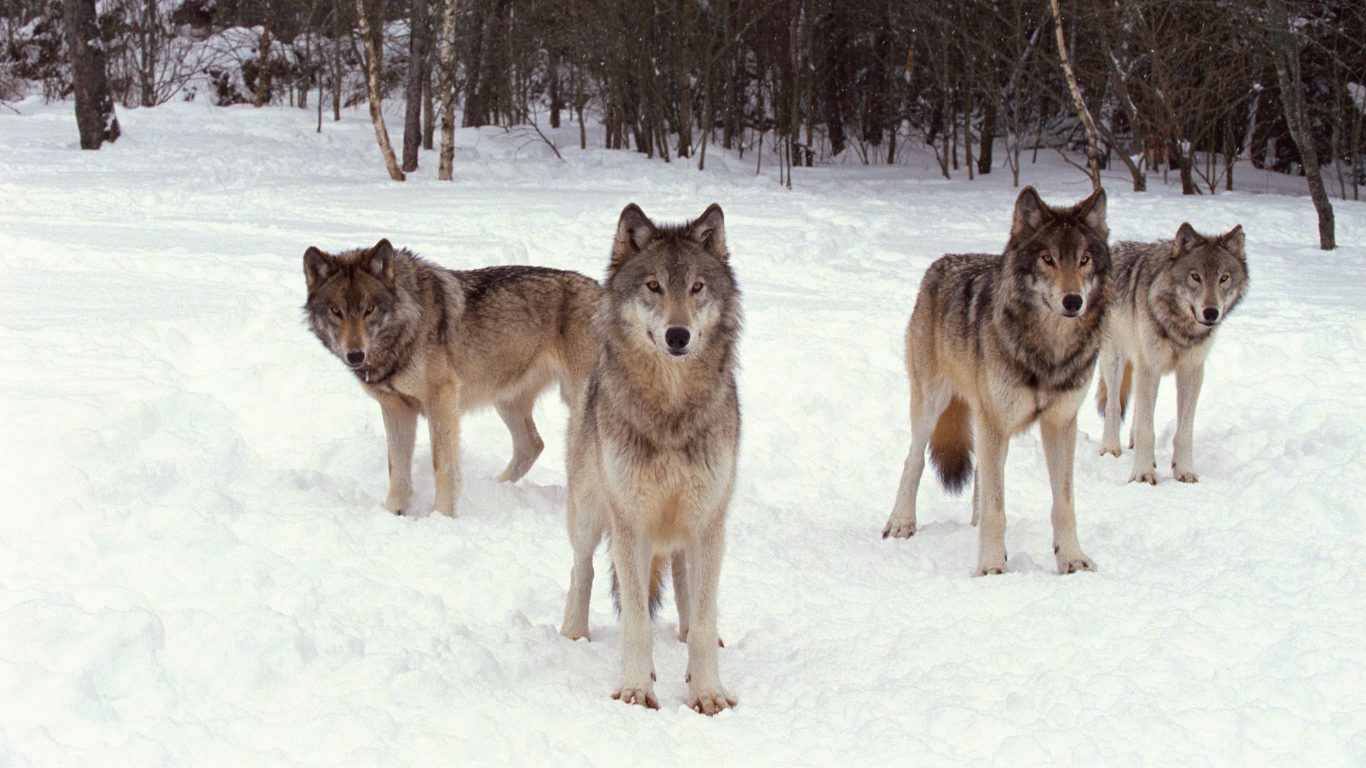
Every day, grey wolves inside the Chernobyl Exclusion Zone absorb approximately 11.28 millirem of radiation — roughly six times the legal safety limit for humans, according to Sky News and Newswise reporting on Princeton-led fieldwork. They should be struggling. Instead, wolf density inside the 1,000-square-mile zone runs about seven times higher than in protected Belarusian wildlife areas nearby, per the study published in Molecular Ecology by Cara Love and colleagues. Princeton researchers have identified genomic and immune signatures suggesting natural selection is actively reshaping cancer-related biology in these animals. That’s not “cancer-proof wolves.” But it’s not nothing, either.
What the Research Actually Found
A decade of GPS collars, blood draws, and genomic scans reveals immune shifts that mirror what oncologists observe in human radiation patients.
Since roughly 2014, researchers have fitted CEZ wolves with GPS collars paired with radiation dosimeters to map exposure patterns. Four findings from the Molecular Ecology paper stood out:
- Altered white blood cell composition and immune pathway changes resembling those seen in human cancer patients undergoing radiation therapy.
- Accelerated genetic divergence in regions tied specifically to DNA damage response and anti-tumor immunity.
- Higher expression of endogenous retroviruses — viral sequences embedded in the genome that can influence cancer-related immune responses.
No direct cancer-incidence data yet exists to prove wolves actually develop fewer tumors.
“The very first question in my mind was whether or not this radiation was enough of a stressor to actually be a selective pressure.” — Shane Campbell-Staton, Princeton University
Headlines say “cancer-resistant wolves.” The paper says “putative selection.” That gap matters. Think of it like the difference between a promising Phase 1 clinical signal and an FDA-approved treatment — the data points somewhere real, but the destination stays unconfirmed. Scientists propose three scenarios:
- the wolves tolerate tumors better
- develop fewer tumors outright
- or simply thrive because nobody’s hunting them anymore
Still, if you’ve ever wondered why immunotherapy works brilliantly for some cancer patients and fails others, this research suggests part of the answer might be running through irradiated Ukrainian forests. The fastest-evolving genomic regions in CEZ wolves cluster around “genes that we know have some role in cancer immune response or anti-tumor immune response in mammals,” Campbell-Staton told ANS News. The war in Ukraine has slowed fieldwork, delaying the long-term data needed to settle whether these wolves are truly resistant or simply resilient.
From Wasteland to Lab: The Unlikely Medical Frontier
Chernobyl’s transformation from HBO disaster backdrop to evolutionary laboratory ranks among science’s stranger recent plot twists.
Campbell-Staton’s team frames these wolves as potential models for designing immunotherapies that mimic naturally evolved anti-tumor defenses — precision medicine inspired by a nuclear exclusion zone. That’s a future research direction, not a treatment you can access today. If researchers regain full access to the CEZ and confirm the hypothesis, the worst nuclear disaster in history may turn out to be quietly teaching us how to fight cancer.