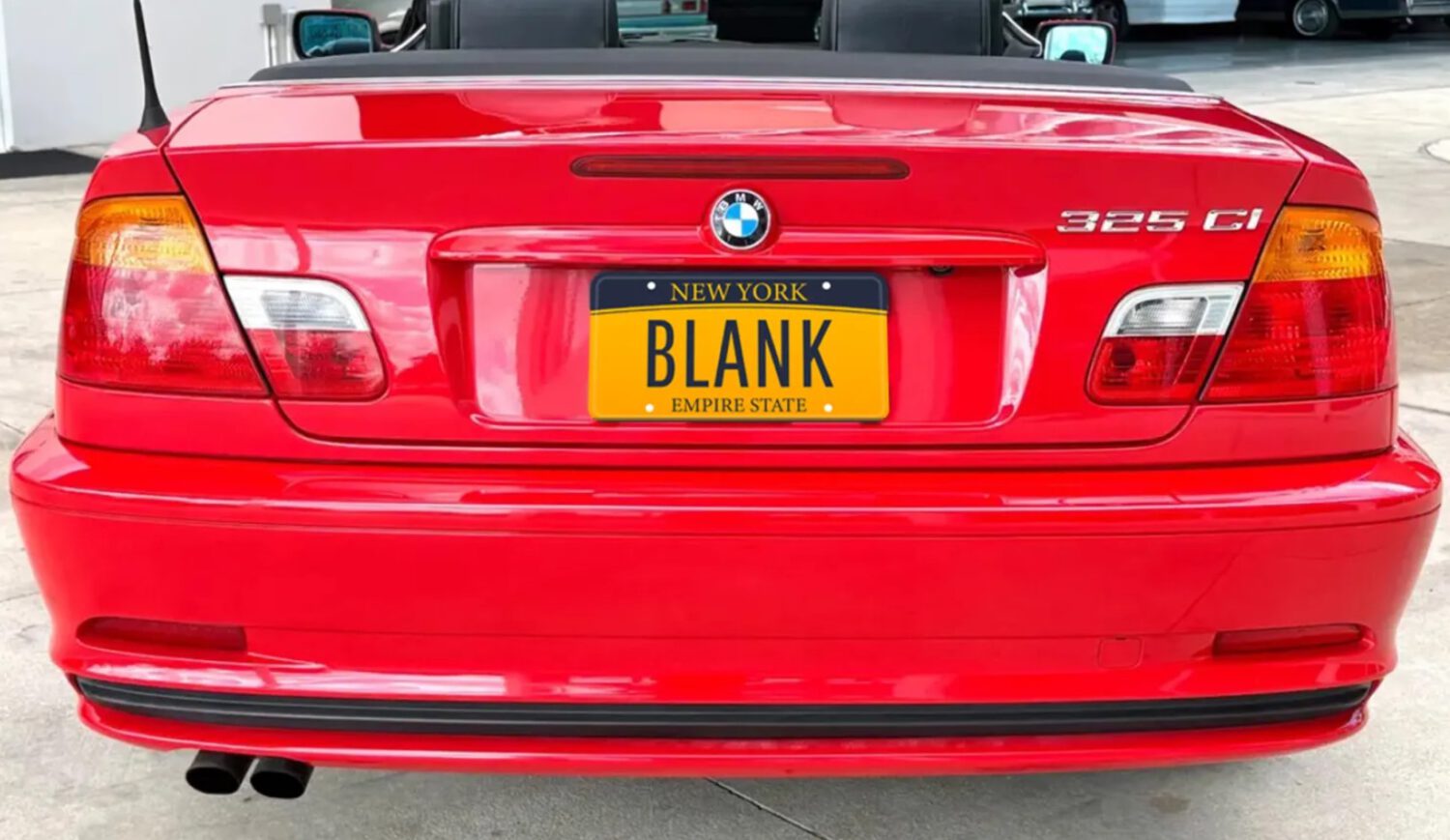
Carole Blank Brown, a 70-year-old New York attorney and real-estate title agent, called the city’s 311 service expecting to dispute a parking ticket. She discovered more than 400 of them, totaling over $40,000, according to the New York Times.
The problem surfaced after Brown updated her vehicle registration to reflect her Upper East Side address. Her vanity plate read “BLANK,” chosen as a nod to her maiden name.
The word that describes an empty field also happened to be her registered plate number. New York City’s parking-enforcement system apparently could not tell the difference.
Two Tickets, Then Hundreds More
A routine registration update exposed an apparent matching failure buried in enforcement records.
The first sign of trouble arrived as two citations: a $65 fine for a missing license plate and a $95 fine for obstructing a driveway. Both listed “BLANK” as the plate number on file.
Brown said neither citation involved her red BMW convertible. When she contacted 311 to sort it out, the full scope of the problem surfaced.
Violations with empty or missing plate fields had apparently been associated with the literal string “BLANK,” and her registration appeared to be the match. More than 400 unresolved violations had accumulated under her name.
The Bureaucratic Gauntlet
Clearing tickets issued to unknown vehicles required multiple judges across multiple days.
Brown had to contest the violations through the city’s Finance Department Adjudication Division. The New York Times reported that four judges reviewed matters over the course of two days, with additional batches of tickets requiring further visits.
The violation types spanned missing plates, double parking, no-standing zones, and blocking fire hydrants. Brown said none of the vehicles or incidents involved her.
Secondary reporting from MLive puts her cumulative exposure above $100,000, reflecting tickets that continued to accumulate as she worked through the original backlog. The New York Times account places the initial total at more than $40,000. The discrepancy likely reflects how long the problem persisted, though the precise relationship between the two figures was not established in the available reporting. Brown’s ordeal is a stark example of paying too much for bureaucratic errors beyond one’s control.
The City Retires the Plate
Brown surrendered “BLANK” to stop additional violations from attaching to her account; the DMV says it will not reissue the combination.
Brown surrendered the “BLANK” plate entirely. According to secondary reports citing DMV spokesman Walter McClure, the New York State Department of Motor Vehicles will not issue that plate combination to another registrant.
Her replacement plate reads “KNALB,” which is “BLANK” spelled backward. The city has not publicly explained the precise technical mechanism that caused empty plate fields to resolve to her registration. It also remains unclear whether similar placeholder collisions exist for other literal values in the enforcement database.
The burden of resolving the error fell largely on Brown, who said the hundreds of citations were not hers.