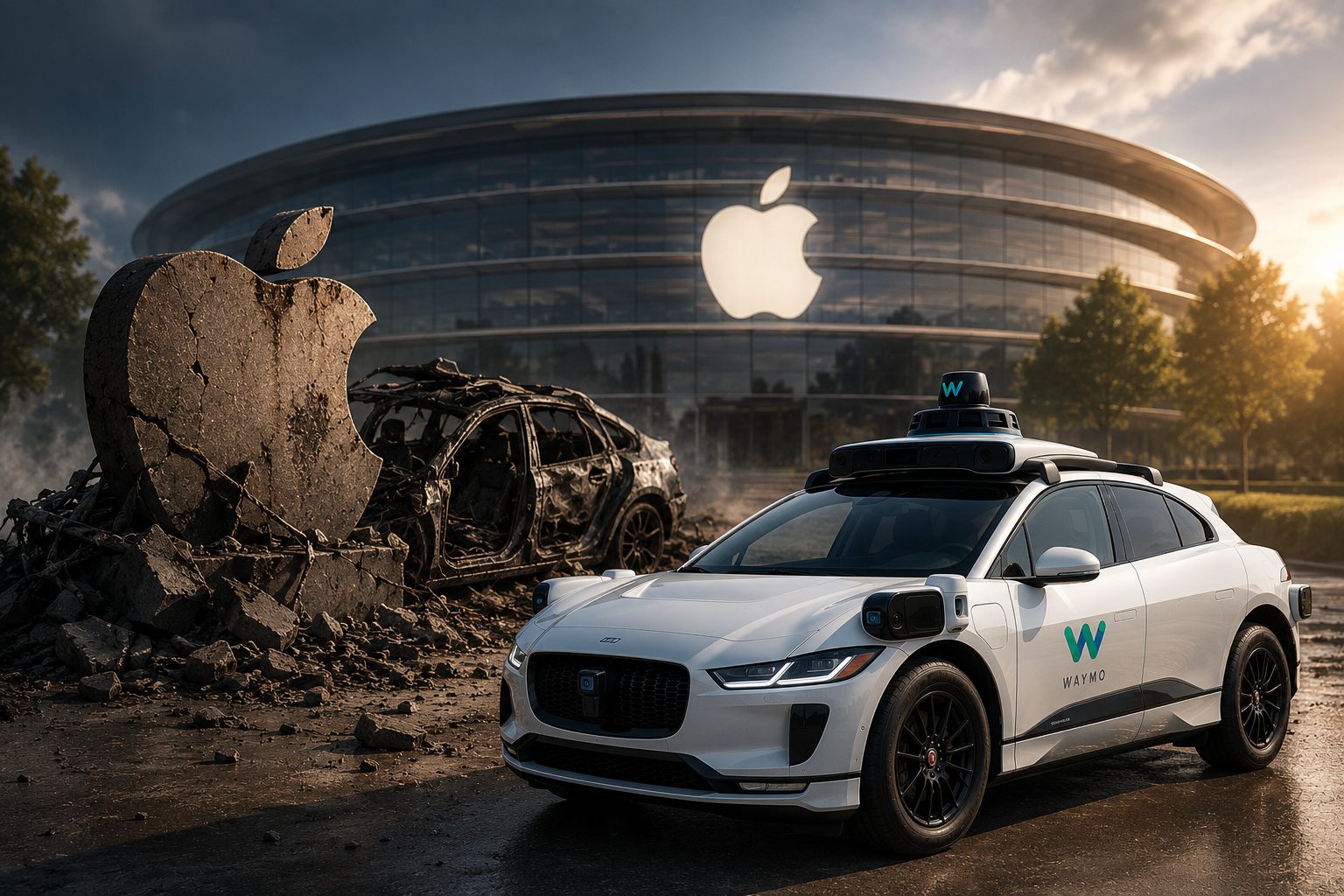
The world’s most secretive tech graveyard just got a new owner. Waymo paid $220 million for Apple’s sprawling 5,500-acre Arizona proving ground—the same facility where Cupertino burned through an estimated $10 billion chasing self-driving car dreams that never materialized. It’s like watching Netflix buy Blockbuster’s headquarters, except this time the streaming giant actually won.
Apple’s Project Titan officially died in February 2024 after a decade of false starts and strategic pivots. The company quietly shuffled roughly 2,000 employees from car development into AI initiatives, trading steering wheels for algorithms.
What started as plans for a fully autonomous pod eventually devolved into something resembling a premium Tesla competitor before executives pulled the plug entirely. The Arizona site, purchased through shell company Route 14 Investment Partners for $125 million in 2021, represented one of tech’s most expensive abandoned bets.
Now Waymo inherits Apple’s automotive ambitions in concrete form. The Wittmann facility includes:
- A 115-acre city course designed for complex urban scenarios
- A four-mile oval track for high-speed testing
- Dedicated freeway loops perfect for validating the company’s sixth-generation Waymo Driver system
This becomes Waymo’s third major proving ground, joining sites in California and Ohio as the company expands robotaxi service across 11 cities covering more than 1,400 square miles.
The transaction perfectly captures Silicon Valley‘s current moment. Apple, traditionally a hardware-first company, retreats from manufacturing entire vehicles to focus on software experiences like CarPlay and AI assistants.
Meanwhile, Waymo doubles down on physical infrastructure, preparing to scale production of its Ojai robotaxis to tens of thousands annually. Where Apple saw an impossible timeline and unclear profit margins, Waymo sees the final piece of testing infrastructure needed for nationwide expansion.
Your autonomous vehicle future increasingly looks like Waymo’s vision rather than Apple’s. Instead of owning a self-driving iPhone on wheels, you’ll likely summon robotaxis that learned their skills on tracks Apple built but never used. Sometimes the most revealing tech stories aren’t about revolutionary launches—they’re about knowing when to walk away.