Most people attempting to learn AI get stuck between simply acknowledging its impact and dabbling with tools. Real AI mastery needs more than just prompt engineering; it requires a clear roadmap. The ADAPT framework offers a structured path from feeling lost in the digital wilderness to orchestrating AI like a seasoned chef commands their kitchen. This guide unveils essential concepts and practical workflows that drive success in the AI economy.
16. ADAPT framework

A five-stage progression from AI resistance to AI orchestration
The ADAPT framework (Acknowledge, Dabble, Amplify, Problem Solve, Tie Together) offers a direct roadmap through today’s tech landscape. It guides professionals from acknowledging AI’s impact to becoming an ‘AI orchestrator.’
This framework provides a diagnostic tool: identify your current stage, then focus on what to learn next. Most professionals stall between Dabble and Amplify, endlessly sampling tools without committing to depth. The framework addresses this pattern by making progression explicit rather than accidental.
15. Acknowledge
Accepting that AI is already reshaping job roles
The “Acknowledge” stage is where denial stops. This isn’t about learning a new tool; it’s an identity shift. Research shows that many job roles are already being augmented or replaced by AI capabilities across text, data, and video domains.
Consider a manager who previously dismissed AI capabilities, then realizes their denial is holding the team back. This crucial acceptance means understanding that roles are evolving, demanding new ways of working. It paves the way for deeper engagement with AI’s genuine potential.
14. Dabble
Building a mental map before specializing
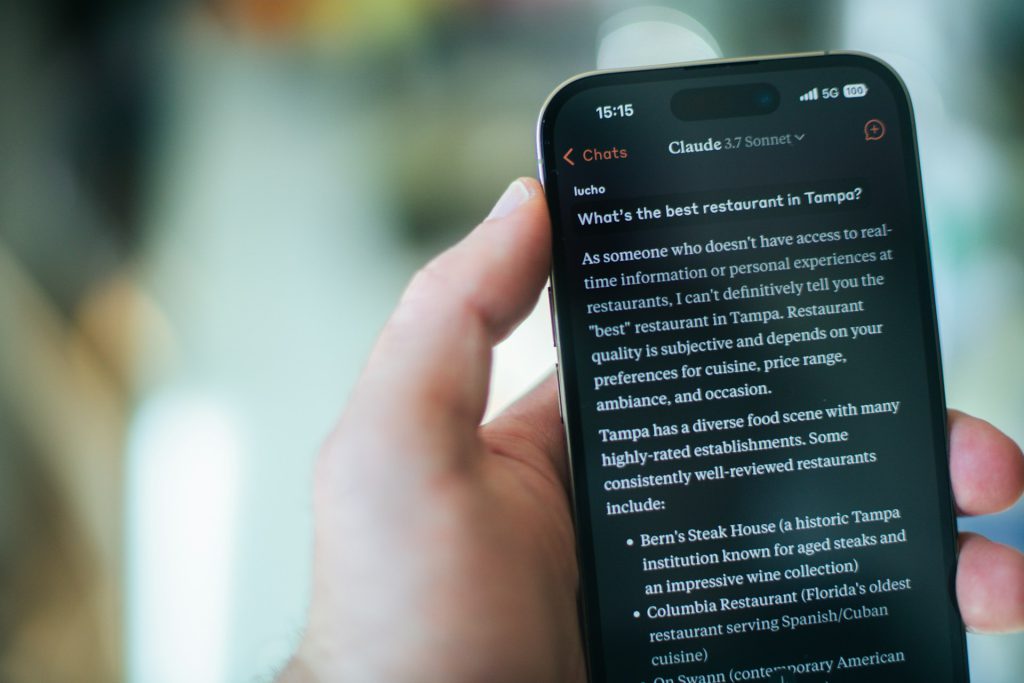
The Dabble stage builds a mental map of AI’s capabilities, not mastery. Exploration means sampling tools across multiple use cases—generative text, video, data analysis, and voice. The recommended approach involves trying around 20-30 tools to understand what AI can do before committing.
This often looks like trying an app once, then moving on. ChatGPT for writing, HeyGen for a quick avatar video, Suno for music generation. This creates a “vibe” for what AI can do, offering broad possibilities without deep specialization. Embrace this chaotic journey; it’s essential before picking a lane.
13. Amplify
Deep mastery of three to five core tools
The real work begins after exploring 20-30 tools during the Dabble phase. Amplify marks the pivot from broad exposure to deep specialization, where commitment to just 3 to 5 tools becomes the strategy. This means dissecting every setting, understanding every use case, and recognizing every failure mode for actual paid work.
A content creator might move from endlessly trying various generators to surgically mastering ElevenLabs for voice, ChatGPT for visuals, and HeyGen for avatars. Integration matters more than novelty. This stage transforms tourists into residents who know their tools cold.
12. Problem Solve
Stitching tools into revenue-generating workflows
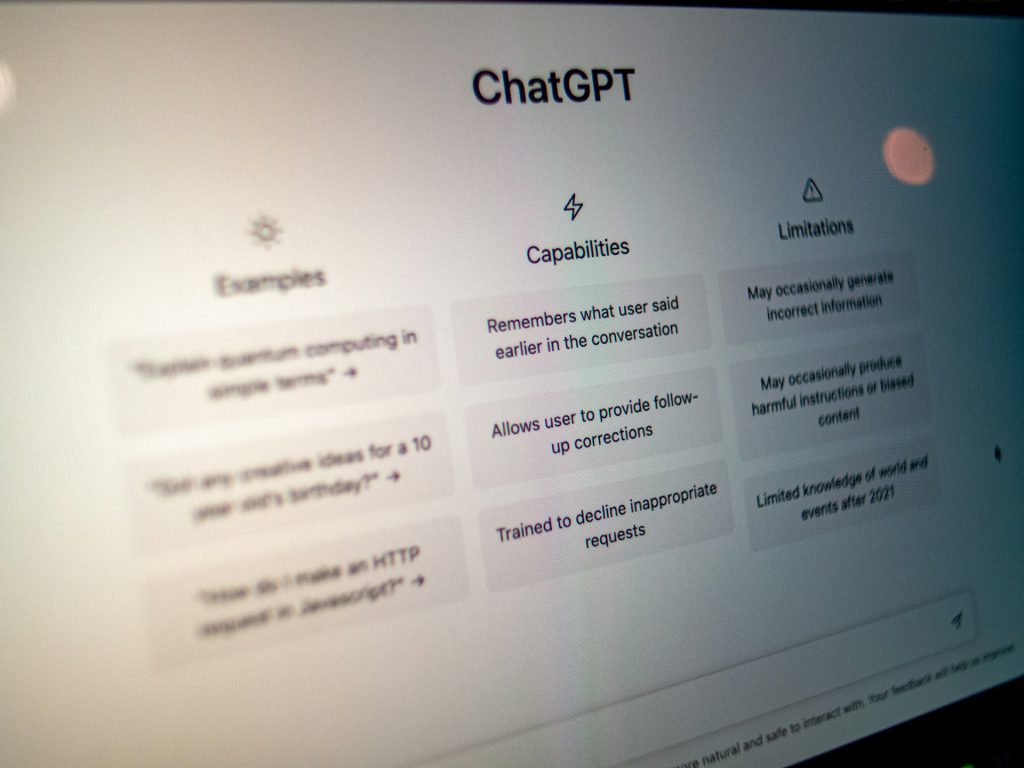
The ‘Problem Solve’ stage transforms AI tools into direct revenue streams. Ad creative generation offers a clear example: 1 person can now produce 100 ad creatives overnight through automated workflows, a task that once consumed weeks and significant budget from agencies.
Consider a busy medical practice handling 1,000 calls daily across multiple clinics. An AI voice agent can now resolve a substantial portion of those inquiries quickly, reducing staffing costs by several positions monthly. This creates opportunity for those connecting tools to real business problems, commanding premium compensation in the market.
11. Tie Together

Orchestrating multiple AI tools into automated systems
This final ADAPT phase transforms operators into orchestrators, seamlessly integrating multiple tools. These automated systems run like a perfectly trained concierge, prepping workdays overnight without intervention.
Autonomous task handling includes:
- Inbox triage
- Email summarization
- Draft replies
- Calendar conflict resolution
Monday mornings unfold with the smooth predictability of a well-rehearsed performance. This orchestration dissolves administrative burdens, freeing attention for high-value work that actually requires human judgment.
10. System prompts
The architectural blueprints defining AI behavior
System prompts function as the onboarding document for a digital employee, setting its role, language parameters, behavioral boundaries, and escalation protocols. Without explicit guidance, AI tools improvise, yielding off-topic or unhelpful responses.
When an AI assistant receives a system prompt to act as a “calm customer support agent who speaks English and Hindi,” it knows its job. This clear directive ensures it handles difficult calls effectively, maintaining consistent tone and switching languages seamlessly. Tools like Sarvam AI provide natural voices for Indian-language interactions, making the experience feel genuinely human.
9. RAG

Grounding AI responses in verifiable facts
Retrieval-Augmented Generation (RAG) directly confronts AI hallucination by grounding responses in verifiable facts. This mechanism provides AI access to external documents or specific knowledge bases, ensuring it draws from actual data rather than invented details.
With RAG, a corporate AI precisely answers questions about internal policy documents, instantly confirming Q3 bonus structures or updated travel expense limits. It pulls directly from official HR PDFs, eliminating guesswork. RAG transforms AI from a confident bluffer into a sharp-witted librarian, delivering fresh, accurate, and contextually relevant outputs.
8. MCP

Connecting AI to external tools and actions
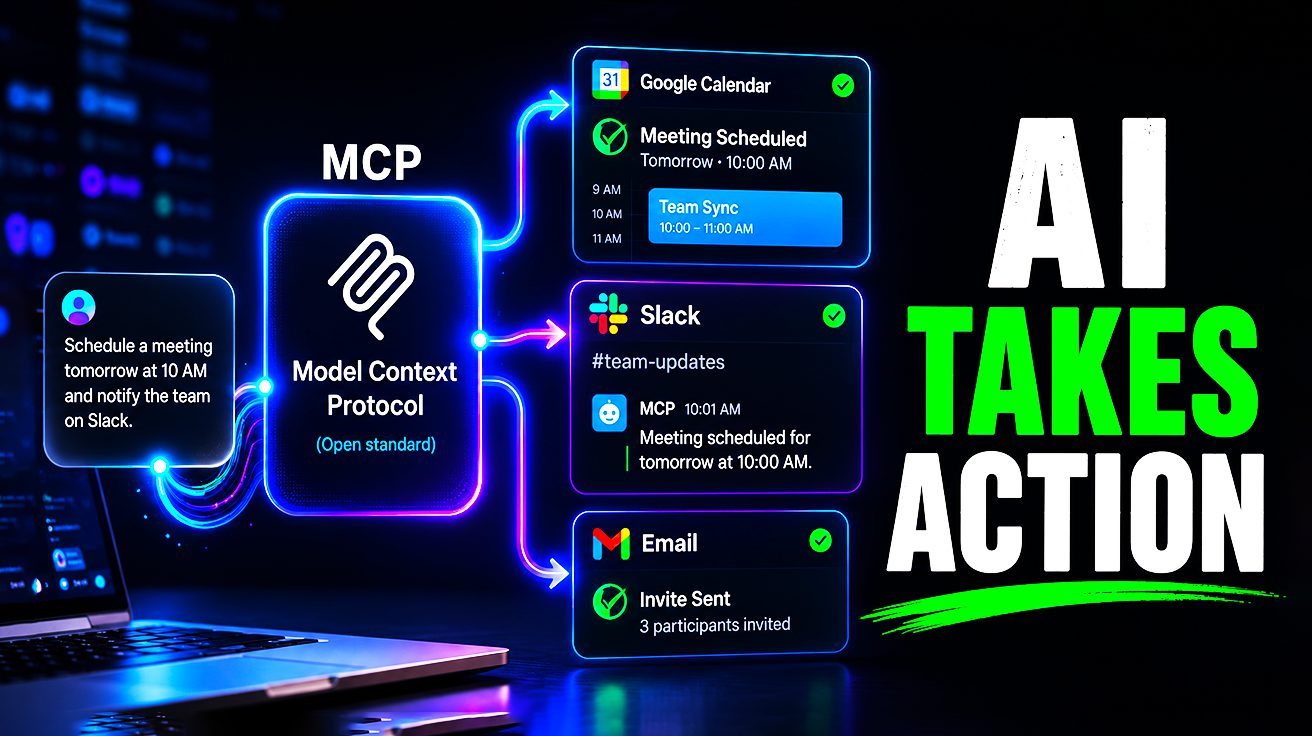
The Model Context Protocol (MCP) acts as a standardized connection layer, allowing AI systems to connect to external tools, data sources, and actions. This means AI isn’t just talking; it actively performs tasks by integrating with systems like calendars or Slack.
Consider requesting an AI assistant to schedule a meeting. With MCP, the AI processes the request, directly books the time in the calendar, and sends a notification on Slack. This transforms AI from a conversational interface into an active, functional agent that drives real-world actions.
7. Fine-tuning

Adapting general models for specific purposes
Fine-tuning means taking a broad, foundational model and adapting its core capabilities with domain-specific training data. This process transforms it from a broad tool into a focused specialist, significantly sharpening the AI’s understanding for particular tasks.
A marketing team can fine-tune a large language model with exact brand guidelines and years of customer communication history. This ensures AI-generated content perfectly echoes their unique voice, avoiding generic corporate speak. Custom training with proprietary brand data makes AI profoundly more effective for niche applications.
6. ChatGPT

Versatile platform for thinking, writing, and visual creation
ChatGPT has become a fundamental component of digital workflows, offering general assistance for brainstorming and research. Its visual capabilities with image generation have made it a go-to tool for content creators who need to draft article outlines rapidly and generate diverse image concepts.
Content professionals leverage this tool to brainstorm social media captions and experiment with visual directions, significantly cutting production time. This utility makes ChatGPT foundational for the exploratory ‘Dabble’ and skill-deepening ‘Amplify’ stages of AI mastery.
5. Claude

Essential partner for complex thinking and sophisticated content
5 years ago, the idea of an AI drafting a nuanced proposal was pure science fiction. Claude emerges as a primary tool for those in the “Amplify” stage of AI integration, where the goal is deep understanding and consistent application. It serves as an essential partner for complex thinking, drafting, reasoning, and producing sophisticated content.
A copywriter tasked with refining an intricate marketing proposal can input complex ideas and receive refined arguments and fresh angles in return. Claude’s ability to grasp subtle context means it transforms disjointed bullet points into compelling narratives, enabling precision that turns good drafts into great ones.
4. Gemini

Rapid synthesis for deep research needs
When facing tight deadlines and complex information needs, Gemini’s Deep Research feature delivers comprehensive briefings quickly. The AI assistant acts as a digital research specialist, rapidly synthesizing vast information streams.
Gemini excels in rapid, in-depth information synthesis when clarity is paramount. A market analyst needing a comprehensive briefing on a complex industry trend can initiate an immediate, comprehensive data dive with a simple prompt, transforming monumental aggregation tasks into swift, focused information sprints.
3. Perplexity
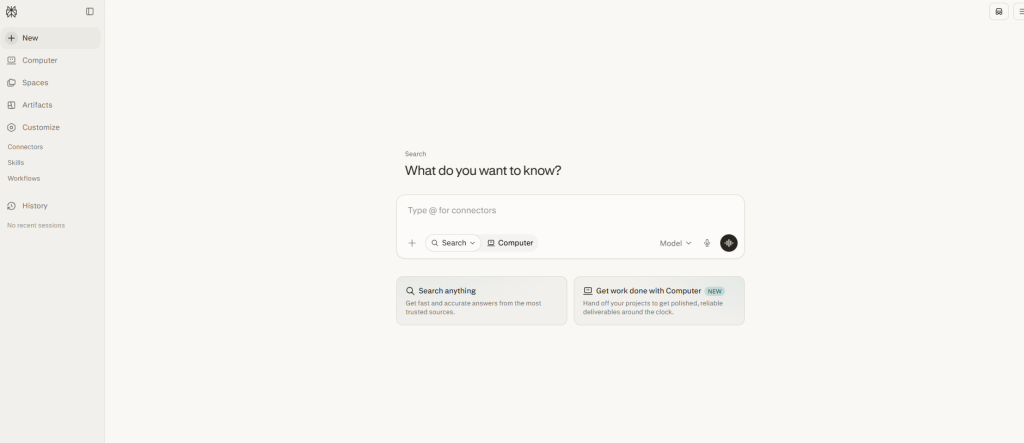
Focused answer engine with source citations
Verifying information for crucial reports often means navigating an internet full of questionable sources. Perplexity operates as a focused AI answer engine, swiftly delivering direct answers grounded in real-time web data with clickable source links.
A student confirming a specific detail for a history paper can input their query and receive a concise response pulled directly from credible academic and news sites. This efficiency makes it indispensable for quickly retrieving verifiable information, a clear advantage over general writing AI tools.
2. Julius AI
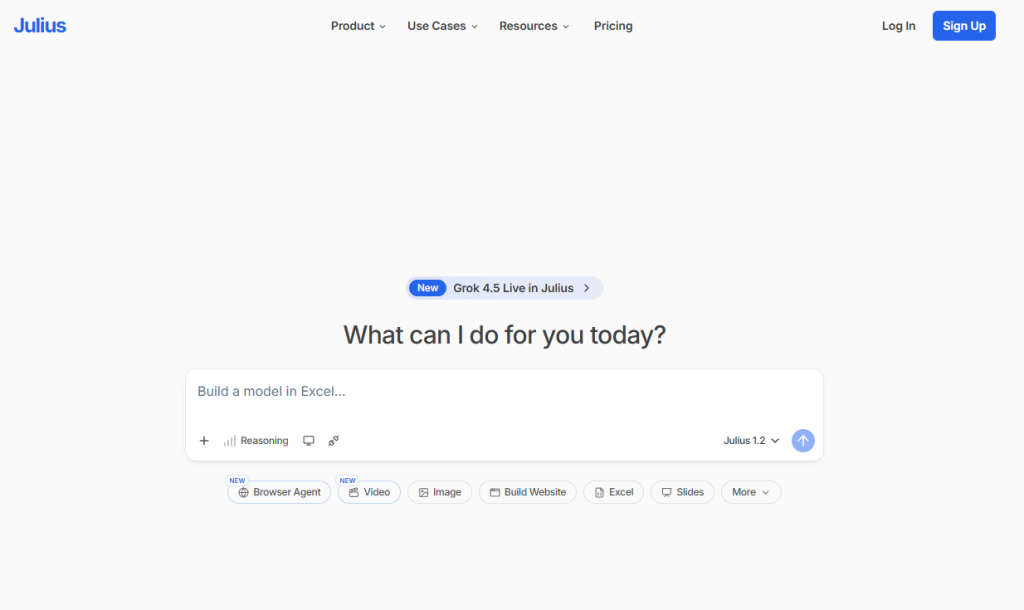
Natural-language data analysis and visualization
Julius AI transforms spreadsheet work by letting users upload data files and interact using natural language. It constructs visualizations and identifies patterns, often building charts in seconds rather than hours, saving crucial time.
Business owners can suddenly visualize sales trends and spot product lines that quietly dominated a quarter. This democratizes data analysis, making complex insights as accessible as ordering takeout and freeing users from manual spreadsheet grinding.
1. Sarvam AI
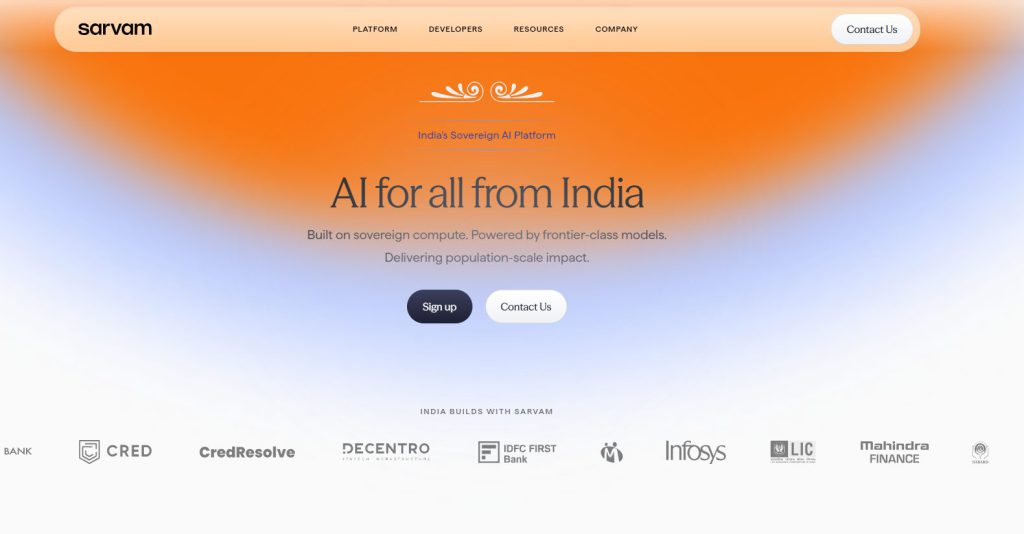
Natural-sounding voices for Indian languages
Reports indicate automated phone calls often lead to hang-ups if voices sound artificial. Sarvam AI transforms stilted machine voices into genuinely human tones, prioritizing native communication for Indian languages like Hindi, Tamil, and Telugu.
A healthcare provider deploying an AI receptionist powered by Sarvam AI can greet patients in their native tongue, eliminating awkward pauses and misunderstandings. Sarvam AI bridges crucial linguistic gaps in voice-agent applications, ensuring clarity and building user trust through natural-sounding multilingual interactions.