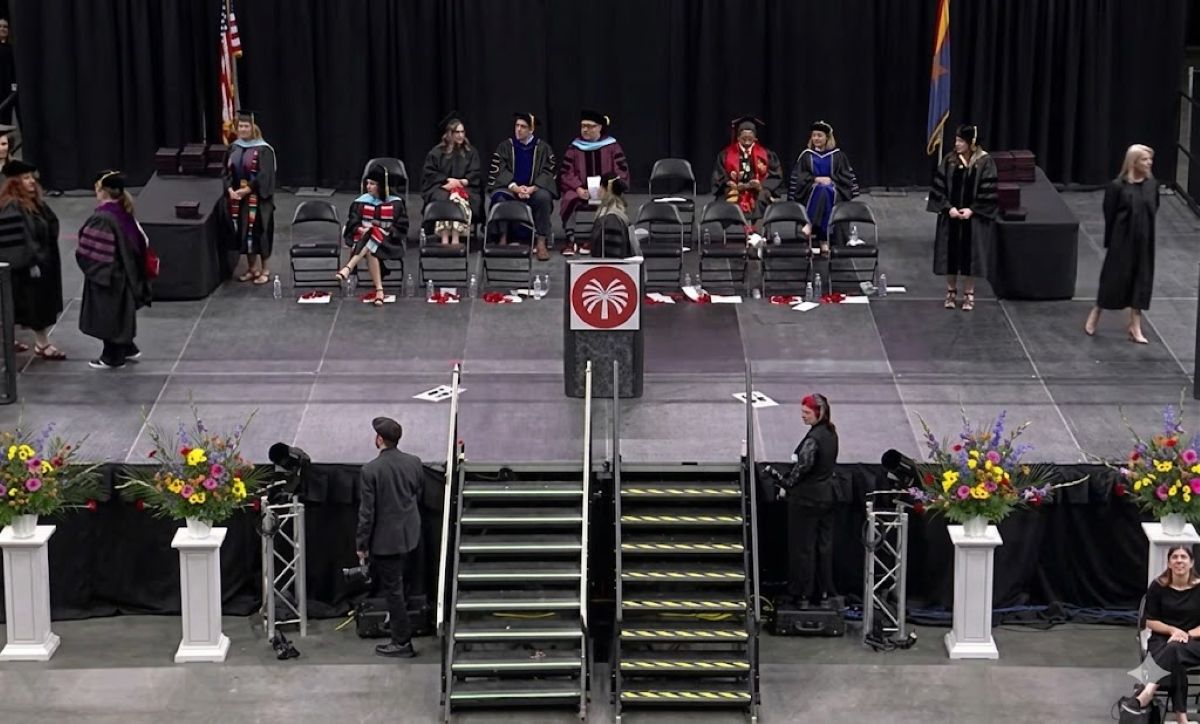
Silent graduates walked across the stage while families booed from the stands. Glendale Community College’s AI name-reading system had crashed mid-ceremony, leaving students in an awkward shuffle toward their diplomas without the basic dignity of hearing their names called. The incident captures a growing tension in American education: can technology improve our most human moments without destroying them?
The QR Code Ceremony
Students scan codes to trigger pre-recorded pronunciations, but the process reveals deeper questions about authenticity.
Here’s the workflow disrupting graduation traditions nationwide:
- Students preview AI-generated pronunciations of their names up to three times before the big day
- If the system mangles “Xochitl” or stumbles over “Siobhan,” voice actors step in to create the final audio clip
- On graduation day, each student scans a personalized QR code as they approach the stage, triggering their pre-approved name pronunciation through the sound system
Companies like Tassel have doubled their high school users since 2023, building on datasets from years of human voice recordings.
Alexandria City Public Schools serves 16,300 students from 118 countries who speak 127 languages—exactly the demographic where mispronunciation stings most. Administrator Michael Burch reports “rave reviews” and claims “not a name was misspoken” using the $4,000 system, a bargain compared to extending expensive arena rentals.
The Human Resistance
Critics see efficiency masquerading as inclusion, with automation replacing a fundamentally human moment of recognition.
Washington-Liberty High School learned this lesson the hard way. After announcing AI plans for their 700-graduate ceremony, parent June Prakash confronted the school board, arguing that graduation represents “one of the most meaningful moments” in a student’s journey. Turning it into an “AI moment,” she said, makes the experience “standardized, impersonal rather than authentic and human.”
Student backlash runs deeper. When one university with 19,000 students announced AI name-reading, a Change.org petition collected 1,800 signatures while a Reddit thread exploded with 10,000 upvotes and brutal comments calling the decision “lazy” and “demeaning.” Washington-Liberty ultimately reversed course, choosing human readers despite efficiency concerns.
The protests reveal something Netflix-algorithm familiar: people can accept AI recommendations for what to watch, but having a synthetic voice speak your name at life’s pinnacle feels like algorithmic overreach. Your name carries your identity, your family’s hopes, your cultural heritage. When institutions outsource that recognition to QR codes and voice synthesis—even perfectly pronounced voice synthesis—they risk reducing milestone moments to logistical problems requiring technological solutions rather than human presence and attention.