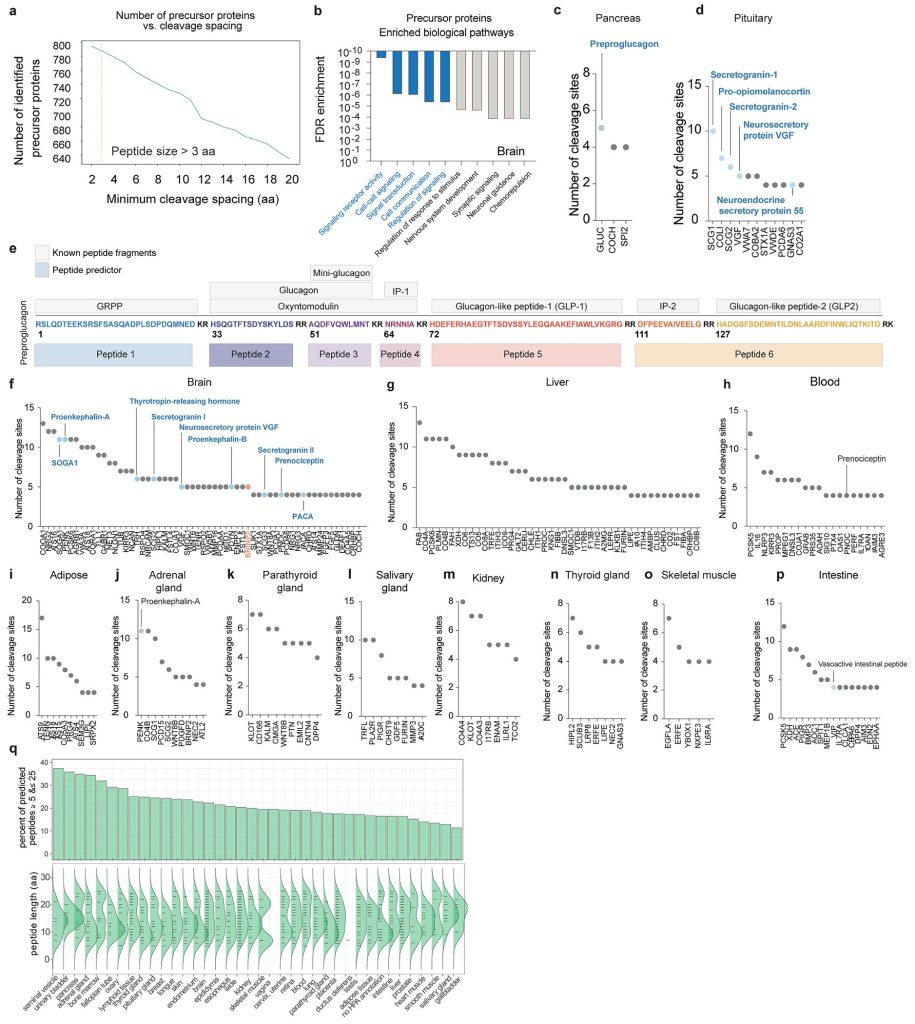
Stanford Medicine researchers trained an algorithm called Peptide Predictor to do something deceptively simple: predict where enzymes would slice prohormone proteins into potential signaling peptides. From roughly 20,000 protein-coding genes, the AI identified 373 prohormones, predicted 2,683 possible peptides, and flagged 100 for lab testing. The winner — BRP, or BRINP2-related peptide — is a 12-amino-acid molecule your body already makes. In neuron-like cells, BRP triggered a ten-fold increase in activity, dwarfing GLP-1’s three-fold bump, according to the Nature study. This isn’t ChatGPT inventing drug names. It’s a targeted computational search for hormones hiding in plain sight inside your own genome.
BRP vs. Ozempic: What the Animal Data Actually Shows
- Mechanism: BRP targets the hypothalamus — the brain’s appetite thermostat — rather than activating GLP-1 receptors across gut, pancreas, and brain like semaglutide does.
- Appetite suppression: A single injection cut food intake by up to 50% within one hour in both lean mice and minipigs.
- Fat-specific weight loss: Obese mice lost approximately 3 grams of body fat over 14 days, while controls gained about the same.
- Side effects: No detectable nausea-like behavior, constipation, or significant muscle loss in animal models.
- Metabolic improvement: Glucose and insulin tolerance improved without any GLP-1 signaling involved.
“Nothing we’ve tested before has compared to semaglutide’s ability to decrease appetite and body weight. We are very eager to learn if BRP is safe and effective in humans,” said Katrin Svensson, the Stanford researcher leading the work, according to Science Daily.
Svensson has noted that GLP-1 receptors distributed across the brain, gut, and pancreas explain both semaglutide’s metabolic power and its notorious GI side effects. BRP, by contrast, reportedly acts more narrowly on the hypothalamus — which may be exactly why it skips the nausea.
The Catch – and Why It Still Matters
Every result so far comes from mice and minipigs, not people — and BRP’s receptor remains unidentified.
One major gap remains: no human data. BRP’s exact receptor hasn’t been found yet. Small peptides degrade quickly in the body, so the team is working on stability modifications to avoid a future requiring very frequent injections. Svensson has reportedly co-founded a startup called Merrifield Therapeutics to push toward human trials, though no timeline has been confirmed publicly. The regulatory path — phase 1 safety, dose-finding, larger randomized trials — will take years.
“Natural Ozempic” has been slapped on everything from berberine to ginger tea by wellness influencers with more followers than evidence. BRP is categorically different: an endogenous peptide hormone published in Nature and backed by NIH funding, not a supplement marketed through Instagram Reels. But the human proof isn’t here yet, and that distinction matters.
For anyone who stopped a GLP-1 prescription because the nausea felt worse than the weight, this research quietly reframes obesity as a brain-signaling problem — one with more than one solution still waiting to be decoded.