



Ninety-two percent of electric-vehicle owners surveyed worldwide said their next car will be another zero-emission EV, according to a 2024 study from the Global EV Drivers Alliance (GEVA). That figure points to unusually strong retention, but it comes with a methodological caveat worth understanding before treating it as a verdict on the broader car market.
GEVA, a nonprofit network of EV-driver associations, collected more than 23,000 responses across 18 countries between August and November 2024. Respondents were recruited primarily through GEVA’s member organizations and weighted by each country’s share of the global EV fleet, meaning the sample skews toward people already engaged enough in EV ownership to join an advocacy network.
The “1 in 10” Number Needs Unpacking
The oft-cited “1 in 10” framing combines two distinct groups that point to very different outcomes.
Only 1% of respondents said they would choose a gasoline or diesel vehicle as their next car. A separate 4% said they would opt for a plug-in hybrid, which pairs an electric motor with a combustion engine but is not a full return to fossil-fuel dependence.
Those are meaningfully different outcomes. The 92%, 4%, and 1% figures do not account for the full 100% of responses without reference to GEVA’s underlying dataset, which also includes categories such as “Don’t know” and “Other.”
Lower Bills Beat Green Credentials as the Top Motivator
When EV owners explained their original purchase decision, practical economics outranked environmental concern.
Lower operating costs ranked above reduced emissions as the primary reason respondents chose an EV. That ranking carries an implication for automakers and policymakers: cost savings appear to do substantial work in the purchase decision alongside climate considerations.
Where the EV Experience Still Falls Short
Satisfied owners still have complaints, and they concentrate around public charging.
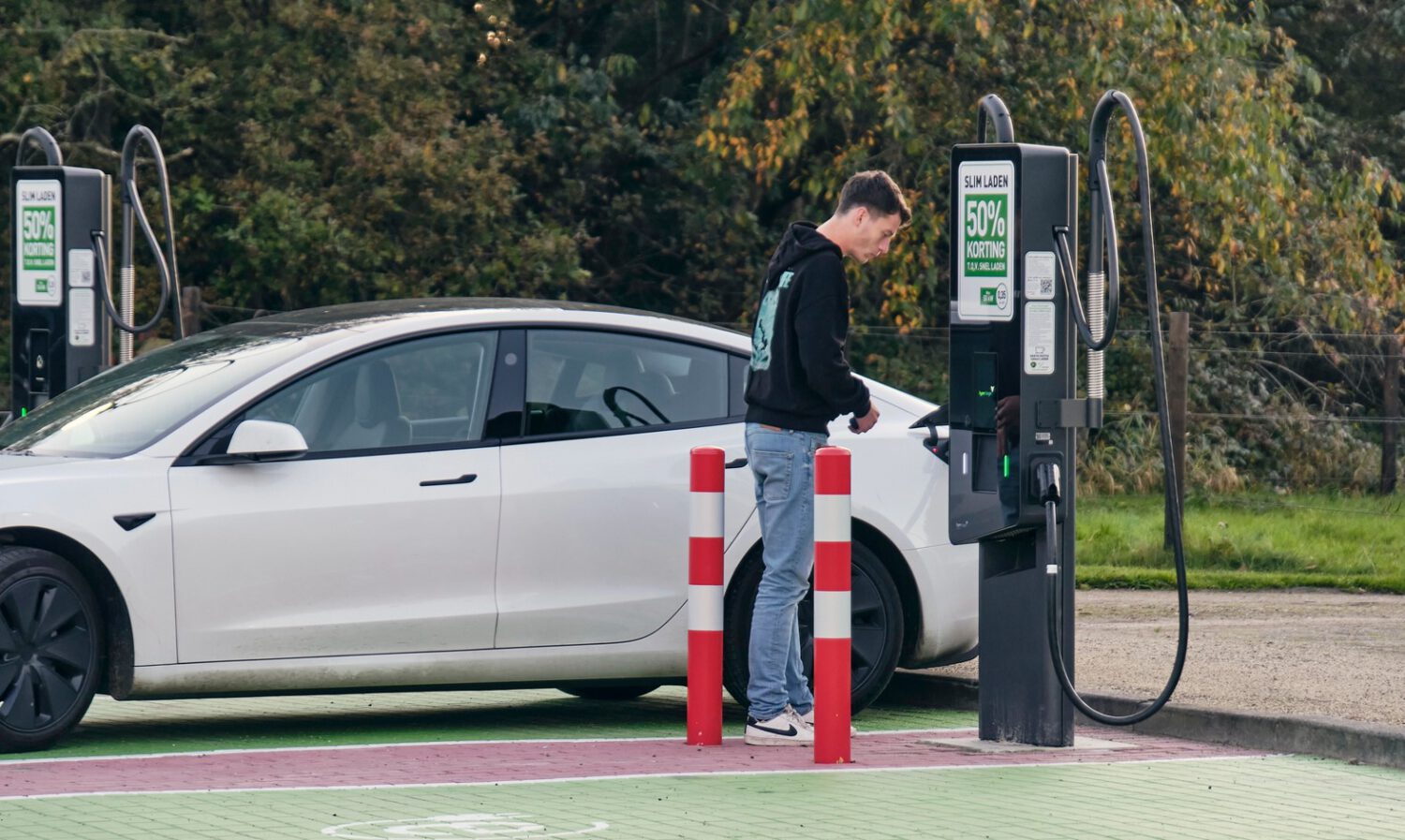
Respondents cited a shortage of fast chargers needed for longer road trips, unreliable equipment, and the time required to charge as the main friction points. The pattern suggests that daily home charging largely satisfies EV owners, while the occasional long-distance drive exposes the weakest parts of the current infrastructure.
What This Survey Cannot Tell You
The results describe a specific, self-selected population and should not be read as a measure of wider public opinion.
GEVA’s results do not reflect gasoline-car owners considering a switch, undecided shoppers, or drivers who evaluated EVs and walked away before purchasing. Those groups are absent from the data entirely.
The survey also did not publish separate results for the United States, a notable gap for American readers trying to gauge domestic sentiment. The 92% loyalty rate describes existing, often association-affiliated EV drivers, not the driving public at large.
The Real Challenge Is Still Ahead
High retention among current owners reframes the question facing the industry.
The retention numbers suggest the industry’s more pressing problem is not keeping existing EV owners satisfied. It is making public charging reliable enough to persuade drivers who are still on the fence. Those prospective buyers have heard about broken chargers and lengthy highway waits, and that reputation shapes their hesitation. A driverless Tesla incident making headlines only adds to broader public skepticism about EV technology reliability.
Loyalty among converts is a solid foundation. It is not, by itself, an expansion strategy.