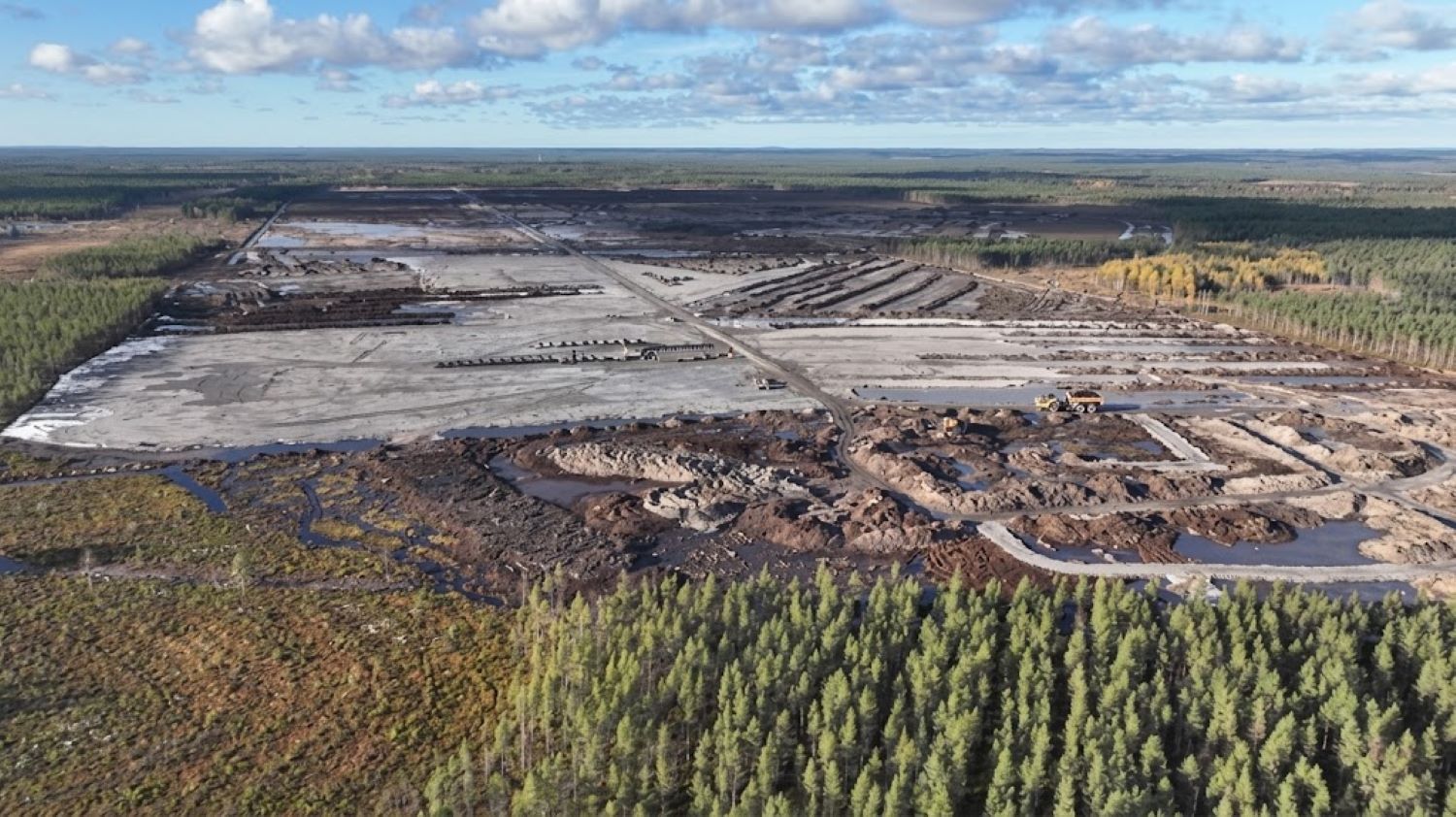
Reports from Finnish authorities and media investigations estimate that roughly 250,000 trees were cleared across approximately 330 hectares at the Muhos site before required environmental impact assessments were completed. At a second site in Kajaani-Otanmäki, approximately 150,000 more trees were reportedly removed, bringing the estimated combined figure to around 400,000.
Those figures remain estimates under active scrutiny, not final determinations of criminal fact.
Two Sites, One Order to Stop
The Finnish Supervisory Agency moved against both locations after finding that required environmental reviews had not been completed before work began.
The agency ordered Tuike Finland Oy, Google’s Nebraska data center water use and electricity demand have drawn similar scrutiny , here, the agency moved against Google’s local subsidiary, to suspend environmentally significant preparatory work at both Muhos and Kajaani-Otanmäki. Tuike Finland confirmed the suspension on October 14.
The agency documented what had already taken place: tree removal, topsoil stripping, access road construction, storage area development, and alterations to ditches, culverts, and stormwater infrastructure.
A Criminal Investigation
Five separate investigation requests, including one from the Finnish Supervisory Agency itself, prompted the Oulu Police Department to open a preliminary criminal probe.
Police are examining suspected environmental damage at the Muhos site, and authorities noted that additional offenses could emerge as the inquiry develops. Detective Superintendent Kari Pakanen told Reuters, as reported by Euronext, that investigators are assessing whether Tuike Finland breached Finland’s Water Act. They are also examining potential environmental harm, and Pakanen said a corporate fine is possible if wrongdoing is established.
Police aim to complete the investigation during 2027 and plan to provide a public update in December.
The Part Everyone Is Underreporting
Beyond the tree count, regulators flagged significant shortcomings in how the company demonstrated control over water-related environmental effects.
The Finnish Supervisory Agency required Tuike Finland to submit a detailed water-management plan by November 5. The plan must address drainage structures, implementation schedules, independent monitoring, effects of heavy rainfall and snowmelt, and specific risks tied to acidic black-shale soils on site.
If the company fails to deliver an adequate plan, the agency may pursue formal enforcement measures, including a conditional financial penalty. Authorities are also examining whether altered drainage and inadequate water-management arrangements could affect nearby waterways and surrounding land.
Context the Press Release Won’t Give You
Google’s reported €13 billion Finnish investment is significant, but investment scale does not determine compliance obligations.
The administrative suspension and the criminal probe are separate legal tracks. One does not establish the other. The projects are not necessarily finished; planning, measurements, and limited reversible activities may remain permissible under the agency’s order. Disputes over AI Data Centers and land use have emerged across multiple jurisdictions as infrastructure expansion accelerates.
The Broader Problem
The pattern here is not unique to Google, and that is precisely why Finnish regulators’ intervention matters.
Other hyperscalers are also racing to build data center capacity across Europe as AI infrastructure demand intensifies. That competitive pressure does not justify clearing hundreds of thousands of trees before the required oversight process is complete.
The question Finnish regulators are forcing into the open is straightforward: at what point does moving fast become moving in violation of the law? The investigation may clarify that for Muhos. What the industry should address for itself is why the question keeps arising at all.