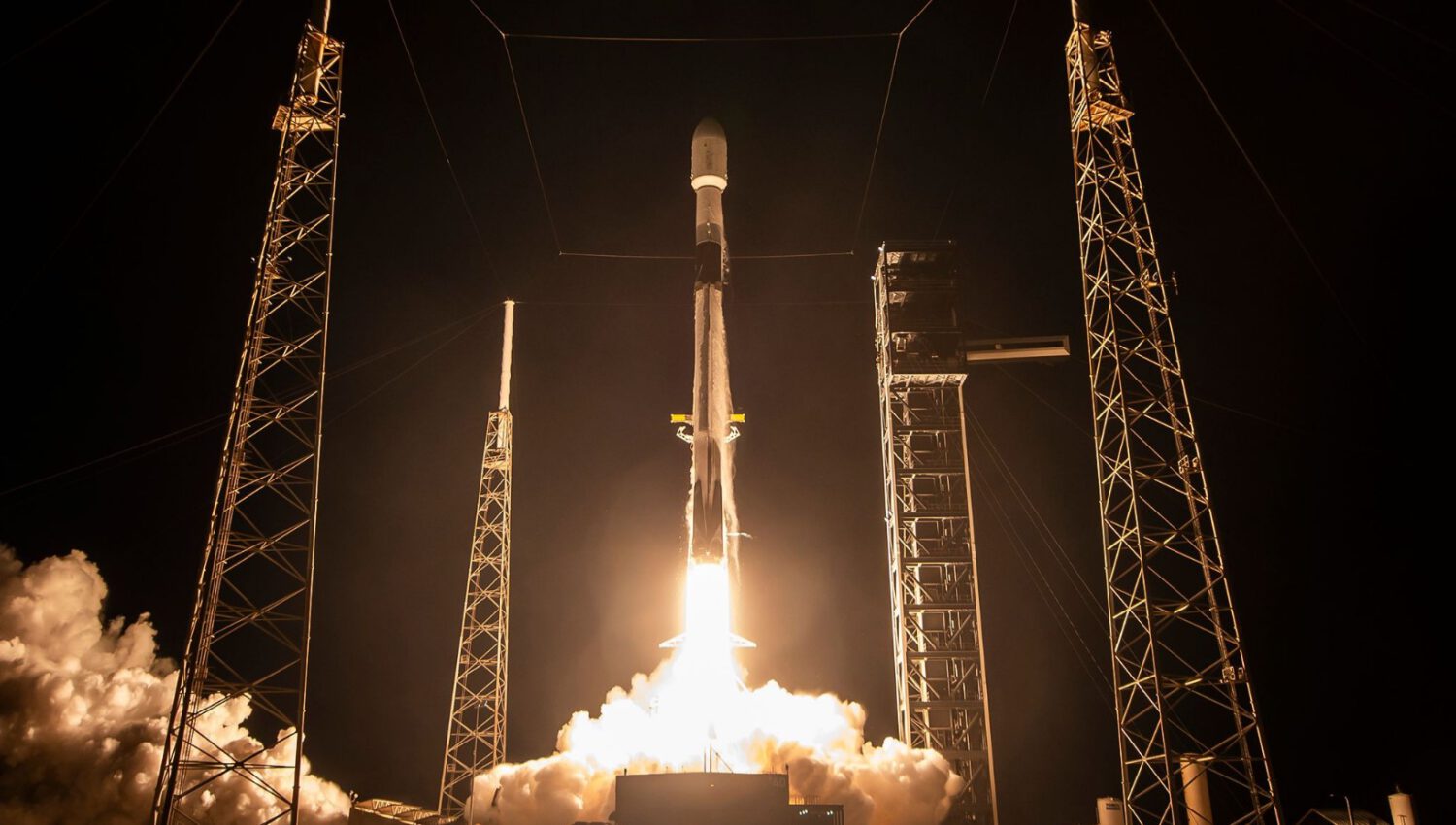
The last rocket to leave Florida lit up the predawn sky on Oct. 20. SpaceX’s Falcon 9 Bandwagon-5 rideshare carried 32 payloads to orbit from Cape Canaveral Space Force Station, leaving behind a glowing “space jellyfish” of illuminated exhaust gases spread across the darkness.
Then the Space Coast went quiet.
SpaceX VP of launch Kiko Dontchev disclosed during an Oct. 21 speaking engagement that Florida launches are paused for at least six weeks. The reason is not a pullback from the state; it is construction. Kennedy Space Center is being reconfigured for Starship, and that kind of work does not happen between missions.
Why the Skies Over the Space Coast Went Quiet
Infrastructure for a much larger rocket is reshaping the launch complex that Falcon 9 has called home.
SpaceX is preparing Launch Complex 39A at Kennedy Space Center for Starship operations. Dontchev said the launch infrastructure was “effectively complete,” with ongoing work focused on Gigabay, a roughly 380-foot facility intended to assemble and prepare Starship vehicles.
The scale difference matters. Starship stands more than 400 feet tall when fully stacked, requiring specialized transport, stacking, and recovery infrastructure that Falcon 9 does not. Moving from Falcon 9 to Starship resembles converting a commuter rail depot to handle freight locomotives. The location is the same; the requirements are completely different.
SpaceX plans to manufacture Starship vehicles and boosters in Texas, ship them to Florida by barge, and unload them near KSC for final preparation. The Aug. 25 Florida mission was the last dedicated Falcon 9 Starlink mission from the state, according to reporting from the time. Future Starlink deployments from Florida are expected to fly on Starship instead.
Will Anyone Else Launch in the Meantime?
No other Florida provider had a firm launch date on record with federal planners as of late October.
The short answer is probably not soon. No Florida launch provider had a firm target date listed with the Federal Aviation Administration at the end of October.
Blue Origin’s New Glenn was unavailable while the company repaired and upgraded its Cape Canaveral launch complex. Company officials said they remained committed to flying before the end of 2026. United Launch Alliance’s Vulcan rocket remained grounded following a February anomaly, with no firm Florida date in available public information.
A Record Year Makes the Silence Louder
Florida went from one of its busiest launch years on record to a near standstill in a matter of months.
Florida recorded 109 orbital launches in 2025, up from 57 in 2022. SpaceX accounted for 101 of those missions, making the company’s scheduling decisions the primary driver of the region’s launch cadence.
By Oct. 26, 2026, Florida had logged only 60 launches for the year, with one in September and three in October through the 26th. Readers who grew accustomed to roughly weekly liftoffs are now measuring the quiet in weeks rather than days.
What Starship Means for Florida
The vehicle expected to follow Falcon 9 into Florida’s skies is built for a different scale of mission entirely.
Starship is designed to carry larger payloads than Falcon 9 and is expected to become central to SpaceX’s future Starlink deployment strategy from Florida. NASA’s Artemis lunar program also plans to use a Starship-derived vehicle, giving the Kennedy Space Center infrastructure significance well beyond SpaceX’s commercial business.
Dontchev said SpaceX hoped to launch from Florida before the end of 2026. Timing remains subject to testing, regulatory approval, and operational readiness, so that target is an aspiration rather than a commitment.
The pause has a reported cause and an estimated duration. What is expected to arrive at Kennedy Space Center on the other side of it is a vehicle substantially larger than anything the Space Coast has launched before. For a region that has made rocket launches part of everyday life, that distinction is worth watching.