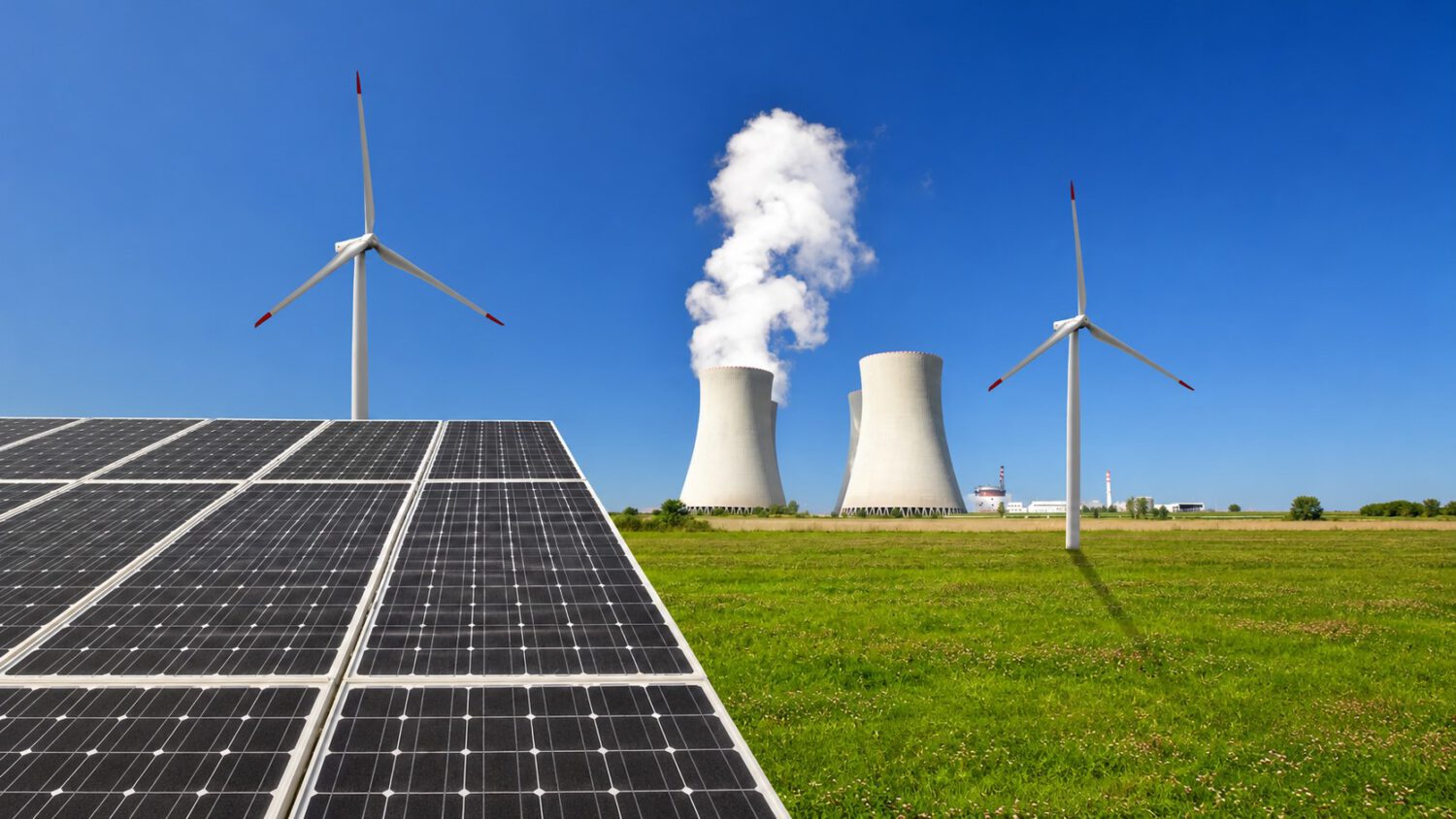
Solar generated more electricity globally than nuclear during the northern-hemisphere summer of 2025. According to Ember’s 2026 global electricity review, a full-year overtake is expected in 2026, a forecast the International Energy Agency also projects.
Solar supplied 75% of the increase in global electricity demand in 2025 alone, growing by 636 TWh, or roughly 30%, in a single year.
The reason isn’t purely climate policy. It’s cost.
Driven by Economics
Falling prices and faster permitting have made solar the default choice for new generation in most markets.
The IEA identifies solar PV as the lowest-cost option for new electricity generation in most countries. “The growth in global renewable capacity in the coming years will be dominated by solar PV,” IEA Executive Director Fatih Birol said.
Panel prices are only part of the bill. Inverters, mounting hardware, permitting, labor, and grid connection add substantial cost on top of the module itself.
Still, the underlying economics have proven decisive across vastly different markets. Pakistan illustrates this clearly: solar’s share of the country’s electricity reportedly rose from below 2% in 2019 to approximately 24%, driven by expensive and unreliable grid power combined with cheap imported panels, though that figure has not been independently verified against a primary Pakistani source.
Households and businesses there acted without waiting for a national energy strategy. Solar’s modularity allows consumers to deploy systems independently rather than depending on utilities or governments to build centralized capacity first.
What Beating Nuclear Actually Means
Surpassing nuclear in annual generation is a real milestone, but the two technologies serve different functions on a grid.
Surpassing nuclear in annual terawatt-hours is not a like-for-like replacement. Nuclear plants provide firm generation that remains available through weather changes and across all hours of the day, though they are not immune to outages, maintenance, or fuel constraints.
Solar output varies with sunlight. Ember reports that solar generation grew more than tenfold between 2015 and 2025, while nuclear output increased by roughly 1.3% in 2025 and has remained comparatively stable over that period.
The gap in annual generation is closing because solar is expanding rapidly, not because nuclear has collapsed. Capacity factors, dispatchability, storage requirements, and construction timelines all shape how each technology functions within a grid.
Batteries increasingly pair with solar to shift midday generation into evening demand. They do not yet fully address multi-day or seasonal shortfalls.
The Bottlenecks Worth Knowing
Grid infrastructure and supply-chain concentration are emerging as the real constraints on solar’s next phase.
Grid connection and transmission are becoming serious constraints as solar projects are built faster than networks can absorb them in several major markets. Your electricity bill also doesn’t automatically fall when panel prices do.
Retail electricity prices reflect network costs, taxes, financing, and balancing charges, not just the cost of generation. That gap frustrates consumers who expect cheaper panels to mean cheaper power.
Heavy dependence on Chinese manufacturing creates geopolitical exposure for countries pursuing domestic energy security. U.S. tariffs and policy uncertainty are adding friction even where solar remains economically competitive on fundamentals.
What Comes Next
The decisive question is no longer whether solar will keep growing, but whether grids and storage markets can keep pace.
The IEA projects solar’s share of global electricity to nearly double, from roughly 8% in 2025 to approximately 15% by 2030. Renewables overall are forecast to meet more than 90% of global electricity-demand growth through that period, according to the IEA.
Whether grids, storage markets, and permitting systems can keep pace with solar’s expansion is now the central challenge.