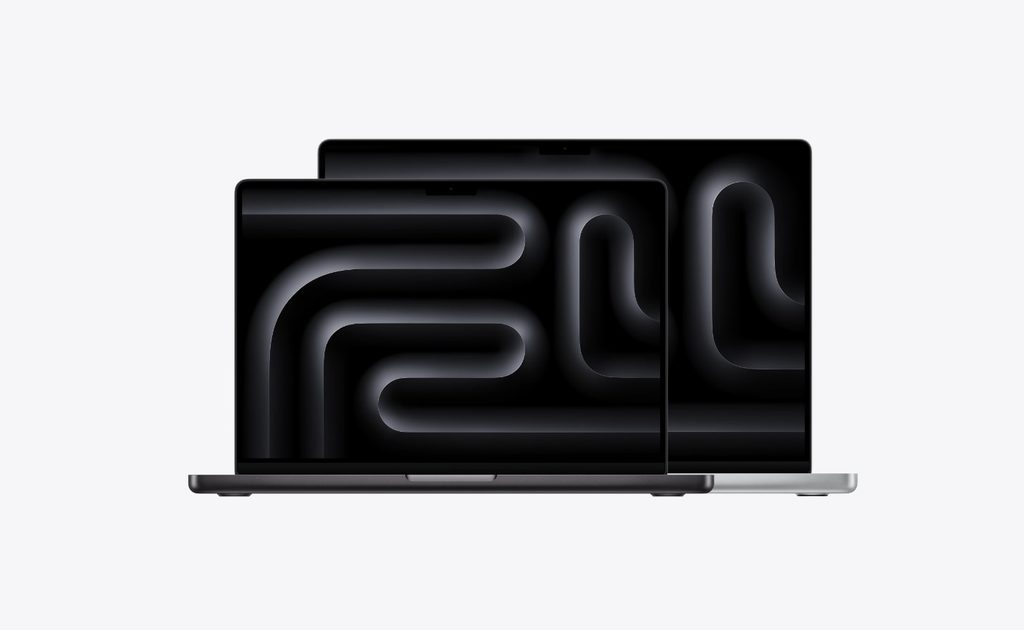
Apple announced the refreshed 14-inch MacBook Pro on October 27, 2026, pairing its new M6 processor with upgraded wireless connectivity. The enclosure, display, and port selection are largely familiar, with the principal changes living under the hood. For broader context on Apple’s 2026 hardware lineup, see the recent Mac Mini and Mac Studio launch.
A New Chip With Significant Claims
Apple attributes substantial performance gains to the M6, though independent benchmarks have not yet validated those figures.
The M6 includes a 12-core CPU and a 12-core GPU. According to Apple, the chip delivers up to 30% faster graphics performance and up to 25% faster AI workloads compared to M5, based on Apple’s own testing.
The M1 comparisons are more dramatic. According to Apple, the M6 processes LLM prompts up to 13 times faster than a 13-inch MacBook Pro with M1 and renders ray-traced Blender scenes up to 11.7 times faster. Apple also reports up to 3.3 times faster Affinity image processing and up to 2.5 times faster Xcode project compilation against the same M1 baseline.
The M6 is designed to run large language models locally, keeping your data on the machine rather than sending it to a remote server. This reflects Apple’s broader custom silicon strategy, which extends well beyond the MacBook Pro line.
Connectivity Gets a Full Refresh
Wi-Fi 7 and Bluetooth 6 are the headline wireless upgrades, joining a wired port lineup that carries over from the previous model.
Wi-Fi 7 and Bluetooth 6 replace the older wireless standards from the previous generation. That makes them the most notable external upgrade beyond the chip itself.
The wired port lineup includes MagSafe 3, HDMI, an SDXC card slot, a headphone jack, and three Thunderbolt 4 ports. Thunderbolt 4 carries over from the prior model rather than advancing to a newer generation.
Display, Memory, Battery, and Finish
The 14.2-inch Liquid Retina XDR display returns unchanged, leaving the value case to rest entirely on internal gains.
The 14.2-inch Liquid Retina XDR display returns with ProMotion adaptive refresh up to 120Hz, and nano-texture glass is available as a configure-to-order option.
The base configuration includes 16GB of unified memory and 1TB of storage. Apple rates battery life at up to 24 hours, and the laptop ships in space black and silver.
Price and When to Order
At $1,999 to start, the base configuration is the most accessible entry point, though expanding memory or storage pushes the price sharply higher.
The base 14-inch MacBook Pro with M6 starts at $1,999 for 16GB of memory and 1TB of storage. The top listed configuration, with 32GB of memory and a 4TB SSD, reaches $3,899. Buyers who anticipate needing more than the base memory or storage should factor the specific upgrade costs into their budget before ordering. It is also worth reviewing common computer problems to help maximize your investment once your new machine arrives.
Preorders open October 28 in the U.S. Retail availability and deliveries begin November 6 in initial launch markets.
If you are running an M1-era MacBook Pro, Apple’s performance figures point to a wide gap that makes the upgrade case straightforward. If you bought an M5 model recently, the internal gains are real. The chassis is identical, however, and the switching cost has not changed from last year.