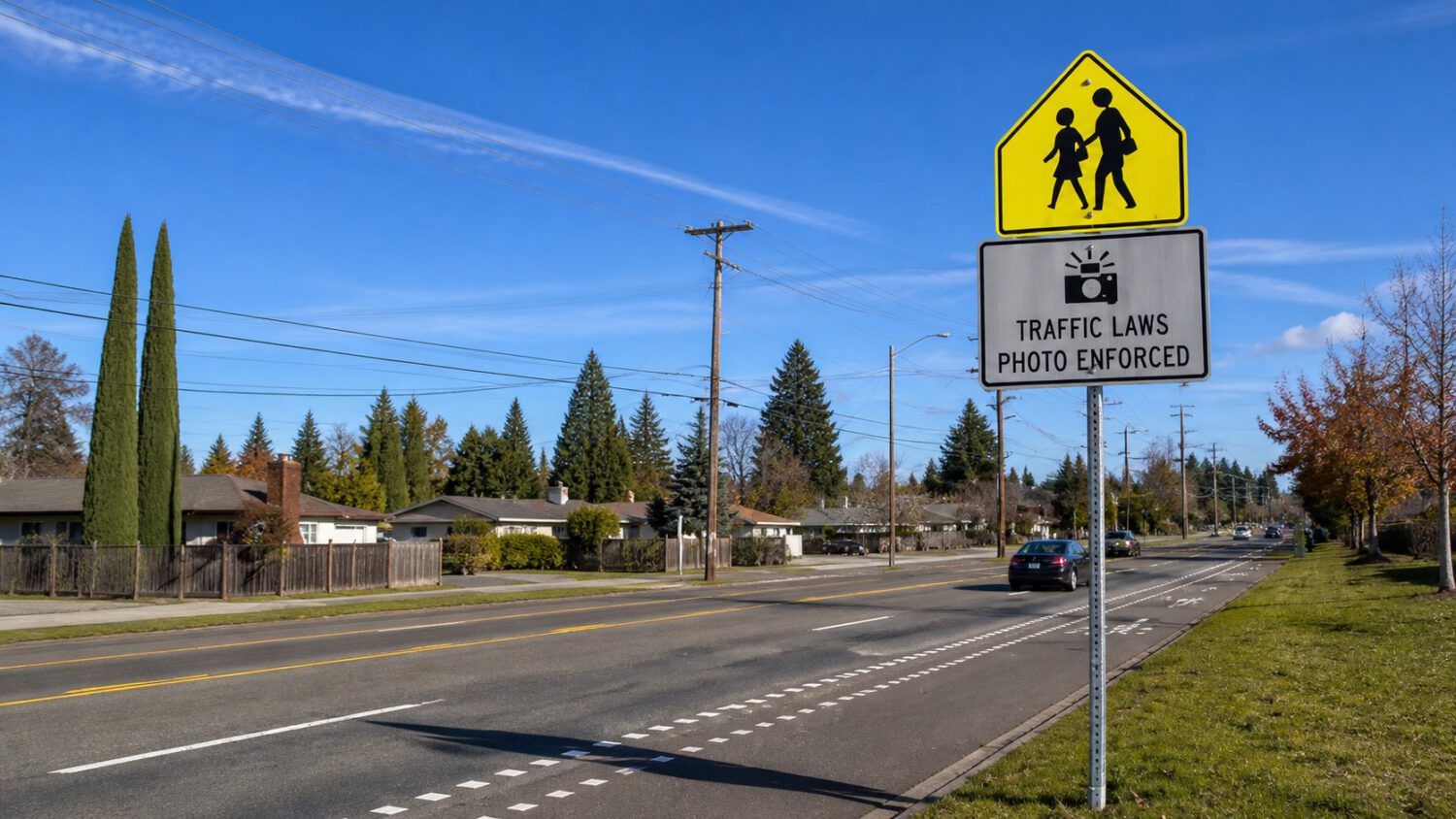
Two cameras. One corridor. Nearly 400,000 detected speeding violations in a single month. City data reported by The News Tribune and KOMO News shows that approximately 515,000 vehicles passed the camera locations on Norpoint Way and Marine View Drive between September 14 and October 11. Roughly 77% of those vehicles were recorded above the 40-mph posted limit, an observed rate that reflects consistent, corridor-wide behavior during the measured period.
Two Cameras, One Very Revealing Month of Data
The detection numbers show how routinely vehicles on this corridor exceeded the posted speed limit.
The cameras were placed along a stretch where community members had reported crashes and dangerous driving conditions. According to The News Tribune and KOMO reporting, the initial period served as a warning phase, meaning vehicles flagged during that time were not automatically fined. The city’s automated-enforcement vendor, identified in News Tribune reporting as NovoaGlobal, captured the volume without issuing citations while the program ramped up.
400,000 Violations, 200 Citations Per Day Maximum
The city cannot process every detected case, so whether a citation arrives depends partly on chance.
Tacoma capped enforcement at 100 citations per camera per day, according to KOMO and Yahoo News reporting. Selection from the pool of detected violations is randomized, though vehicles recorded at higher speeds reportedly have a greater chance of being chosen. City officials stated that processing every detected violation would overwhelm available administrative resources.
That cap means a maximum of 200 citations leave city offices daily across both cameras. Against a backdrop of hundreds of thousands of detections in a single month, the gap between what was recorded and what can be enforced is substantial.
$145 Fine, No Insurance Hit, No DOL Record
The citation costs $145 and is classified as a civil infraction, not a moving violation.
Camera-issued citations carry a $145 fine, according to Tacoma’s official automated-enforcement fact sheet. The city does not report these violations to the Washington Department of Licensing or to insurance companies. That distinction is meaningful for drivers who associate traffic citations with long-term impacts on their records and premiums, including those weighing what a vehicle costs less to own and operate over time.
Revenue from the fines cannot enter Tacoma’s general fund. Per FOX 13 Seattle reporting, the money must fund roadway-safety improvements such as bike lanes, pedestrian crossings, and street lighting.
Crashes Preceded the Cameras
Residents raised concerns about repeated collisions along Marine View Drive before the cameras were installed.
Local workers interviewed by KOMO described a pattern of collisions near Marine View Drive and said traffic appeared to slow after the cameras went up. Those observations are attributed to the workers interviewed and do not represent a formally measured speed reduction. Tacoma has operated automated enforcement since 2008, primarily targeting red-light violations and school zones, and this Northeast Tacoma expansion reflects the program’s continued growth.
What Comes Next
The first month’s detection volume raises direct questions about the city’s capacity to sustain enforcement at scale.
Two cameras generating hundreds of thousands of detections per month will test the city’s ability to process, select, and issue citations at a consistent pace. Whether Tacoma adjusts enforcement thresholds, expands staff capacity, or adds cameras elsewhere will shape how the program develops. For drivers on Norpoint Way and Marine View Drive, enforcement is already active, though citations reach only a fraction of recorded violations each day.