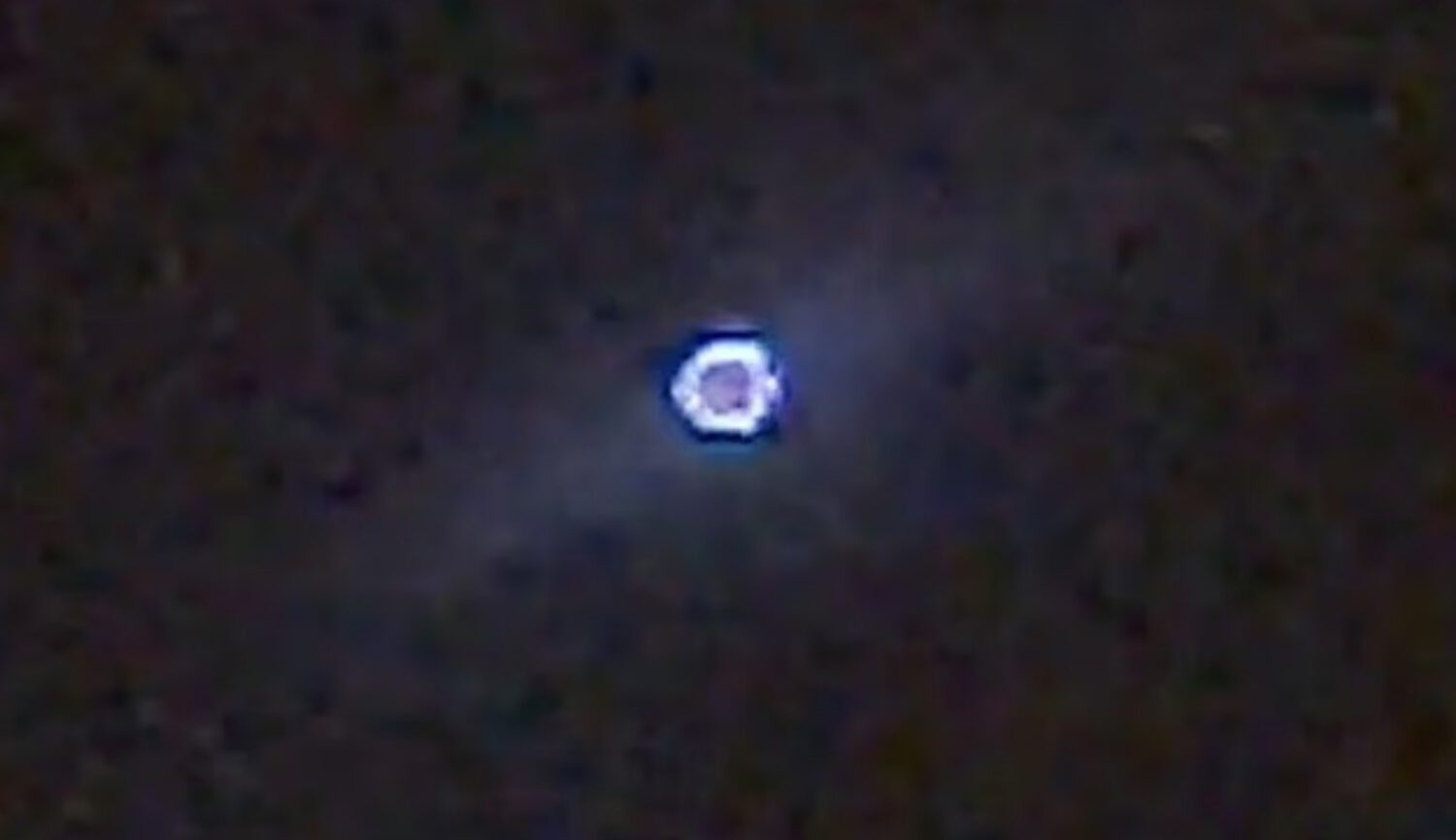
At 3:25 a.m., roughly 400 miles south of Nova Scotia, two sailors on watch reported something they couldn’t explain: a bright light sitting low on the horizon, slightly left of the bow, against a clear sky with a thin crescent moon and no nearby vessel traffic.
That account, submitted to the National UFO Reporting Center (NUFORC) on October 11 and later made public, is an unverified witness report, not a confirmed event.
What the Sailors Said They Saw
According to the NUFORC submission, the ship’s second mate first noticed a single orb, and the two crew members tracked it through binoculars for roughly 40 minutes. They estimated it was 12 to 16 miles distant and described apparent bursts of speed, rapid rises and falls, and side-to-side movement lasting five to 10 minutes at a time.
Three or four additional orbs then reportedly appeared, performing similar movements.
“All twisting and turning, rising and falling together in no set pattern.” Unnamed sailor, as quoted in secondary reporting of the NUFORC submission.
The sailors said the objects sometimes disappeared and seemed to reappear at a different position. The account describes what witnesses interpreted as hypersonic speeds, though no instrument measurement is reported in the available material, and the figure reflects human estimation from a moving vessel at night.
Radar Recorded Nothing
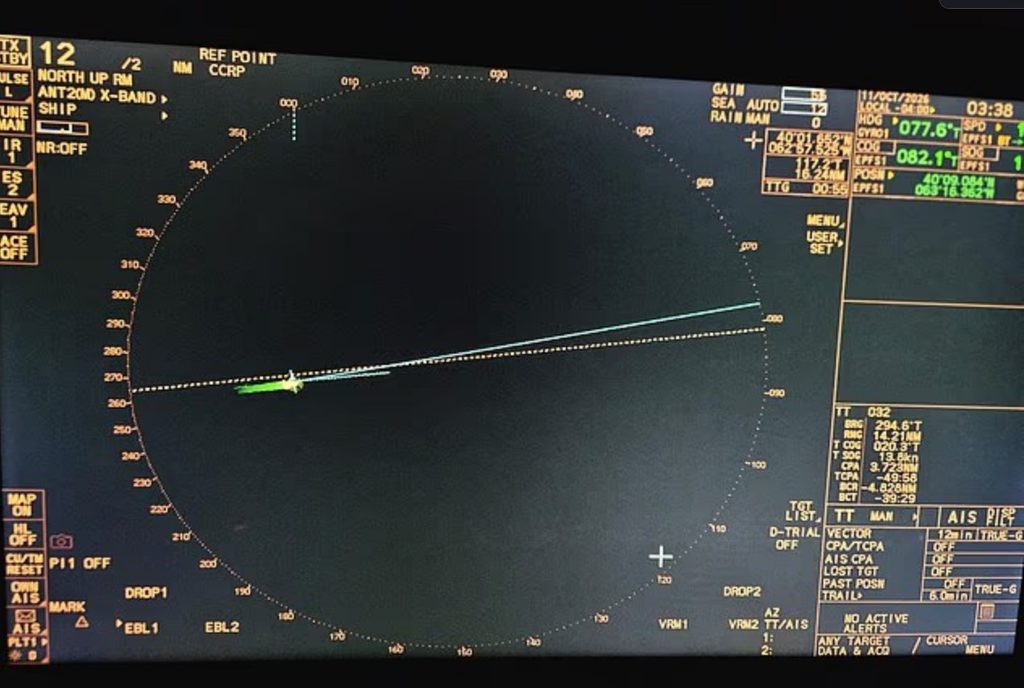
The sailors reported that none of the objects produced a return on the vessel’s radar, and the submission reportedly included radar screenshots. Those screenshots have not been independently authenticated, and without raw files, system specifications, and timestamp verification, they do not establish whether radar coverage was adequate.
Detection depends on target size, material, altitude, aspect angle, and clutter-suppression settings. Earth’s curvature also limits line-of-sight range, further constraining what any marine radar can detect. The available reporting does not establish the radar system’s specifications or calibration status. Whether the alleged objects were even within its detection envelope remains unknown.
What Could Explain It
Over a dark ocean, with no fixed reference points on the horizon, judging distance and speed visually is genuinely difficult. A star, planet, satellite, distant aircraft, or even another vessel’s lights can appear to move, pulse, or shift position as the observing ship rolls and changes heading.
Distance estimation presents a second problem. Without a known reference object at a confirmed range, the 12-to-16-mile figure cannot be independently verified from the account alone. If the actual distance differed substantially, every calculation of apparent speed could change with it.
Rocket-related phenomena offer a separate, well-documented comparison. SpaceX launches have previously produced glowing spirals and expanding luminous clouds when expelled propellant catches sunlight at high altitude, a phenomenon linked to the physics of supersonic flight dynamics at extreme altitudes. Space physicist Don Hampton explained the mechanism to CBC: “Very often when they’re finished with their mission, they will actually sort of eject some of their propellant.”
That comparison has clear limits here. The Atlantic witnesses described multiple compact orbs, not a single expanding spiral, and the available reporting identified no launch on a matching trajectory or schedule. The rocket explanation is a reference point, not a confirmed answer.
What the Evidence Does Not Show
No independent observer, authenticated video, vessel navigation log, or official maritime or military investigation has been identified in the reporting reviewed. NUFORC supplied no definitive explanation in that same reporting. The “hypersonic speeds” description is a witness interpretation, not an instrument-measured figure.
A separate NUFORC report from Twentynine Palms, California, appeared in the same coverage cycle. A single witness described a pulsating, irregular object that seemed to shift from a hexagonal to a circular shape over roughly 15 minutes. A Falcon 9 launch from Florida was considered as a possible explanation, but a timing discrepancy was noted by the reporting. That account is an independent, unverified observation and does not corroborate the Atlantic case.
Does Anyone Have This Technology?
No publicly documented aircraft or weapons system has been shown to perform the full combination of behaviors the sailors described: hypersonic velocity, instantaneous direction reversal, sustained hover, and optical disappearance and reappearance at a new location. Public descriptions of hypersonic glide vehicles, which exist in U.S., Chinese, and Russian arsenals, involve high-speed atmospheric flight and maneuvering, not hovering or instantaneous course reversals.
The apparent gap between the reported behavior and any publicly documented capability is significant. That gap is precisely why accounts like this attract both serious attention and equally serious scrutiny.
What Would Change the Story
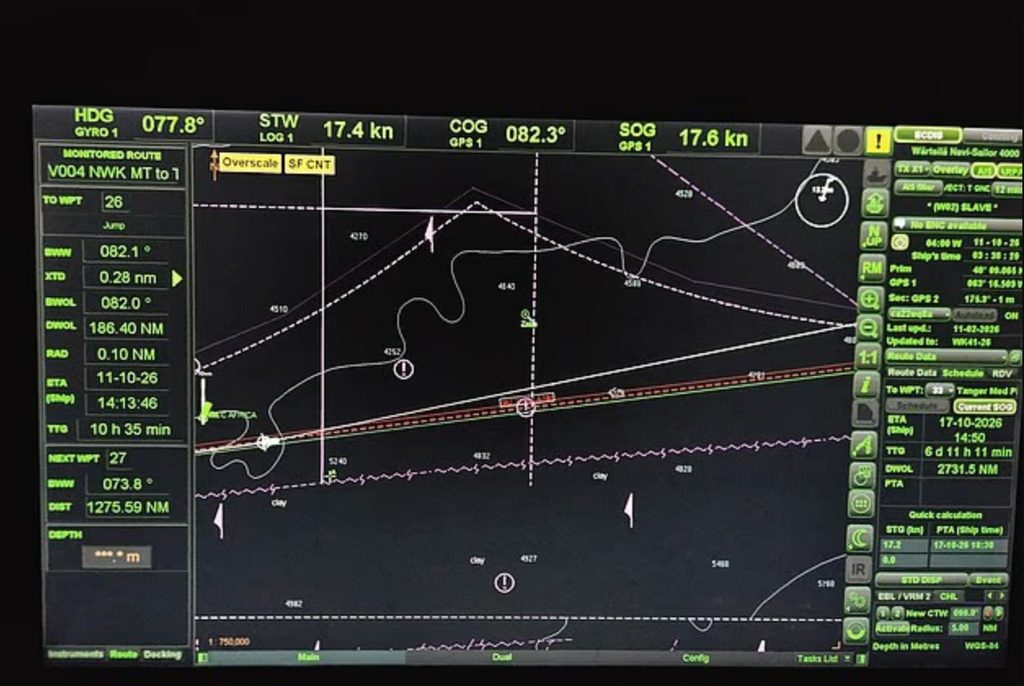
A meaningful follow-up would benefit from authenticated navigation records from the vessel, raw radar files with system specifications, and precise compass bearings and elevation estimates from the observation window. Those records would need to be cross-checked against satellite passes, aircraft tracks, weather data, and rocket-launch schedules for that night.
If those records surface and hold up, the conversation shifts. Until then, this remains a striking account from two witnesses, logged in a public database, waiting for the corroboration that would make it something more.