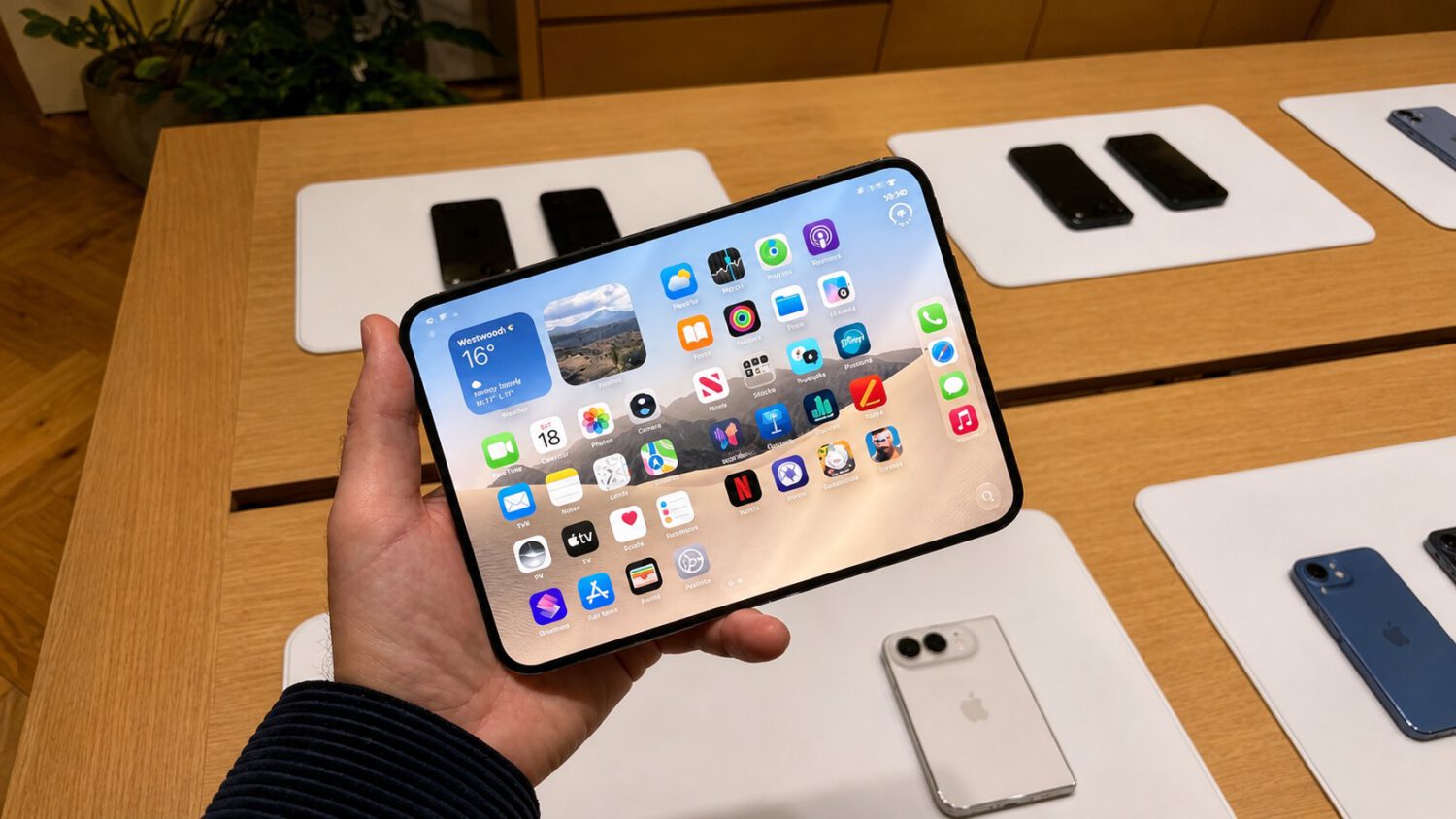
Apple’s foldable iPhone accessories ecosystem is already taking shape as the device arrives October 23 with a feature set larger than the company let on. Early reviewers found several software capabilities built specifically for the Duo’s folding form factor that Apple did not highlight in its launch materials.
The gap matters if you’re deciding whether this phone justifies its early-adopter risks.
The Features That Didn’t Make the Keynote
Apple quietly built a suite of form-specific tools that go well beyond what appeared in the launch presentation.
Start with Edge Light. When the Duo is unfolded, the border of the inner display can illuminate during FaceTime calls, functioning like a ring light in low-light conditions, according to AppleInsider. That makes the Duo the first iPhone to support the feature, and it’s the clearest signal that Apple engineered software around the hardware rather than the other way around.
Horizontal Reachability addresses a genuine ergonomic problem: the unfolded Duo approaches small-tablet territory, putting controls far from your thumb. Apple reportedly developed a sideways version of the familiar Reachability gesture that shifts the interface left or right instead of downward, according to AppleInsider. This feature is not available at launch and is planned for a later software update.
Group photos no longer require anyone to sprint back into frame. Smart Take uses on-device processing to watch for a moment when subjects look ready, then triggers the shutter automatically. The outer display can also serve as a live viewfinder, letting subjects frame themselves while someone else holds the phone, per Apple’s product page.
Apple Pencil support is arriving via iOS 27.2, adding drawing, annotation, and document markup on either display. Secondary reporting from MacRumors indicates the feature was already active in the release-candidate build, suggesting it will be available shortly after launch. Apple’s official announcement describes the timing as “later this year.”
What Early Reviewers Actually Found
The Duo’s native software is polished; third-party app support tells a more complicated story.
Some applications have not been updated for the Duo’s wider inner screen. Those apps occupy only the center portion of that display, leaving large black bars on either side, according to The Verge. Slack has reportedly begun adapting its interface, but compatibility across the broader app ecosystem remains uneven.
MagSafe chargers require some attention. Some upright desktop chargers can tilt or rotate under the Duo’s uneven weight distribution when the phone is open, per MacRumors. Flat chargers and USB-C connections avoid that particular problem, and the issue appears tied to individual charger design rather than a failure of MagSafe broadly.
Smart Take’s processing demands carry a trade-off. One reviewer at The Verge observed that sustained use of the feature makes the device noticeably warm and can contribute to lag. That is a single-reviewer observation rather than a confirmed hardware defect, but it is worth monitoring as more units reach users.
The Variable That Actually Determines Your Experience
Apple designed thoughtfully for the foldable form factor; how useful that proves depends on the apps you use.
Apple built something more considered here than a standard iPhone with a crease down the middle. Edge Light, Smart Take, and the planned horizontal Reachability gesture each address a specific reality of using a folding display. That shows in the details reviewers found that Apple never foregrounded in its announcements.
The honest limitation is one familiar to anyone who bought into a new hardware category early. Apple’s own apps currently reflect the Duo’s full potential, while third-party support is still developing. How fast that gap closes depends on developers and on Apple’s continued platform support. That is the real variable to watch once the Duo reaches customers on October 23.