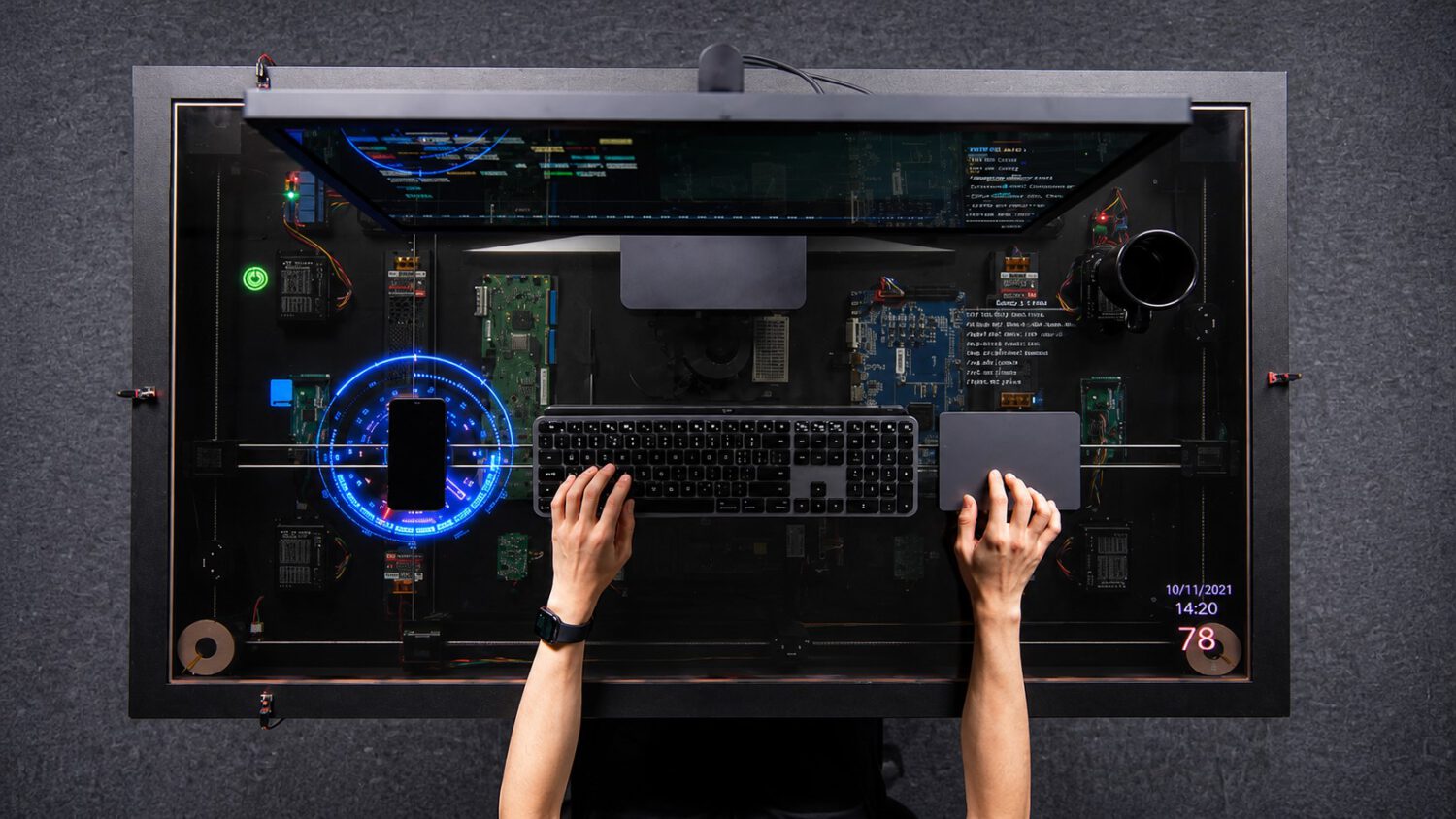
Set your phone anywhere on the desk. It charges. No pad, no alignment ritual, no millimeter-by-millimeter shuffling until the charging icon finally appears. For anyone curious about iPhone accessories that eliminate friction, this concept pushes that idea further than most products on the market.
That was the promise Apple made in September 2017 when it announced AirPower, a wireless charging mat designed to power an iPhone, Apple Watch, and AirPods without requiring precise placement. Apple expected to ship it in 2018. In March 2019, the company canceled it, stating publicly that AirPower could not meet its standards, according to reporting from NBC News and MacRumors. Those outlets also connected the failure to heat buildup, signal interference, and the engineering difficulty of managing overlapping charging coils.
An independent creator has now spent roughly two months building a desk inspired by what Apple walked away from, according to the creator’s demonstration. The approach is nothing like what Apple attempted.
One Coil, One Camera, Zero Alignment Anxiety
The desk finds your phone so you never have to think about placement again.
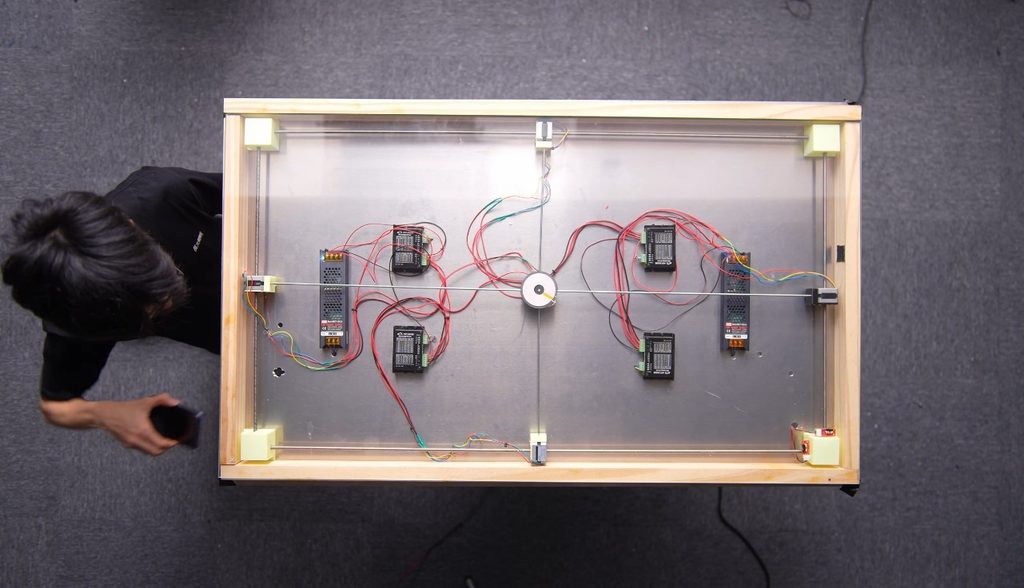
A camera mounted above the surface identifies where a device is sitting. Motors then move a single wireless charging coil beneath the desk to match the phone’s position. The alignment problem shifts from you to the hardware.
The creator demonstrated the tradeoff directly in the video: covering the full desk with stationary coils would require roughly 600 of them. Moving one coil trades a dense electrical grid for a mechanical system, a camera, and a positioning algorithm. Apple reportedly tried to solve the placement problem with more coils; this desk solves it with spatial awareness.
The desk’s “simultaneous charging” behavior deserves a precise description. One mobile coil moves rapidly between devices, cycling through them in sequence, while two additional fixed coils in the corners handle other devices. That is not the same as three independently powered coils running in parallel, and the creator’s demonstration does not claim otherwise.
A Desk That Watches You Work
Beyond charging, the desk automates several reminders that most people currently manage through separate apps.
The transparent desktop surface doubles as a display, showing charging animations, task progress, and desk gadgets-style system controls. A Mac mini installed inside the desk powers the setup when connected to an external monitor, according to the creator’s demonstration.
Motorized legs raise the surface after the camera detects an hour of continuous sitting. Once per hour, the system moves a cup toward you as a hydration prompt.
Focus Mode is worth a closer look: a 25-minute timer appears beneath the charging phone, and if you remove the phone before the timer ends, the desk refuses to resume charging when you put it back. The keyboard also received a receiver coil embedded in its housing, so it charges wirelessly when the moving transmitter passes beneath it.
Prototype vs. Promise
The video demonstration shows device tracking, charging animations, height adjustment, and Focus Mode behavior. What it does not establish is charging speed, power output, heat management, foreign-object detection, camera privacy handling, mechanical noise, or long-term reliability of moving parts. Those questions remain open.
The project’s real significance is the design philosophy it proposes. Most charging accessories assume you will adjust your behavior to fit the hardware; this desk assumes the hardware should locate your device and move to meet it. Whether every moving part holds up after a year of daily use is unknown. The question the desk asks, though, is worth sitting with.