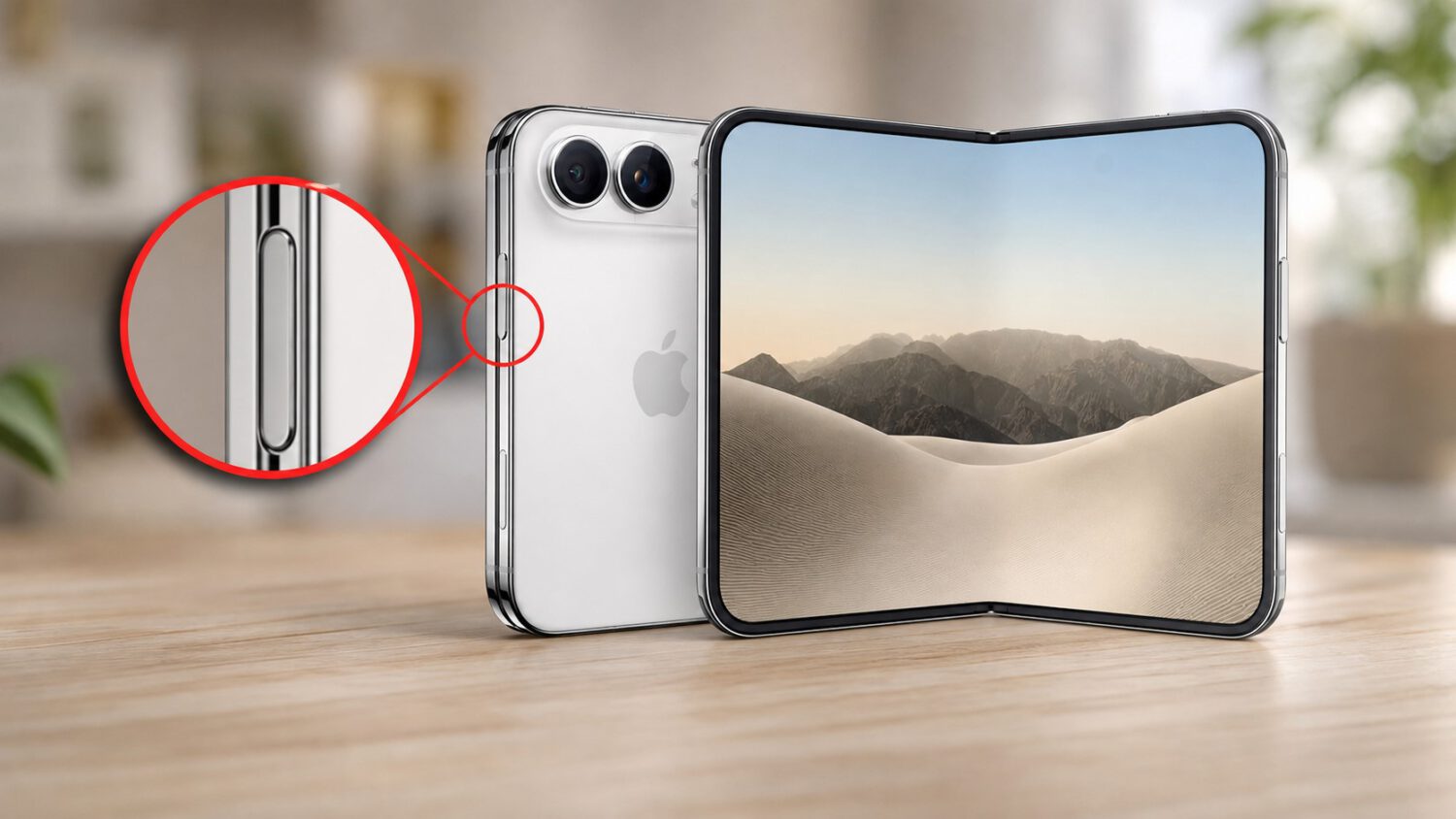
Apple’s first foldable iPhone replaces the company’s most recognizable security feature with something older and, for this form factor, more practical. The iPhone Duo, announced September 9, 2026, and starting at a reported $1,999 (verify current regional pricing before purchase), authenticates through a Touch ID sensor built into the side button rather than a front-facing facial recognition system. Whether that trade-off suits your daily routine depends on how you use a phone, and the reasoning behind it is worth understanding.
One Sensor, Two Screens, Zero Confusion
A foldable phone’s shifting geometry creates an authentication problem that a fixed fingerprint sensor solves more cleanly than a front-facing camera system.
A standard iPhone presents one predictable front-facing plane. Your face is always roughly where the camera expects it.
The Duo changes that equation. According to Apple and secondary reporting from MacRumors, the side-button Touch ID sensor provides consistent authentication whether the device is open or closed, a capability that addresses at least four distinct operating postures: closed, open flat, resting on a surface like a tent, and partially folded.
Covering every posture with a front-facing facial authentication system would likely require more than one strategically placed depth-sensing module. That is an engineering inference, not a confirmed Apple design decision. The underlying hardware demands are worth noting, though: a TrueDepth system is not a compact RGB camera. It needs an infrared camera, an infrared illuminator, and a dot projector. Together those components construct a depth map accurate enough to meet Apple’s biometric standards. Fitting that hardware beside a continuous foldable display is already a challenge. Adding batteries, hinge mechanics, and display electronics inside a thin dual-chassis body compounds those packaging constraints.
The inner display includes a front-facing FaceTime camera, which demonstrates that Apple prioritized display continuity. Apple’s developer documentation identifies front-facing cameras on both displays but does not characterize the inner camera as a TrueDepth authentication system.
What Changes When You Actually Use It
Touch ID on the Duo is fast and flexible, but the shift from passive facial recognition to deliberate finger placement is a real adjustment.
The side-button sensor supports multiple enrolled fingers, which is practical on a device you hold in different orientations throughout the day. Reviews from 9to5Mac describe reliable performance across different grips.
The contrast with Face ID is noticeable, particularly at first. Face ID authenticates passively: you look at the phone and it unlocks. Touch ID requires deliberate contact. Users switching from a conventional Face ID iPhone will feel that difference, especially in situations where glancing at the screen was enough.
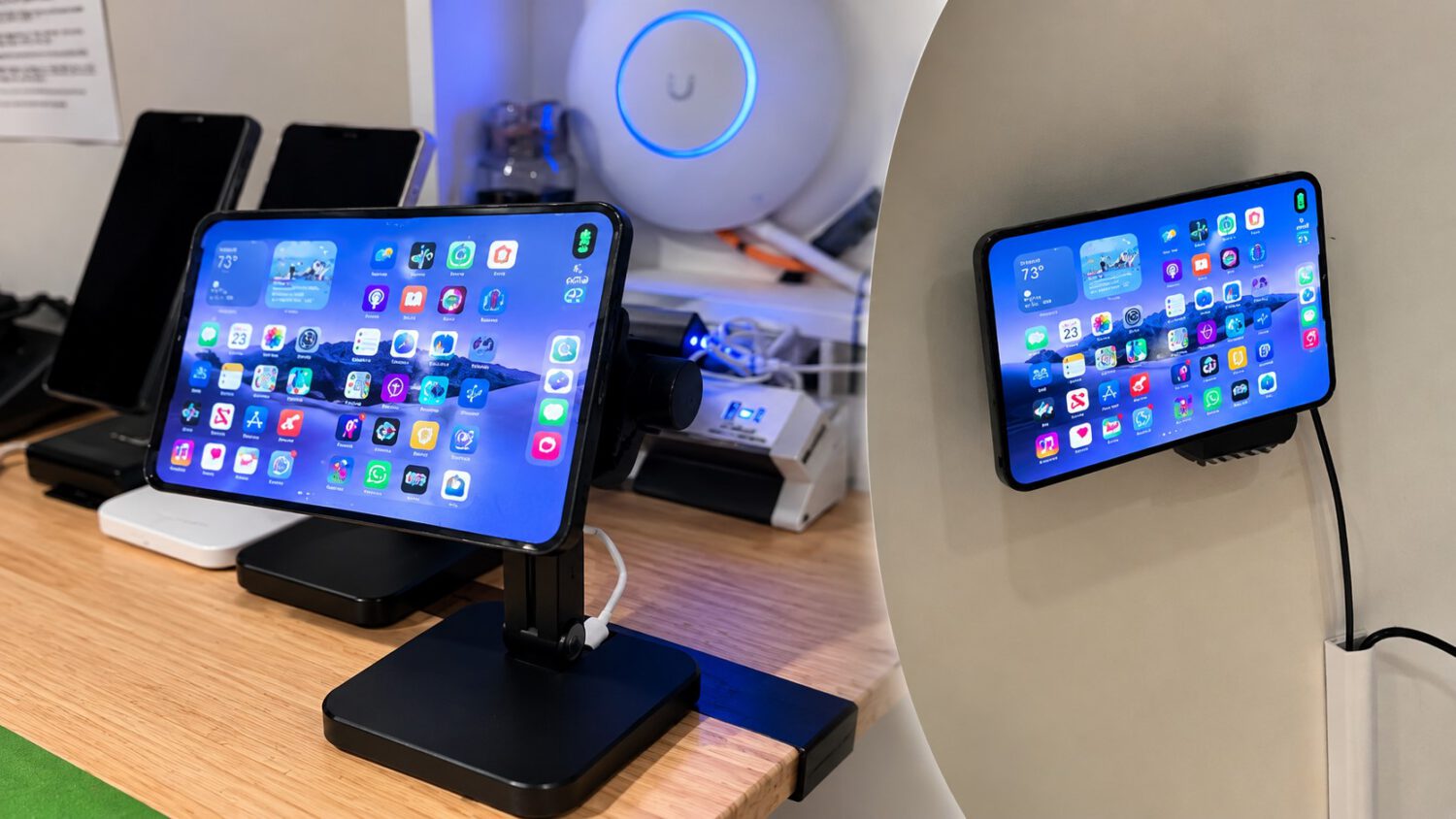
One scenario where the fingerprint sensor earns its place: the phone resting flat on a desk. Touching a side button is faster than lifting the device to align your face with a camera. Apple Watch unlocking offers an additional hands-free path, according to MacRumors, providing some offset in situations where reaching for the button is inconvenient. Managing battery life across two displays is another daily usability consideration worth factoring into any purchase decision.
Features tied to Face ID’s attention detection, such as keeping the display active while you look at it, are not present on the Duo based on current reporting from MacRumors. Note that secondary sources conflict on this point: TechSpot has reported Face ID support on the device, while MacRumors describes Touch ID as its primary biometric system. Readers should confirm the final specification against Apple’s official product documentation before purchase.
A Practical Conclusion for a New Category
The Duo is not Apple retreating from Face ID; it is Apple applying the right biometric tool to a device whose front surface is not a fixed reference point.
Conventional flagship iPhones retain Face ID. Touch ID, already proven on the iPad Air and iPad mini, returns here as a form-factor choice rather than a fallback.
For buyers weighing the Duo’s $1,999 starting price, the practical question is direct: does a larger, foldable screen justify a more deliberate unlock experience? Browsing iPhone accessories is a natural next step for anyone committing to this ecosystem at this price point. The side-button sensor is fast and capable. Your answer will hinge far more on what you plan to do with that inner display than on how you feel about fingerprints.