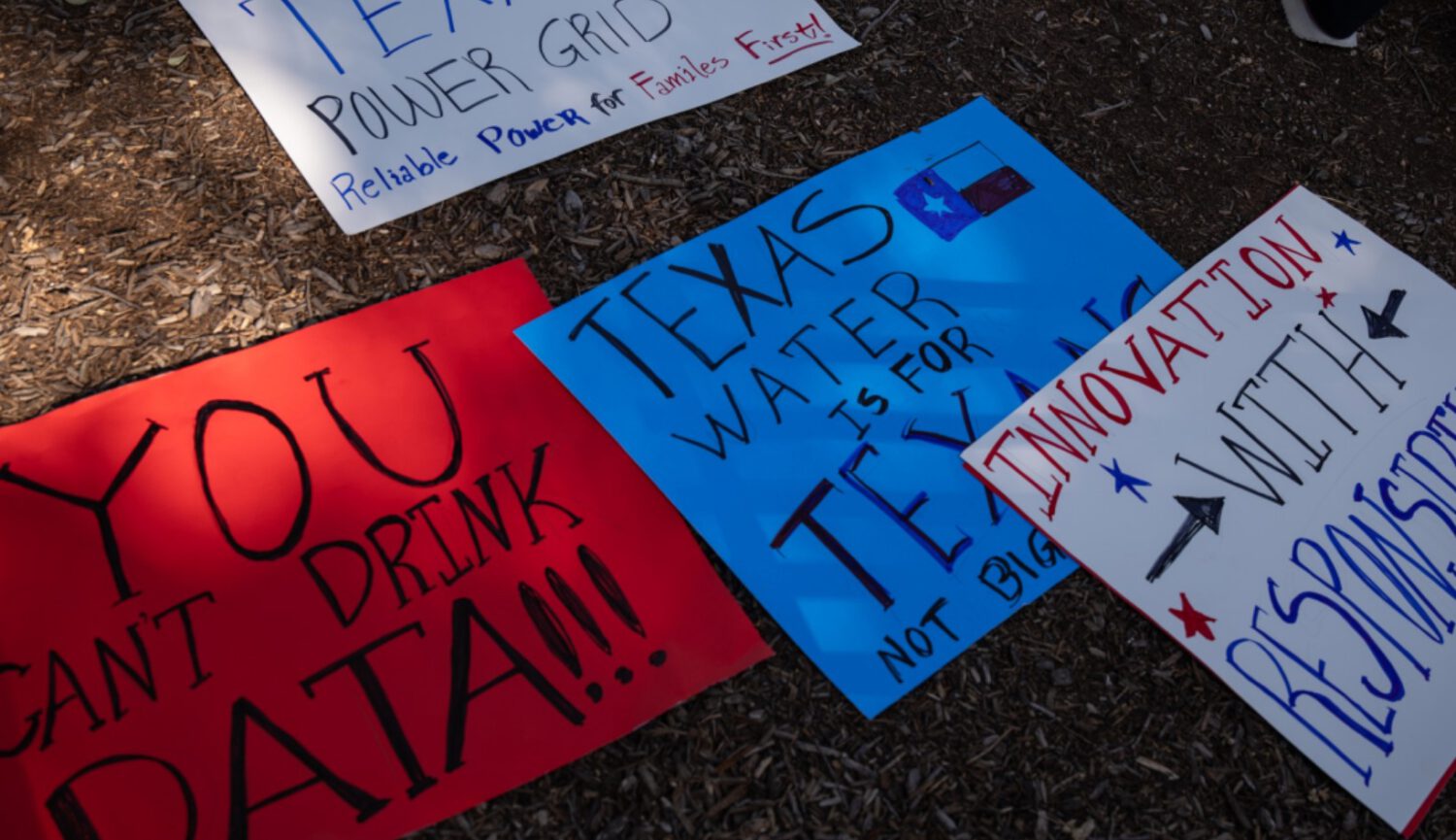
On September 21, 2026, Gov. Greg Abbott directed the Texas Commission on Environmental Quality to pause all permits related to data center projects. Less than 28 days later, two watchdog groups reviewed TCEQ’s records and reached a troubling conclusion: the machinery had not stopped.
What the Records Show
The permit activity documented after Abbott’s directive suggests the pause meant different things to different offices.
Public Citizen identified at least 16 permitting actions that advanced after the directive, according to its published review. FracTracker Alliance counted 35 such actions, including 14 gas-plant or generator applications that continued through regulatory review, according to FracTracker.
The timing on three of those is difficult to overlook. TCEQ mailed preliminary-decision notices on September 22, one day after the directive, for major-source air-permit applications covering VoltaGrid’s ABI-1 power plant in Abilene, NRG’s Prairie Energy Center in Grandview, and Nexus’s self-powered data center in Hubbard, according to Public Citizen and Inside Climate News. Those three projects carry a combined potential to emit 38 million tons of air pollution per year, according to Public Citizen’s analysis.
Eight applications were placed into expedited review after the directive, FracTracker reported, including an air permit for engines and turbines intended to power a data center in Irving. Stormwater authorizations continued as well, with actions recorded for Caldwell Valley Technology Park, Crusoe’s Abilene campus, and EdgeConneX’s Cedar Creek campus, according to Inside Climate News.
Public Citizen described the situation as “business as usual” for data centers, arguing the activity undermines public trust in TCEQ.
The Definitional Gap TCEQ Needs to Close
The core dispute is not whether permits were signed, but whether reviewing them, advancing them, and authorizing related site work counts as a pause.
Abbott’s press secretary, Andrew Mahaleris, said no permits were approved and that TCEQ had not taken and would not take proactive actions related to approving data-center permits, according to CNBC. That position is defensible only if “approving” is the one word that matters.
FracTracker researcher Sam Law said the agency’s stated interpretation, that companies could submit applications but not advance them, was not reflected in its permitting records. That gap between stated policy and documented action is where the real problem lives.
Stormwater coverage is not a minor paperwork formality. According to Law and FracTracker, it can authorize land disturbance and site preparation, meaning developers may begin grading and clearing before a final facility permit exists. Whether that applies to any specific project depends on the authorization, local rules, and other required approvals, but the broader point stands: different regulatory steps can enable construction-adjacent work in sequence.
TCEQ’s stated position and its permitting records appear to conflict. Clearer agency guidance, one that explicitly covers application review, public notices, emissions certifications, and stormwater authorizations rather than only final signatures, would close that ambiguity before more projects quietly advance through the queue.
Political Context Worth Noting
Campaign contributions from data-center-related interests add context to a regulatory dispute that turns on how a governor’s directive is interpreted.
The Texas Tribune reported that Abbott received approximately $9 million in data-center-related contributions since July 2025. Roughly $2.8 million of that total arrived after the permitting pause was announced, representing about 13% of his donations during that period, according to the Tribune. The Tribune noted a distinction between direct industry donors and those with indirect financial ties to data centers; the cited reporting does not allege or establish wrongdoing.
A Pause Needs to Mean Something
If you live near one of these proposed facilities, the definition of “pause” is not an administrative technicality: it determines what gets built near your community before the state finishes its review.
Residents near proposed gas plants received public notices triggering formal comment periods, which gives them a real opportunity to participate. What they deserve to know is whether the state’s pause covers the full permitting pipeline or only the signature at the very end of it.
A genuine moratorium requires a definition precise enough that an agency cannot interpret its way around it. Texas should establish, in writing, exactly which regulatory actions are suspended: not just final approvals, but every step that moves a project closer to a shovel in the ground. If you live near one of these proposed sites, AI data centers and the infrastructure built to power them can affect your community long before a final permit is signed.