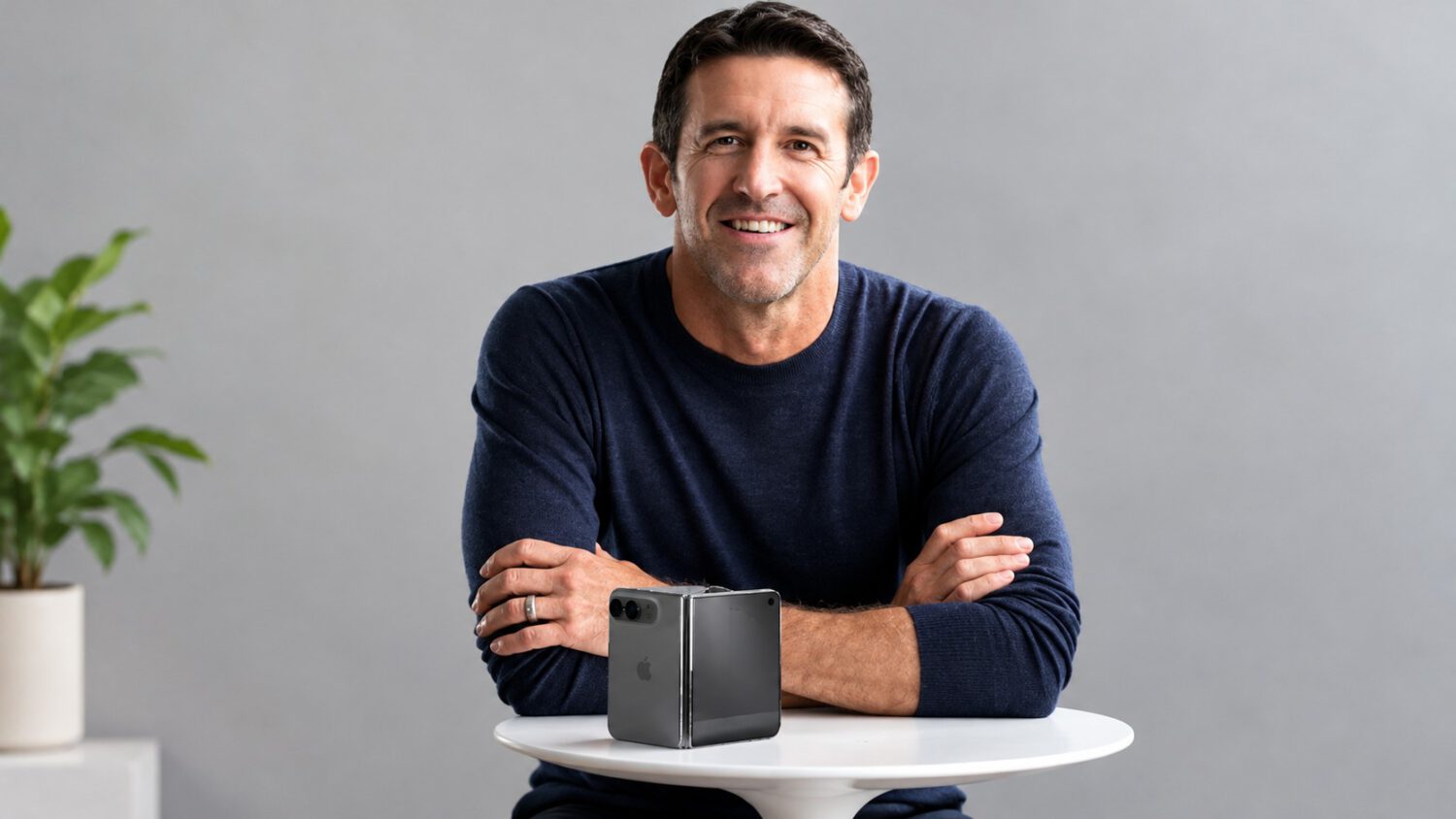
Apple CEO John Ternus told TIME that early foldable phones felt “kind of cheap and crappy,” a characterization he offered while discussing the company’s first foldable iPhone, the iPhone Duo. Samsung released its first foldable smartphone in 2019, giving it a multiyear head start in the category, and has since set pre-order records with its latest flagship lineup.
The question worth asking is not whether Apple finally showed up. It is whether arriving years later with better materials actually justifies a $1,999 starting price.
Seven Years in the Making
Apple’s foldable ambitions trace to a 2011 patent application, but the company’s stated rationale for waiting centers on materials and manufacturing quality rather than timeline.
According to 9to5Mac, Ternus and five other Apple engineers filed a patent application in 2011 exploring requirements for flexible displays, batteries, and circuit boards. Apple’s approach was to wait until materials and manufacturing met its quality standards rather than compete for first-mover status, a strategy consistent with its broader investment in custom silicon and proprietary hardware development.
Ternus’s “cheap and crappy” comment, reported by MacRumors, was made specifically in the context of explaining the Duo’s development timeline, not as a blanket assessment of every foldable currently on the market. Apple’s design team reportedly faced pressure to accept display materials similar to those used in competing devices. Ternus encouraged engineers to keep searching for a better solution, according to iClarified.
What the Duo Actually Delivers
A hinge built from more than 100 precision components and a custom polymer surface are Apple’s engineering answers to the crease problem no foldable has fully solved.
The Duo uses a book-style design with a 5.4-inch outer display and a 7.6-inch inner display, according to MacRumors. TIME reports the hinge contains more than 100 precision components, and the inner surface uses a custom polymer with a matte, light-deflecting finish intended to make the physical fold less conspicuous during use.
Early users cited by TIME reportedly found the crease barely noticeable. That impression is subjective and has not been verified by independent testing; full durability, battery, and hinge assessments were not available at the time of writing.
One limitation Apple has not claimed to eliminate: the crease is reduced, not gone.
Pre-orders open October 16 at 5 a.m. Pacific Time through Apple’s website and the Apple Store app, per Apple’s newsroom. Retail availability begins October 23 across more than 70 countries and regions, including the United States, United Kingdom, Canada, Australia, China, India, Japan, and South Korea.
At $1,999, the Duo is priced above most consumer electronics in its category. Apple has not publicly offered a justification for that figure beyond its emphasis on materials quality and engineering refinement.
The Verdict Is Still Coming
Retail availability on October 23 is when independent reviewers will assess whether the Duo’s engineering improvements hold up beyond first impressions.
Apple delayed, refined, and priced the Duo at a level that invites scrutiny beyond brand loyalty. Whether the reduced crease and precision hinge engineering actually change how you use a phone day to day is a question independent reviews will answer. Specific unknowns include hinge durability over extended use, real-world battery performance across two displays, and crease visibility under direct sunlight. Prospective buyers may also want to explore iPhone accessories to complement the Duo ahead of its October 23 launch.