Most affordable EVs ask you to accept practicality as a trade-off for personality. Citroën’s answer is the 2 CV Concept, a fully electric production preview targeting a 2028 launch at approximately €15,000, which converts to roughly £12,700 to £13,000 at current exchange rates.
This is a concept preview, not a confirmed production car. Specifications are limited, and the price is a target rather than a retail figure.
A Smaller, Lighter Take on an Icon
Cutting weight is the whole strategy here.
At 3.76 metres, the new concept is shorter than the original 2CV. Citroën is targeting a kerb weight of around 1,000 kg; a lighter car needs a smaller, cheaper battery to achieve usable range.
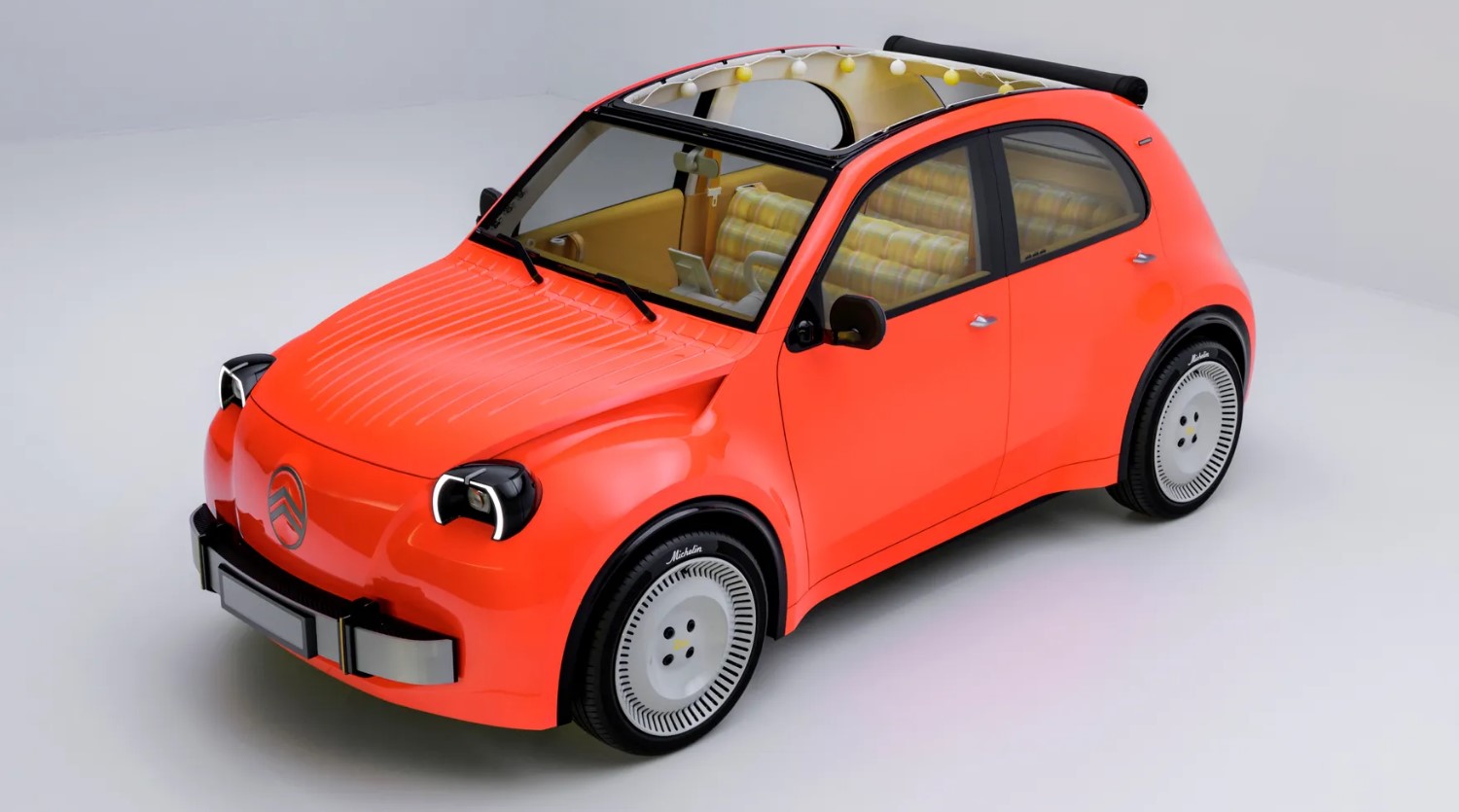
The exterior keeps the original’s rounded proportions. Updates include floating LED headlights, a large double-chevron badge and vertically positioned rear lights.
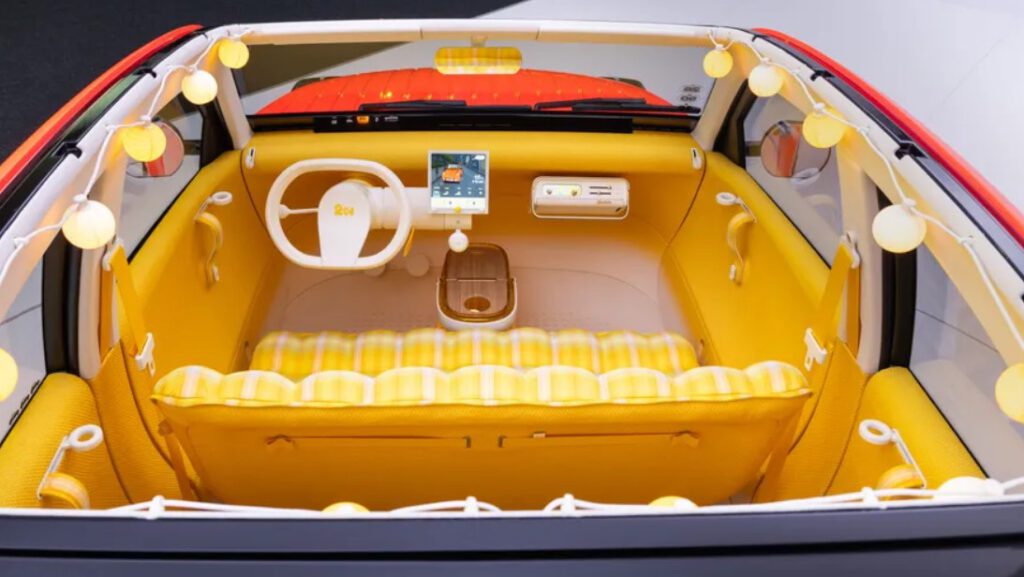
Inside, the layout prioritises simplicity. A single-spoke steering wheel, an 8-inch touchscreen and a slender driver information display set the tone. Removable storage elements include a portable “Radioën” audio system, though these interior details have not been confirmed against an official press kit and should be treated as concept-stage descriptions.
The concept also features a large fabric roof and Michelin tyres with built-in condition monitoring. Citroën has not confirmed whether either feature will reach production.
Key concept figures at a glance:
- Length: 3.76 metres
- Target mass: approximately 1,000 kg
- Target starting price: around €15,000 (roughly £12,700 to £13,000 at current rates)
- Top speed cited by Citroën leadership: approximately 130 km/h (80 mph)
- Production target: 2028
The Numbers Citroën Has Not Released Yet
Range, charging and final pricing remain open questions.
Battery capacity, official WLTP range, charging speed, motor output and acceleration figures have not been announced. Xavier Chardon, speaking to Top Gear, said the car should be capable of reaching 130 km/h while retaining a deliberately efficiency-focused character.
The €15,000 figure is a target. Citroën has not confirmed pricing whether it includes or excludes government purchase incentives, and no UK-specific pricing has been announced.
The proposed European E-Car regulatory framework, designed to support smaller affordable EVs, is still under legislative development. The European Transport Safety Council has raised concerns that the framework could freeze safety requirements for this class of vehicle for an extended period, though Citroën has indicated the production car will meet standard homologation requirements including airbags and electronic stability control.
Where It Sits and Who It Is For
Between the Ami quadricycle and the C3, there is a gap Citroën wants to fill.
The production car is positioned above the tiny Ami quadricycle and below the larger C3 in Citroën’s lineup. The central proposition is approachable electric transport with a clear sense of identity, not maximum range or performance.
Most budget EVs now converge on the same aerodynamic silhouette and touchscreen-heavy interior. They have become, in effect, the appliance version of personal transport. Citroën is betting that emotional identity sells too.
If you are priced out of mainstream EVs or simply find them forgettable, this is the car Citroën wants you to wait for. Whether the price survives production costs, safety homologation and European assembly is the unanswered question.
Until Citroën publishes range, charging performance and confirmed pricing, the electric 2CV is a highly promising preview rather than a confirmed bargain.