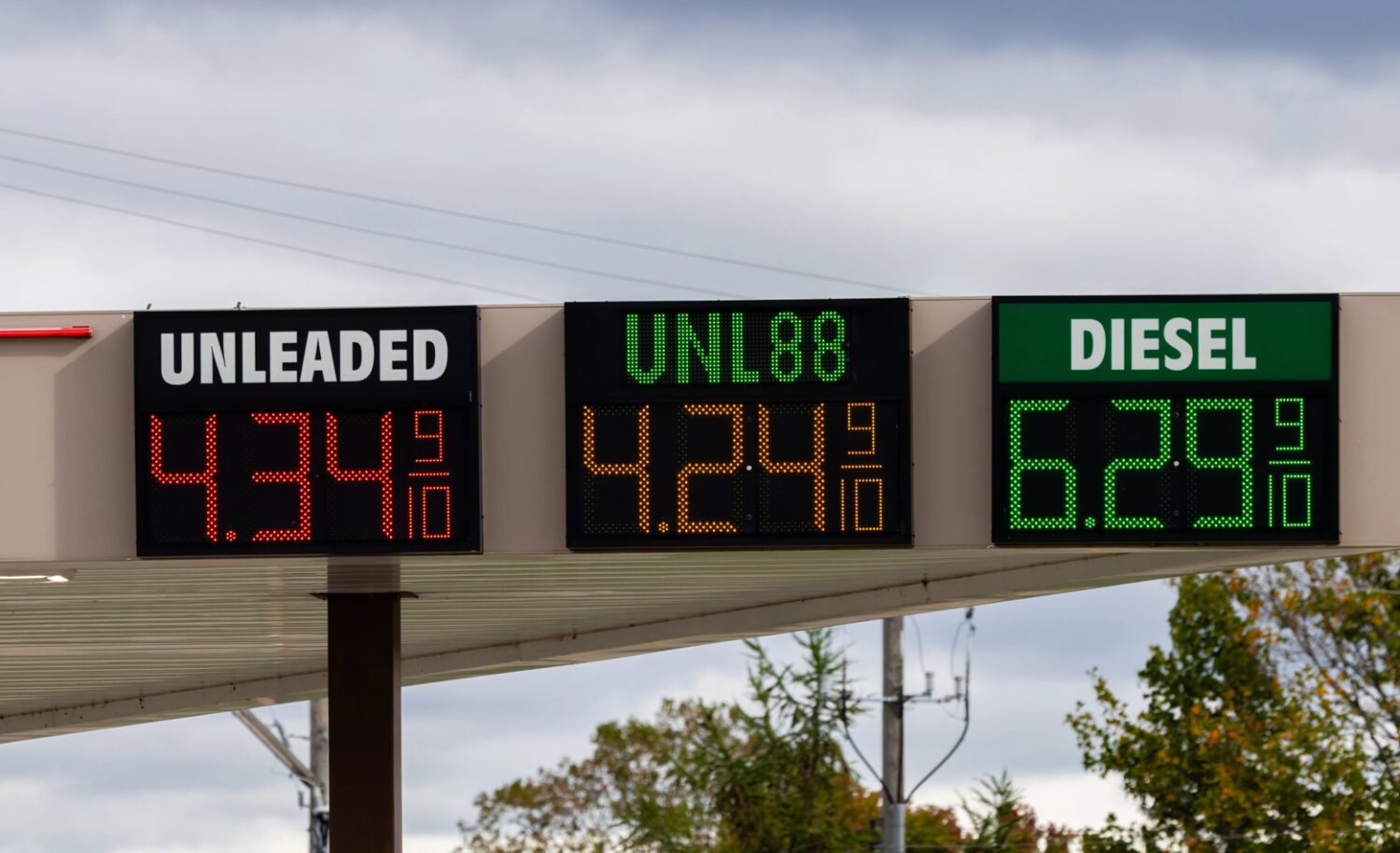
At least 16 U.S. trucking and delivery companies filed for bankruptcy between late August and September 21, according to reporting based on federal court filings and carrier records. Diesel hit a reported record national average of $6.53 per gallon on September 22, according to AAA data cited by NewsNation. Understanding diesel costs relative to other fuel types helps explain why carriers faced such acute pressure at this price level.
Higher fuel costs do not stay at the pump. They can travel downstream to your grocery aisle, your doorstep, and your hardware store shelf, though the degree of pass-through depends on contracts, route length, and each carrier’s ability to absorb costs.
When the Fuel Bill Becomes the Final Bill
Rising diesel prices compounded existing financial stress across carriers of all sizes, from small owner-operators to fleets serving major retailers.
Eight of the identified carriers reportedly sought Chapter 11 protection, which generally allows a business to reorganize its debts and continue operating. Many smaller operators filed Chapter 7, which typically leads to liquidation.
Diesel rose about 72% over 12 months, climbing from approximately $3.71 per gallon to a reported record $6.53, based on AAA data cited by NewsNation. The $3.71 baseline figure and the exact percentage should be confirmed against primary AAA or government price series before treating either number as final.
Fuel was not necessarily the sole cause of every filing. Daniel Kline of TheStreet, as cited in The Drive’s reporting, observed that fuel costs compress trucking margins. He also noted that competition prevents most smaller operators from passing those increased costs to customers. The available reporting frames diesel as a potentially decisive additional stressor on carriers already weakened by weak freight rates, rising insurance costs, maintenance expenses, and intense market competition. Consumers concerned about their own fuel spending may also want to consider whether a recommended fuel filter replacement is truly necessary before agreeing to it.
The affected businesses spanned Arizona, California, Florida, Illinois, and Texas, covering general freight, agricultural hauling, last-mile delivery, and specialized transportation. One Chapter 11 filer was reportedly a Florida-based Amazon delivery contractor, illustrating that this pressure extended well beyond long-haul freight into last-mile operations.
Texas Declares a Diesel Emergency
Texas Gov. Greg Abbott’s statewide disaster proclamation treated fuel availability as a threat to farm operations, freight networks, and household budgets across all 254 counties.
Abbott issued the proclamation in response to diesel shortages and high prices. The declaration signaled that state officials viewed fuel pricing as a risk capable of disrupting farm operations, freight capacity, and consumer expenses statewide, though the precise language of the proclamation should be reviewed to confirm that framing.
The proclamation temporarily allowed carriers to use dyed diesel on public roads. Dyed diesel is normally intended for off-road agricultural and construction equipment and carries different tax treatment under state and federal rules. The order also suspended certain Texas Low Emission Diesel requirements, to the extent the EPA permitted. Weight limits were eased for vehicles hauling fuel, agricultural products, and timber, with reports citing gross vehicle weights up to 95,000 pounds, subject to applicable bridge limits.
Abbott separately requested federal action on ultra-low-sulfur diesel requirements. The emergency measures did not repeal or waive the underlying 20-cent-per-gallon Texas state diesel tax.
The available reporting does not establish that these 16 filings alone caused a measurable nationwide freight capacity shortage. Forward-looking claims about when fuel prices might ease remain speculative and are not supported by confirmed energy-market forecasts in the source material.
If more carriers exit the market, surviving operators may seek higher rates or fuel surcharges to protect their own margins. Those additional costs can move with every shipment, and they can eventually reach you , a reminder that it pays to know what you are paying too much for without realizing it.