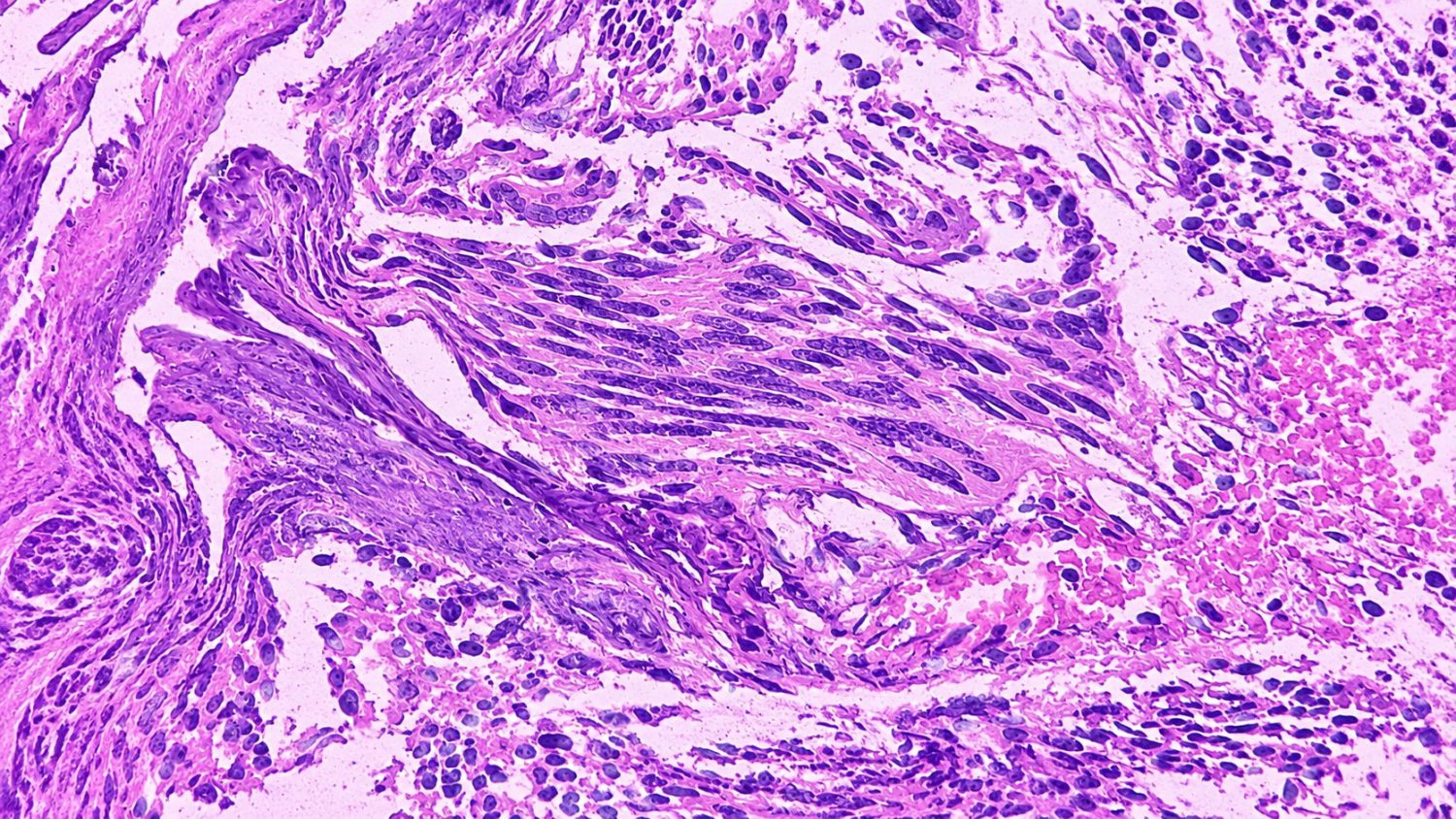
A urine test correctly identifying 95% of localized bladder cancer cases in a study cohort is a result worth paying attention to. Researchers at Stanford Medicine and the VA Palo Alto Health Care System reported that figure in a study published October 2, 2026, in Nature Medicine. The test is a promising investigational assay, not an approved diagnostic product, and the context behind that number matters as much as the number itself.
How the Test Works
uRARE-seq analyzes RNA signals shed by tumor cells into urine, offering a molecular approach that differs from standard DNA-based liquid biopsies.
Tumor cells release RNA messages into urine as they grow. uRARE-seq sequences those signals to assess whether cancer is present and to generate treatment-response predictions. That RNA-based approach is distinct from most liquid-biopsy tests, which search for cancer-associated DNA mutations. The assay reportedly detected non-muscle-invasive bladder cancer, an early form that has not yet breached the bladder wall, which standard urine cytology can miss.
The research team analyzed 683 urine samples from people with bladder cancer and healthy volunteers. Key results from the Nature Medicine study:
- 95% sensitivity: correctly identified participants with localized bladder cancer
- Approximately 90% specificity: correctly identified participants without bladder cancer
- Outperformed standard urine cytology and a DNA-based urine test in the same sample set
- Produced an investigational biomarker intended to predict likely response to immunotherapy or chemotherapy
That treatment-prediction finding is a research result. It does not mean the assay is currently authorized to guide therapy for individual patients.
What the Numbers Actually Mean
A 95% sensitivity figure from a controlled study cohort does not guarantee identical performance across broader clinical populations.
Sensitivity measures how reliably a test identifies people who have the disease. Specificity measures how reliably it returns a negative result for people who do not. Both figures can shift when cancer stage, patient mix, disease prevalence, sample handling, and lab procedures differ from study conditions. If you are a patient navigating a bladder cancer evaluation, that distinction is not a technicality; it is the difference between a research result and a tool your physician can rely on.
uRARE-seq also enters a competitive and evolving field. A 2025 prospective multicenter study of a urinary DNA-methylation test reported 89.2% sensitivity and 87.8% specificity for high-grade or invasive bladder cancer, according to research published in JAMA Oncology. The Stanford team’s reported figures are numerically higher, but the two studies evaluated different assays, populations, and disease endpoints. No head-to-head comparison in an independent population has been established.
No FDA clearance or regulatory authorization for uRARE-seq was confirmed in the available sources. The assay should be understood as an investigational tool, not a commercially available diagnostic or a substitute for cystoscopy, imaging, or physician evaluation.
What Comes Next
Independent, prospective trials across diverse patient populations are required before uRARE-seq can change clinical practice.
Those trials need to confirm performance in people with blood in the urine, other urinary conditions, recurrent cancer, and varying disease stages. The treatment-prediction biomarker requires separate clinical studies demonstrating that acting on it improves patient outcomes. Until that validation is complete and regulators have reviewed the evidence, cystoscopy remains the standard of care, and no currently available urine test has replaced it.