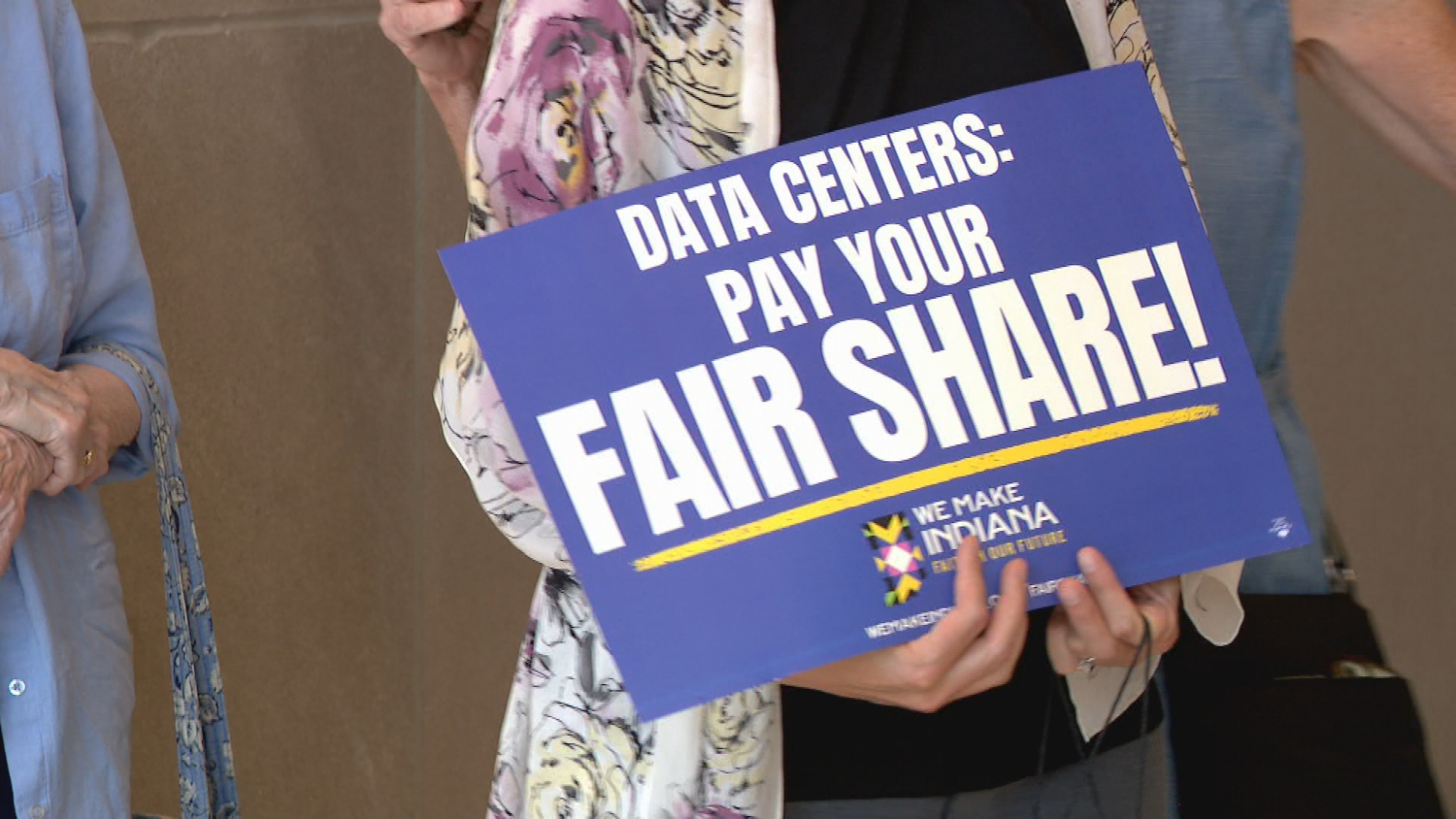
Microsoft’s planned Granger, Indiana data center site spans roughly 900 acres; construction is expected to begin in fall 2026. A coalition of Indiana faith communities submitted a formal proposal asking Microsoft for 1 cent on every dollar of project costs. Months later, the company has not committed to the agreement.
A Binding Agreement, Not a Donation
The dispute is not about stopping a data center; it is about who bears responsibility for what comes with one.
One cent on the dollar. That is what a coalition of Indiana congregations and community organizations asked from one of the world’s most valuable companies, and the coalition says it has not received a substantive response.
We Make Indiana submitted its Fair Share Agreement proposal to Microsoft in May 2026, tied to the company’s planned data center near Granger in St. Joseph County. The group’s stated goal is to change the terms of the project, not to stop it, before construction is expected to begin in fall 2026 and operations potentially start as early as 2029.
The proposal differs from ordinary corporate philanthropy in three concrete ways. It would be legally enforceable rather than discretionary, recurring over the construction and operating life of the facility rather than structured as a one-time grant, and governed by an independent community board rather than the company itself.
At 1% of project costs, the coalition estimates the fund could generate approximately $30 million to $40 million annually for community programs. That figure is an advocacy-group projection, not a verified Microsoft financial disclosure. Priority areas the coalition named include health care, child care, elder care, transportation, affordable housing, environmental protection, energy use, and workforce development. We Make Indiana has also requested stronger commitments on water consumption, air quality, sustainability, and decommissioning.
Still Listening, Still Deciding
Microsoft says investment decisions have not been finalized, but the coalition says that explanation has worn thin.
Microsoft’s public position is that the proposal is part of its community-listening process. The company says it is too early to discuss final investment decisions because it is still engaging other community leaders.
At a Granger open house, Microsoft representatives described the project as being in an early design phase, according to local reporting from ABC57. They said the facility is expected to use a closed-loop cooling system. Residents raised questions about environmental impacts and long-term community commitments.
Voluntary initiatives the company has supported in the area include education programs, digital-skills training, community-college partnerships, natural-land preservation, and hunger relief. Available reporting does not establish the total value of those commitments or confirm they address the specific priorities We Make Indiana identified.
As of publication, Microsoft has not committed to the Fair Share Agreement.
Decades of Exemptions, One-Time Grants
Understanding the coalition’s frustration requires a look at how Indiana rewards data-center developers with public money.
Indiana allows qualifying data centers to receive sales- and use-tax exemptions on eligible equipment and energy purchases. The exemption generally lasts up to 25 years for investments below $750 million and can extend to 50 years for larger investments, according to the Indiana Economic Development Corporation.
A tax-incentive review by the Indiana General Assembly found that seven Indiana projects had qualified for a combined expected investment of $20.8 billion. Exempt equipment expenditures across those projects could range from approximately $2.2 billion to $13.2 billion. At Indiana’s 7% sales-tax rate, potential foregone revenue could range from roughly $150 million to $900 million across the same projects, not as a figure attributable solely to Microsoft’s Granger development.
WFYI reported on the $900 million figure as a high-end projection across the statewide program. Indiana’s official position is that exemptions are performance-based and depend on qualifying investments, so not every projected dollar will necessarily be foregone.
We Make Indiana’s core argument rests on that gap. Voluntary one-time grants, the coalition contends, are not proportional to the scale of a project or the value of long-duration tax benefits available to the developer.
From Indiana to Pennsylvania, a Wider Debate
The Granger dispute is one front in a growing national argument over what communities can demand from AI infrastructure.
Pennsylvania state Sen. Lindsey M. Williams has proposed legislation requiring data-center developers to enter legally binding community-benefits agreements. Her bill would require contributions of at least 10% of total project costs to a fund covering workforce development, environmental improvements, public safety, infrastructure, affordable housing, and energy impacts. That figure is substantially higher than the 1% to 2% range We Make Indiana initially considered. The coalition asked Microsoft to help determine a fair percentage rather than presenting a fixed demand.
Community organizers in St. Joseph County are also considering whether future negotiations over tax incentives or a proposed tax-increment-financing district could serve as leverage. The proposed district could cover approximately 4,000 acres, including the 900-acre Microsoft site, according to the South Bend Tribune. That approach remains a strategy under discussion, not a confirmed outcome.
One additional point of comparison: Microsoft announced a distinct $1 billion data-center investment in La Porte, Indiana, in 2024, with a 35-year sales-tax-credit term tied to that project. Its incentive terms are separate from the Granger development and should not be conflated with it.
What the Silence Signals
The answer Microsoft has not yet given may shape how communities across the country approach the next wave of AI infrastructure.
If St. Joseph County officials use incentive negotiations or TIF approval as leverage, Granger could become a test case for whether communities hosting AI infrastructure can secure durable, enforceable benefits. Other communities facing similar proposals are tracking the outcome. The question is whether voluntary programs and public-relations commitments can substitute for binding agreements, and whether Microsoft will engage that question before local officials force it to.