For 86 hours, Lindsey Isaacs sat in solitary confinement for a crash prosecutors later dropped all charges over. The thing that put her there was a camera recording her car driving down a road.
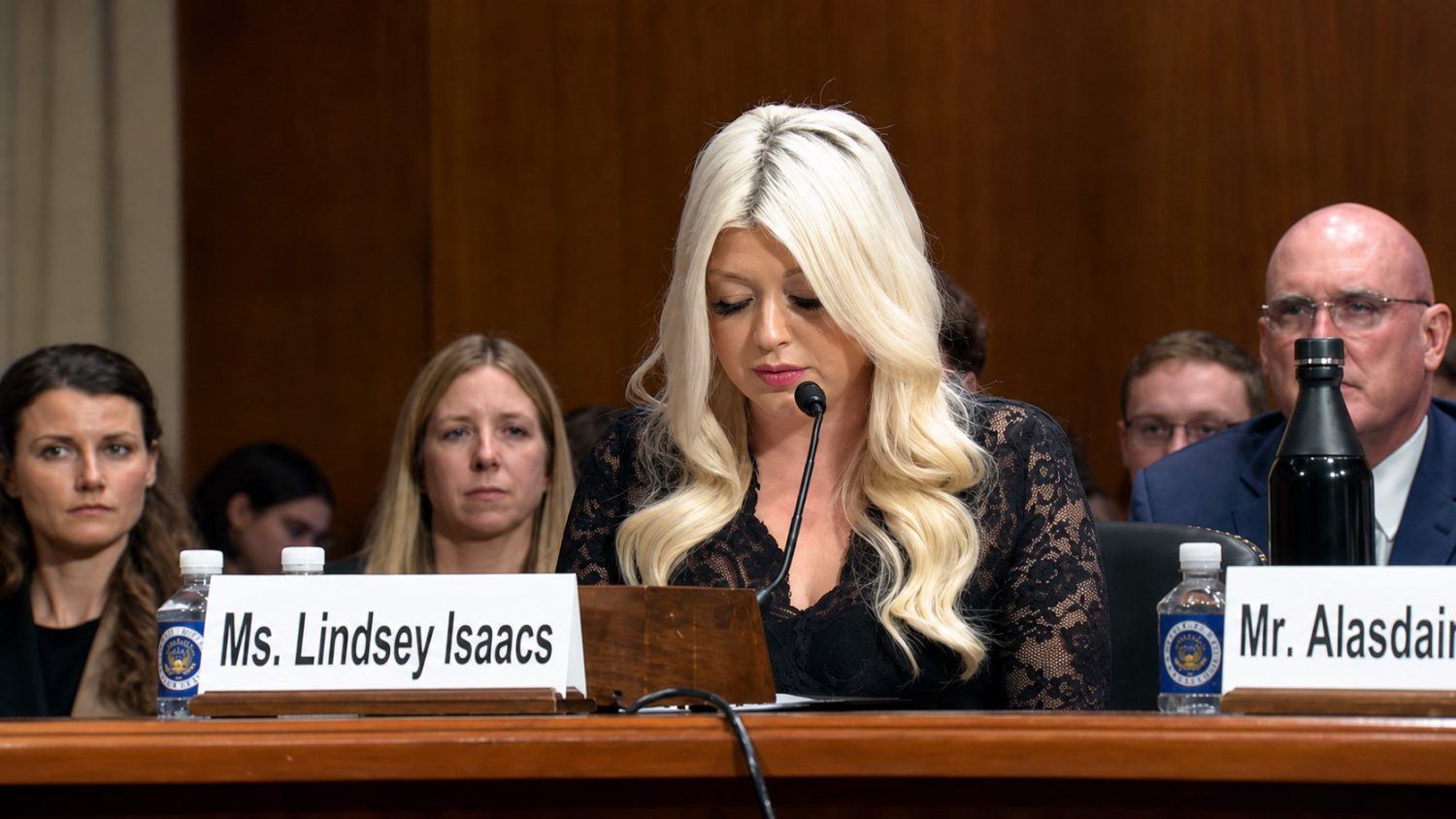
On Sept. 23, 2026, the 23-year-old Palm Beach, Florida resident testified before the U.S. Senate Judiciary Subcommittee on Crime and Counterterrorism. According to her written Senate testimony, a Flock Safety automated license-plate recognition camera record became part of an investigation that ended with her arrest on eight felony charges, including three counts of vehicular homicide.
How a Camera Record Became Eight Felony Charges
A single vehicle-location record outlasted witness accounts, physical evidence, and basic investigative logic.
On Oct. 4, 2025, a crash on Interstate 4 in Volusia County killed three people. Investigators were searching for a Dodge Durango connected to the collision, according to WFTV and CBS12 reporting.
A Flock Safety camera recorded Isaacs’ black Dodge Durango approximately two to three miles from the crash scene. According to Isaacs’ testimony and subsequent reporting, that camera record became central to the investigation that led to her arrest.
Here is what that record actually established: a vehicle was near a location at a particular time. Automated license-plate recognition systems, or ALPR, generate investigative leads by capturing vehicle characteristics and plate data. They do not identify who was driving, and they do not establish that a vehicle caused a crash. Flock Safety has said publicly, per Atlanta News First reporting, that its cameras provide investigative leads and do not determine identity or guilt.
Investigators pursued Isaacs even as other evidence pointed elsewhere. Witnesses reportedly described the suspect vehicle as a different color, according to Fox 35 and Atlanta News First. Isaacs’ Durango did not show the physical damage that reporting indicates investigators would have expected to see. Florida Highway Patrol arrested her in April 2026.
“That piece of information became part of an investigation that ultimately led to my arrest on three counts of vehicular homicide and 13 days in jail for a crash I had nothing to do with.” Lindsey Isaacs, Senate testimony
What the System Owes the People It Gets Wrong
The sequence of Isaacs’ detention illustrates the concrete costs of an uncorroborated camera lead.
After her arrest, Isaacs was placed in solitary confinement for roughly three and a half days. Correctional officers told her the isolation was required because of the severity of the charges and pending evaluation, according to her written Senate testimony.
She was then moved to a mental-health unit for approximately 24 hours before being transferred to maximum-security housing. She remained there for the rest of her 13-day detention, according to her testimony and reporting by The Center Square.
Isaacs testified that at her lowest point, she did not want to live. That detail comes directly from her Senate testimony and has not been independently verified as a clinical or institutional finding.
Prosecutors eventually dropped all charges. A later investigation identified another woman, Alisa Montalvo, as the suspected driver in connection with the crash, according to Fox 35. Isaacs has since filed a civil lawsuit against Florida Highway Patrol troopers and the agency. Those claims remain allegations and have not been resolved by a court.
The accountability question here is not whether ALPR cameras should exist. It is whether investigators adequately weighed physical evidence that contradicted the camera record before seeking an arrest warrant. Think of it like a GPS pin dropped on a map: it tells you a device was near a location, not what the person carrying it did when they arrived. A camera match is the beginning of an investigation, not its conclusion.
Mandatory corroboration standards before a camera lead can support an arrest warrant are a concrete starting point. So are documented review of exculpatory evidence and clear disclosure obligations to defendants. Legislators, prosecutors, police departments, and ALPR vendors all have a stake in closing that gap. Isaacs’ case puts a human face on what happens when institutions skip those steps.