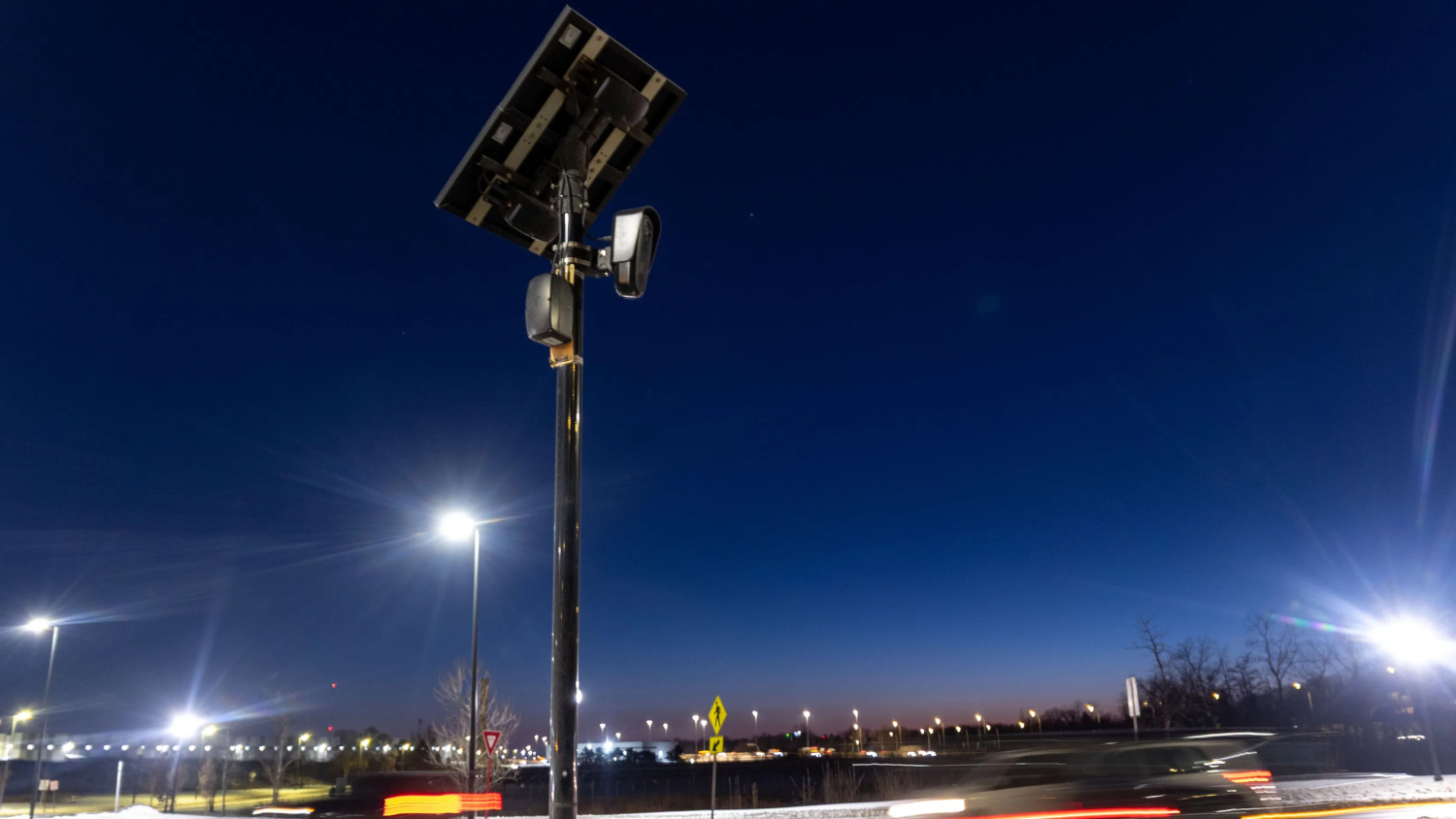
The details are mundane: someone lingers near a stop sign around midnight. Somewhere, a cop opens Flock Safety‘s dashboard, selects “Curfew/Loitering/Vagrancy Violations,” and queries thousands of cameras across multiple states. No case number. Just a hunch. That’s not a hypothetical — it’s documented in public records obtained by the watchdog project Have I Been Flocked. Flock Safety, backed by Andreessen Horowitz and roughly $150 million in Series D funding alone, operates around 120,000 cameras across U.S. roads. CEO Garrett Langley’s stated mission is to “eliminate crime.” The audit logs suggest the system has a more elastic definition of crime than that pitch implies.
The gap between Flock’s investor narrative and documented police behavior is wide — and the records make it concrete.
The investor narrative is vivid. Andreessen Horowitz described Flock’s results as “astounding” in aiding Amber alerts, reducing burglaries, and solving violent crimes. Langley has publicly predicted the network could eradicate almost all crime within a decade. What Have I Been Flocked found in FOIA-obtained records from Plano, Illinois alone: more than 1,200 searches under “Curfew/Loitering/Vagrancy Violations.” One town’s camera network. The national total is almost certainly far higher.
Here’s what officers actually entered as justification in the logs:
- Someone “lingering at a stop sign around midnight”
- A person leaving a house “with a significant amount of traffic”
- An “outside agency dropping vagrant off”
- Tennessee’s fusion center — a joint TBI and Homeland Security operation — querying more than 17,000 Flock cameras, according to FOIA-obtained audit logs, for a “suspicious person at planned protest site”
- Dozens of searches with no case number attached
This isn’t local. Audit records show agencies hundreds of miles away tapping into other towns’ networks under vagrancy categories — a Georgia department querying Plano’s cameras, 600-plus miles distant. The infrastructure functions less like a local crime tool and more like a national surveillance web with minimal friction.
“Technology sold on ‘movie plot scenario, dramatic saving the day’ stories,” ACLU senior policy analyst Jay Stanley told Patch, ends up “used to nickel and dime people for the most prosaic offenses.”
That pattern didn’t emerge from nowhere — it has a century of legal history behind it.
Loitering and vagrancy laws functioned for decades as pretext tools, used to target Black Americans, the homeless, and immigrants for the offense of existing in public. The Supreme Court struck down a Jacksonville ordinance in Papachristou v. City of Jacksonville (1972) for criminalizing “wandering” without lawful purpose. Embedding “Curfew/Loitering/Vagrancy Violations” as a dropdown category in an AI-driven national camera network doesn’t erase that history. It automates it.
Flock self-regulates. Departments self-monitor. Illinois law restricts LPR data use for immigration and reproductive health investigations — but says nothing about vagrancy or protest surveillance. Flock denies using facial recognition and told CNN the system isn’t designed to track people on foot. The audit logs suggest the practical reality is more elastic than the official position. Usage, it turns out, creates its own norms.
Tools like Have I Been Flocked and DeFlock The USA now let anyone check whether their plate has been queried. That’s the situation: a private company’s cameras, backed by hundreds of millions in venture capital, may have already logged your movements across thousands of networks. The documented justification, in some cases, is that someone was standing outside.