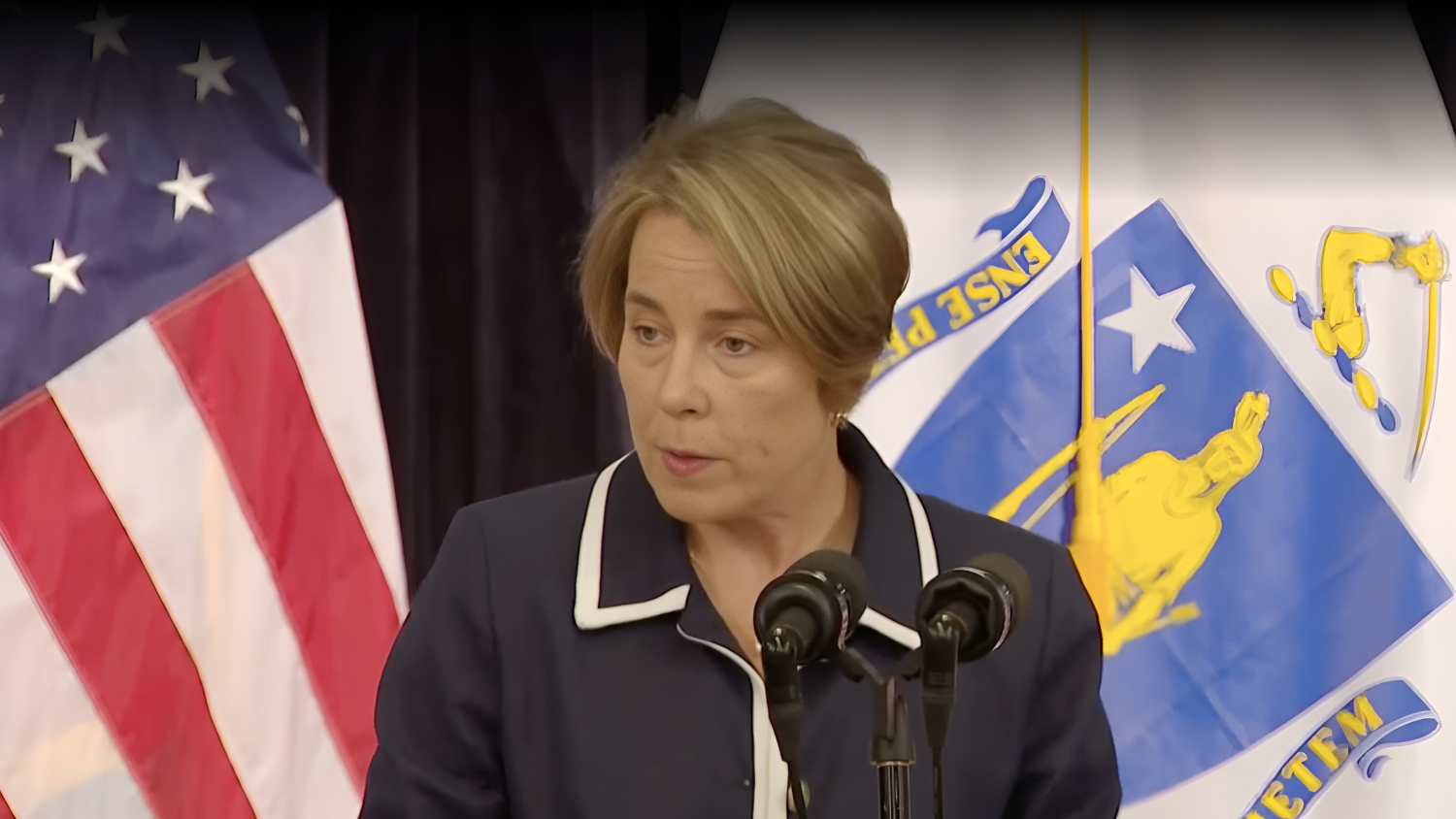
Your town is suddenly hosting a facility that drinks as much electricity as 100,000 homes — then getting the bill. That’s not dystopian fiction; that’s the math behind a single AI-focused data center, according to the International Energy Agency. On September 8, Gov. Maura Healey signed Executive Order 658 to make sure Massachusetts communities never absorb that cost quietly. Her position, stated plainly: “Unless a community says yes to a data center, we are saying no.”
That requirement alone makes Massachusetts an outlier among permitting-friendly states.
Local Approval First, Permits Second
The 25-megawatt threshold separates a modest server room from an AI-hungry facility — and it determines whether your community gets a seat at the table.
The 25-megawatt threshold is the trigger. Above it, your town becomes a required partner, not an afterthought. Developers must secure a community benefits agreement with local stakeholders — meeting state environmental justice standards — before MassDEP, the Energy Facilities Siting Board, or the MEPA Office will touch a single permit application. NDAs with state agencies are banned outright, eliminating backroom arrangements on grid costs or community impacts before they start.
What Developers Must Do
EO 658 sets five non-negotiable conditions for any large data center seeking to operate in the state.
- Secure a community benefits agreement meeting state environmental justice standards before any permit advances
- Bring their own clean energy — procuring enough new clean electricity to cover all annual consumption under the Massachusetts Clean Energy Standard
- Cover the full cost of grid infrastructure and interconnection upgrades — not ratepayers
- Protect local water supply; no compromising availability or quality, especially during drought
- Pay into a Ratepayer Protection Fund if clean-energy obligations fall short, with fees returned directly to ratepayers
Massachusetts already had roughly 40 data centers before this order landed. The Markley Group’s Lowell expansion was court-ordered to pause after private citizens sued — a preview of exactly the conflicts EO 658 aims to structure. Republican challenger Mike Minogue reads the situation differently: the problem is insufficient energy infrastructure, not the facilities themselves. His January comparison carries weight — Massachusetts has roughly 6% as many data centers as Virginia, which he attributes to the state lacking adequate power capacity. More nuclear, more pipelines, more grid. Two competing visions; voters will decide.
Massachusetts vs. New York, Two Different Playbooks
Three neighboring states faced the same pressure and arrived at three very different answers.
New York Gov. Kathy Hochul signed the nation’s first statewide moratorium on hyperscale data centers — those pulling 50 MW or more — in July 2026, pausing state environmental permits while regulators build a framework. Massachusetts chose conditional approval instead: build here, but on the state’s terms, with community buy-in secured upfront. Maine Gov. Janet Mills vetoed a moratorium bill entirely. Sen. Ed Markey wants one national answer, arguing that “every community should be able to say ‘no’ to data centers if they don’t want them” when the risks include electricity spikes, water crises, and pollution.
The IEA puts data centers at 1.5% of global electricity consumption in 2024, and AI infrastructure is pushing that share higher fast. With no federal AI law in place, Massachusetts’ local-veto-plus-bring-your-own-clean-energy model may be the template other states reach for next — and the AI industry’s site-selection calculus will never look quite the same again.