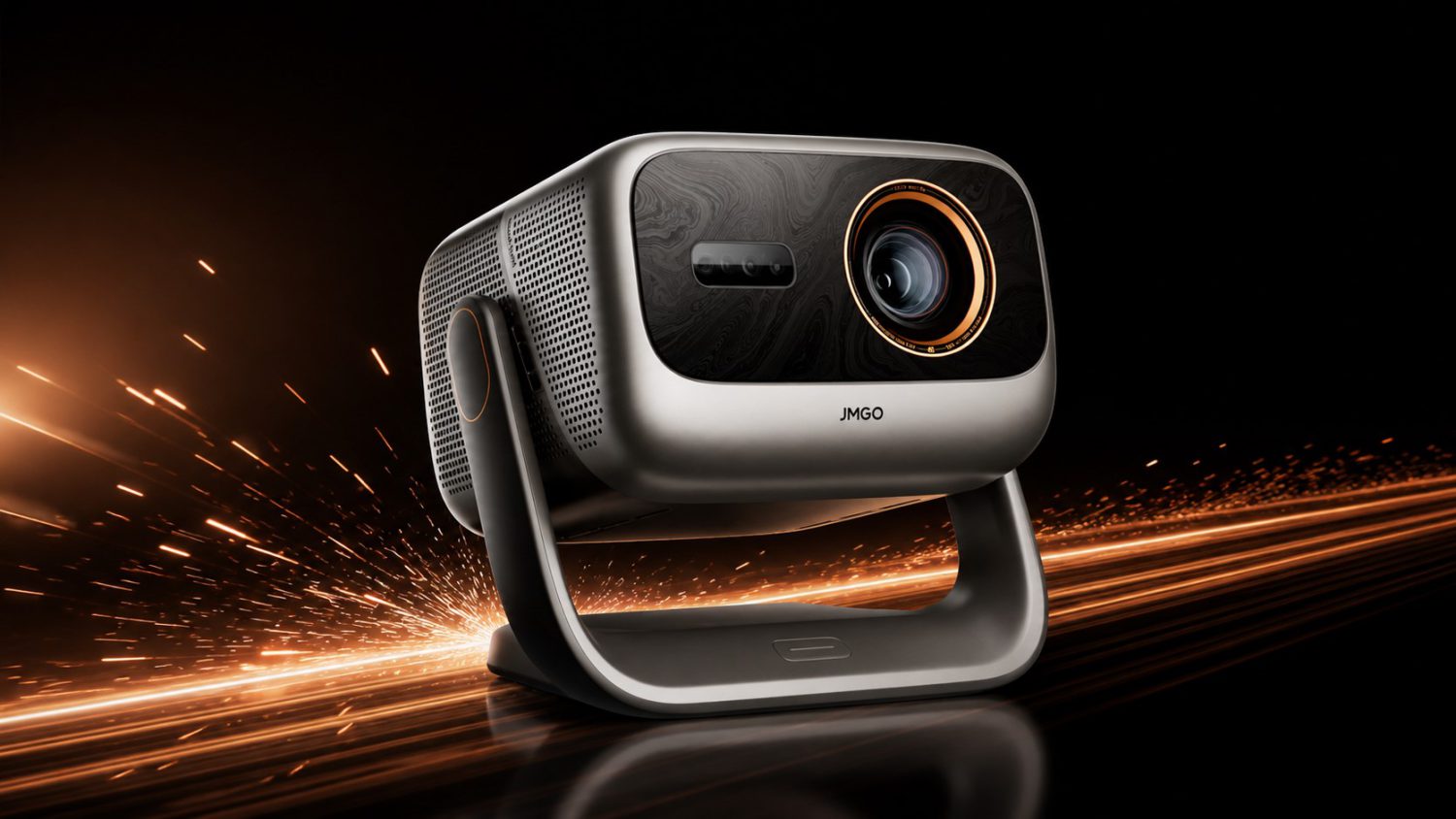
Projector gaming has always been a hostage negotiation. Want true 4K? Enjoy your 60Hz. Want 120Hz? Watch the resolution quietly downgrade itself. JMGO’s new Iris series, debuted at IFA 2026 in Berlin, claims to finally end that standoff — delivering genuine 4K at 120Hz from signal to screen, no pixel-shifting shortcuts. That claim is worth scrutinizing. It’s also worth taking seriously.
The Engine Behind the Claim
The secret is a mirror moving 480 times per second.
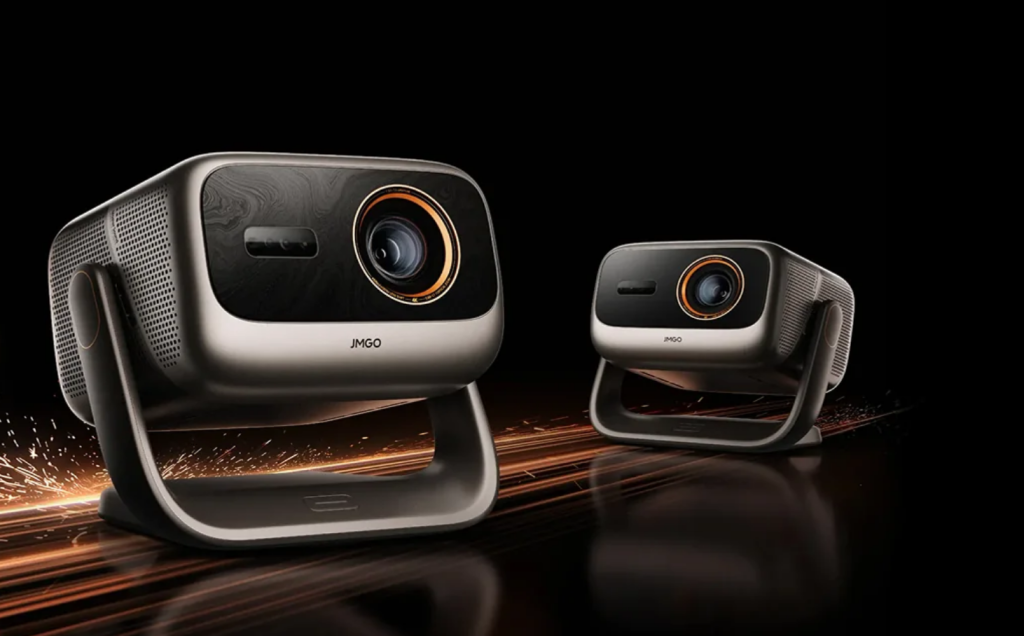
Conventional DLP actuators shift mirrors 240 times per second. JMGO’s proprietary HyperPulse Actuator doubles that rate, paired with a dual-DLPC controller setup. The result, according to JMGO’s IFA 2026 launch materials and corroborated by Forbes, is full 3,840×2,160 resolution maintained at 120Hz — not approximated through resolution scaling.
The Iris Ultra Max pushes 6,500 ISO lumens with 10,000:1 native contrast and a triple-laser engine covering 110% of the BT.2020 color gamut. The Iris Ultra steps down to 4,500 lumens and 7,000:1 contrast but keeps the same 4K/120Hz core. Both use a 15-blade dual-iris system that suppresses stray light roughly 11% better than standard 12-blade designs — the kind of detail that matters when black levels make or break an HDR scene. Optics are genuinely flexible: 0.88–1.7:1 optical zoom, ±130% vertical and ±53% horizontal lens shift. The Ultra Max adds an AI-powered gimbal with 360° pan and 150° tilt for easier screen alignment without manual fiddling.
Your PS5 Finally Has a Worthy Screen
The full gaming spec stack is here — with some honest caveats attached.
The Iris series arrives with:
- VRR
- ALLM
- Dolby Vision at 4K/120Hz
- 4K/120Hz MEMC
- Dedicated anti-RBE hardware targeting DLP’s notorious video games rainbow artifact problem
Google TV handles the smart platform side, though regional OS variations may apply — worth confirming before ordering.
Early-bird pricing opened September 4, 2026:
| Model | Early-Bird Price | MSRP |
|---|---|---|
| Iris Ultra Max | $2,999 | $3,499 |
| Iris Ultra | $1,899 | $2,399 |
Both available via JMGO’s webstore. The closest rival at IFA was AWOL Vision’s LuxVision UST projector — 6,000 ISO lumens, a 0.18:1 throw ratio, and a claimed 1ms input lag at around $5,999, per AWOL’s IFA press release. JMGO trades UST’s cabinet-distance convenience for installation flexibility and roughly $3,000 in savings. Independent input-lag benchmarks for either brand’s new models don’t exist yet. Specs on a press release and specs confirmed by a calibrated meter are two different things — and that gap matters.
“JMGO Iris Ultra Max is the world’s first 4K@120Hz smart DLP projector,” the company stated at IFA 2026 — a claim Forbes describes as credible given the dual-DLPC architecture.
Laser speckle, fan noise, and residual rainbow artifacts are real risks with any bright triple-laser DLP system. JMGO’s mitigation hardware is a step in the right direction. Long-term independent testing will tell the actual story.
The Verdict Before the Verdict
Start clearing wall space — but keep your expectations calibrated until reviewers weigh in.
If your room goes reasonably dark and 150 inches of 4K at 120Hz sounds better than another streaming service subscription, the Iris Ultra Max is the most technically credible projector answer yet — at a price that doesn’t require a second mortgage. The architecture is genuinely novel. What it needs now is six months of reviewers stress-testing it with PS5s, high-end gaming rigs, and real living rooms before the spec sheet becomes a verdict.