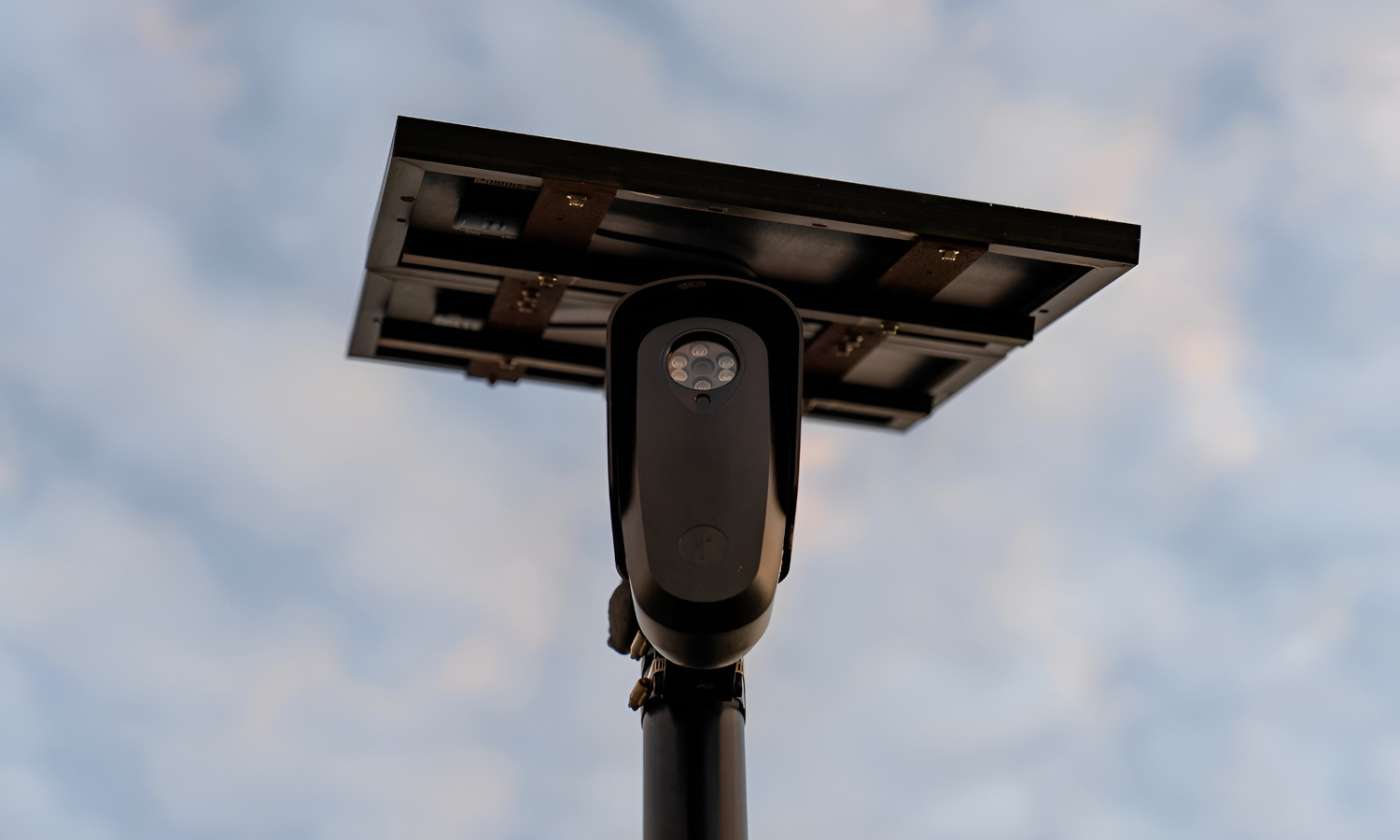
On a public sidewalk, a credentialed TV journalist pointed a camera at a contractor bolting surveillance hardware to a pole — and three officers arrived. The journalist was detained. Nobody was suspected of a crime. The installer simply didn’t want to be filmed doing it, which is a striking posture for someone deploying a system about to do exactly that to everyone else who drives past.
That’s the inversion at the center of this story: a system built to watch you, apparently uncomfortable being watched itself.
What Flock Actually Does
Flock’s 120,000 cameras don’t just read plates — they build a detailed file on your vehicle every time you drive past one.
Flock Safety’s automatic license plate reader (ALPR) cameras capture your plate, vehicle make, model, color, and visible details like bumper stickers and decals, assembling what the company calls a “vehicle signature.” That signature gets checked against law-enforcement databases in real time. More than 120,000 of these cameras are now active across 6,000-plus cities in 49 states, scanning plates billions of times per month. Data is stored for 30 days by default — though Flock has recently shifted its recommended default toward shorter retention windows depending on contract terms. There’s a reasonable chance one of these cameras is already mounted near your commute. In most communities, your local government approved the contract without a public referendum.
The documented problems are not minor edge cases:
- A misread digit — a “7” logged as a “2” — triggered a wrongful stop of an innocent driver, according to Business Insider.
- More than 50 officers have been investigated or punished for using ALPR data to secretly tracking romantic partners or exes, according to a Washington Post investigation.
- EFF reports Flock infrastructure has been used to track protesters, Romani people, and women seeking reproductive health care.
- The Institute for Justice has sued Norfolk Police alleging Fourth Amendment violations tied to Flock surveillance.
- The ACLU describes Flock’s recent privacy updates as “a thinly veiled PR attempt” that leaves the core civil-liberties risks untouched.
The journalist’s detention wasn’t triggered by any of that data. No hotlist hit. No stolen-car flag. A contractor felt uncomfortable being filmed on a public street — and three officers materialized. A system that scans your movements billions of times a month treated a credentialed journalist’s camera as the problem requiring a police response.
Cities Are Starting to Push Back
From Florida to Los Angeles, officials are discovering that “crime-fighting tool” and “surveillance liability” aren’t mutually exclusive descriptions.
Flock expanded the way a true-crime podcast does — everywhere, suddenly, unavoidably — but the corrections are starting to accumulate. Florida’s state transportation department revoked local law enforcement’s ability to deploy ALPR cameras on state highways, citing “concerning reports of misuse, data privacy concerns, and surveillance schemes,” and ordered removal within 30 days. LAPD won’t renew its Flock contract. Tempe ended its contract. More than 50 cities and counties have canceled or deactivated cameras in 2026 alone. San José has a Flock problem that has drawn significant civic pushback of its own.
Flock says it was founded to fight crime while safeguarding civil liberties. The gap between that stated mission and the documented record is where the real story lives.
When filming a camera installation gets you stopped by three officers, transparency is clearly running in one direction. Meaningful accountability for this infrastructure — warrants, data-sharing limits, genuine public consent — isn’t a privacy advocate’s wish list. For a system with this much reach, it’s the baseline.