Fauquier County, Virginia residents learned their tap water contained PFAS and microplastics. No public funding was coming to fix it. Households were on their own. Mia Heller, 18, read the local newspaper report, watched her family’s advanced home filter membrane foul and clog until it needed replacing, and asked the obvious question nobody had answered cheaply: what if the filter had no membrane at all? Across five garage iterations, she built a 3D-printed, flour-bag-sized prototype that self-tests at 95.52% microplastic removal per pass. That number comes from her own testing, not an independent lab. Both facts matter.
How Magnetic Oil Does What Membranes Can’t
The chemistry here is simpler than it sounds — microplastics hate water, love oil, and magnets do the rest.
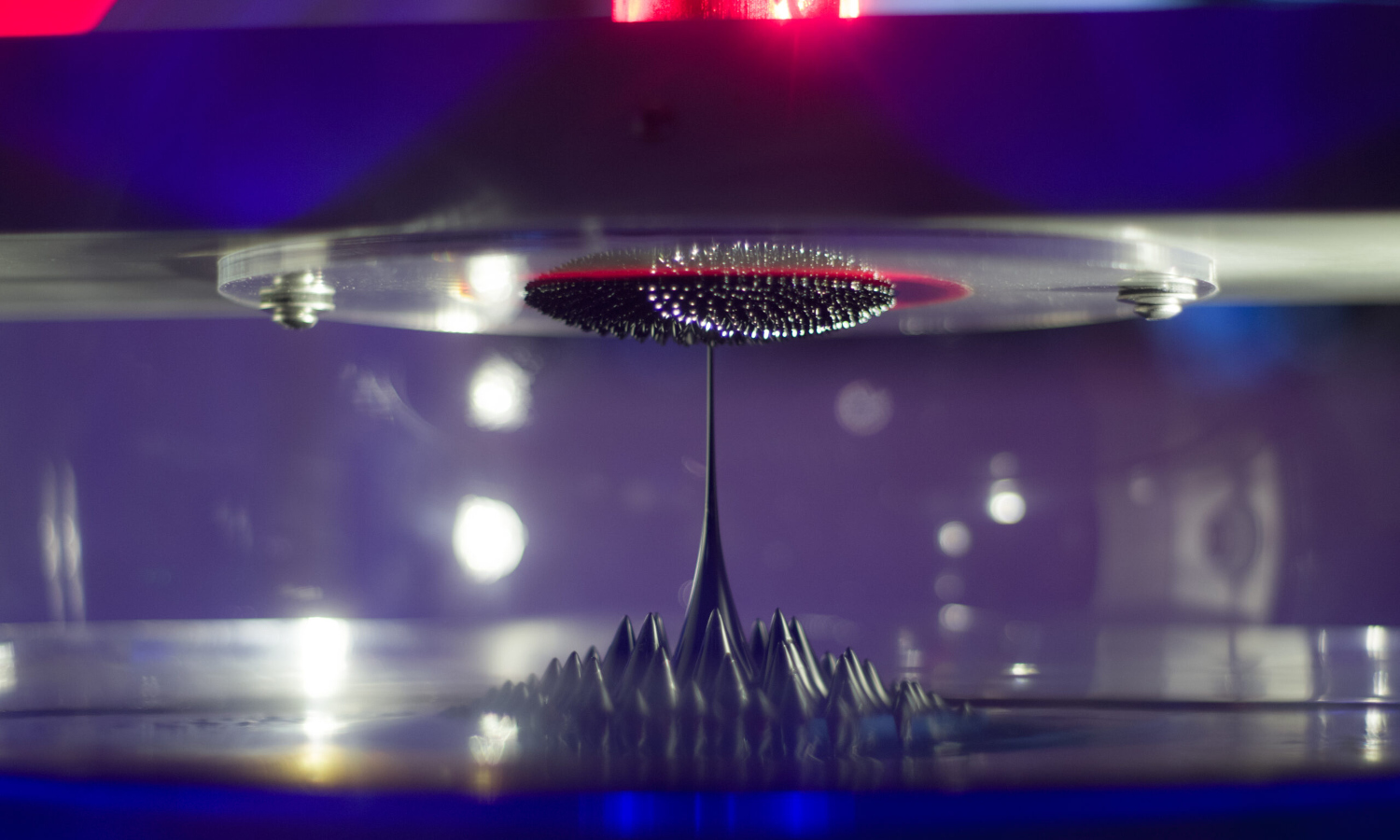
Microplastics are hydrophobic — they bind to oil, not water. Ferrofluid is an oil-based liquid carrying nanoscale magnetic particles; you’ve probably seen it forming alien spikes in desk novelty toys. Here it’s doing actual work. Mix ferrofluid into contaminated water and microplastics grab onto the oil phase. Apply a magnet, pull the ferrofluid-plastic mixture out, leave cleaner water behind. No membrane. No clogging. No cartridge heading to the bin. Heller’s closed-loop system recovers 87.15% of the ferrofluid for reuse — a critical detail for anyone thinking about long-term operating costs.
What the Prototype Actually Does:
- Three-module design: contaminated-water reservoir (~1 L), ferrofluid store, magnetic separation core
- 95.52% microplastic removal by weight (self-reported via DIY turbidity sensor; often rounded to 96% in headlines)
- 87.15% ferrofluid recovery rate per closed-loop cycle
- Form factor: roughly the size of a bag of flour; 3D-printed casing
- Regeneron ISEF 2025 finalist; $500 award from the Patent and Trademark Office Society
Toxicologist Matthew J. Campen of the University of New Mexico called the concept “a great idea,” according to Smithsonian Magazine, while flagging the open questions that still need answers. Conventional drinking-water plants remove roughly 70–90%+ of microplastics. Heller’s prototype sits at or above that range — under her own controlled conditions, processing one litre per pass. Promising numbers. Unverified by any third party. Heller herself says independent lab confirmation comes before any product claims.
A Prototype Is Not a Product – Yet
Two unsolved problems stand between this garage invention and your kitchen sink.
Two real challenges remain. First: what happens to the concentrated plastic-laden ferrofluid sludge at household scale? Safe disposal guidance doesn’t exist yet. Second: ferrofluid isn’t cheap, and scaling the volume raises cost questions Heller openly acknowledges. Membrane-free operation removes one familiar maintenance headache — and replaces it with a less familiar one. Managing ferrofluid reuse and plastic-rich waste will require clear safety standards before any consumer rollout makes sense.
What Heller built is a working proof-of-concept that asks exactly the right question. Independent lab verification is the next real milestone — and the only one worth watching for. Until that happens, this is precisely what it should be: a very sharp garage experiment that earned its place at the table.