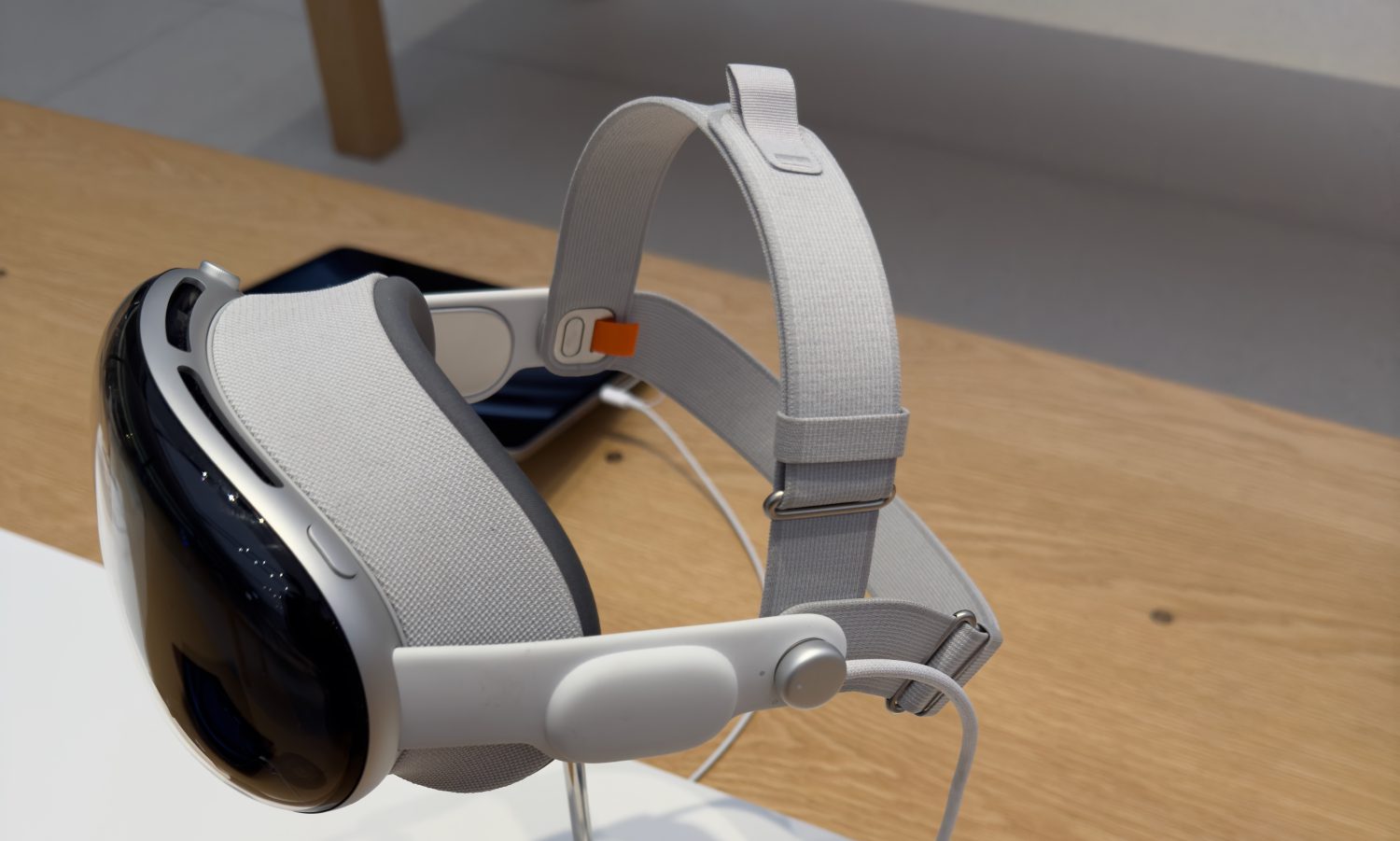
Surgeons have spent decades wrestling with cluttered monitor setups, craning their necks between screens while trying to stay focused on the operative field. Now, one orthopedic surgeon at Duke Health has demonstrated something that consumer tech watchers and medical professionals alike didn’t fully anticipate: a $3,500 spatial computing headset, running FDA-authorized software, functioning as a legitimate intraoperative tool. That gap between living room gadget and surgical instrument tells you everything about where mixed reality actually earns its keep.
What Happened in That OR
The first real-world use of Stryker’s SportSuite Vision app put critical surgical data directly in the surgeon’s line of sight — no neck-craning required.
During a hip arthroscopy at Duke Health, orthopedic surgeon Dr. Chad Mather III used Stryker’s SportSuite Vision — an FDA-authorized software application running on Apple Vision Pro — to access arthroscopic video, CT imaging, and planning tools called HipCheck and HipMap FAI Analysis, all floating in his field of view while he operated on a real patient.
The headset’s video see-through AR kept the physical OR fully visible throughout the procedure. Other OR staff still used traditional monitors. Mather simply didn’t have to redirect his attention between them. According to Stryker, spatial computing let him “customize the placement of key clinical information” within the sterile field, creating a “more comfortable, streamlined OR setup.” Think of it as Iron Man’s HUD — except the stakes are someone’s hip joint, not a missile.
A few facts worth bookmarking:
- FDA granted De Novo authorization (DEN250040) on July 17, 2026 — the first authorization of its kind for a consumer spatial computing headset used intraoperatively
- Classified as a Class II orthopedic device under 21 CFR 888.1150
- Indicated specifically for femoroacetabular impingement (FAI) and labral repair procedures only
- First real-world clinical use announced September 1, 2026, at Duke Health
What This Actually Means for the Headset
Surgery may be the high-stakes, high-information environment where spatial computing finally justifies its existence — though the road to broad adoption remains narrow.
Apple Vision Pro has struggled to define its audience since launch. The device’s price point and specialized use cases have kept it far from mainstream adoption. But complex, high-information surgical environments — where you need both hands free and both eyes contextually loaded — are precisely where mixed reality outperforms a wall of scattered monitors. The FDA formalized that logic by creating an entirely new product category: “arthroscopic or orthopedic endoscopic intraoperative augmented reality video see-through display system.” Bureaucratic language, genuinely significant act.
Caution is warranted, though. No clinical outcome data exists yet, and adoption requires hospitals to invest in headsets that carry a substantial price tag. Apple’s Vision Pro team reportedly saw layoffs, per Engadget’s coverage, and SportSuite Vision currently covers only two specific hip procedures. That’s a narrow but credible start — not a broad surgical transformation.
The quiet bombshell here isn’t the surgery itself. It’s the FDA formally recognizing smart glasses and spatial computing as a legitimate medical tool category, complete with its own device classification. That regulatory milestone matters more than any product announcement. And it suggests that for the right procedure, in the right hands, the headset no one knew what to do with just found its table.