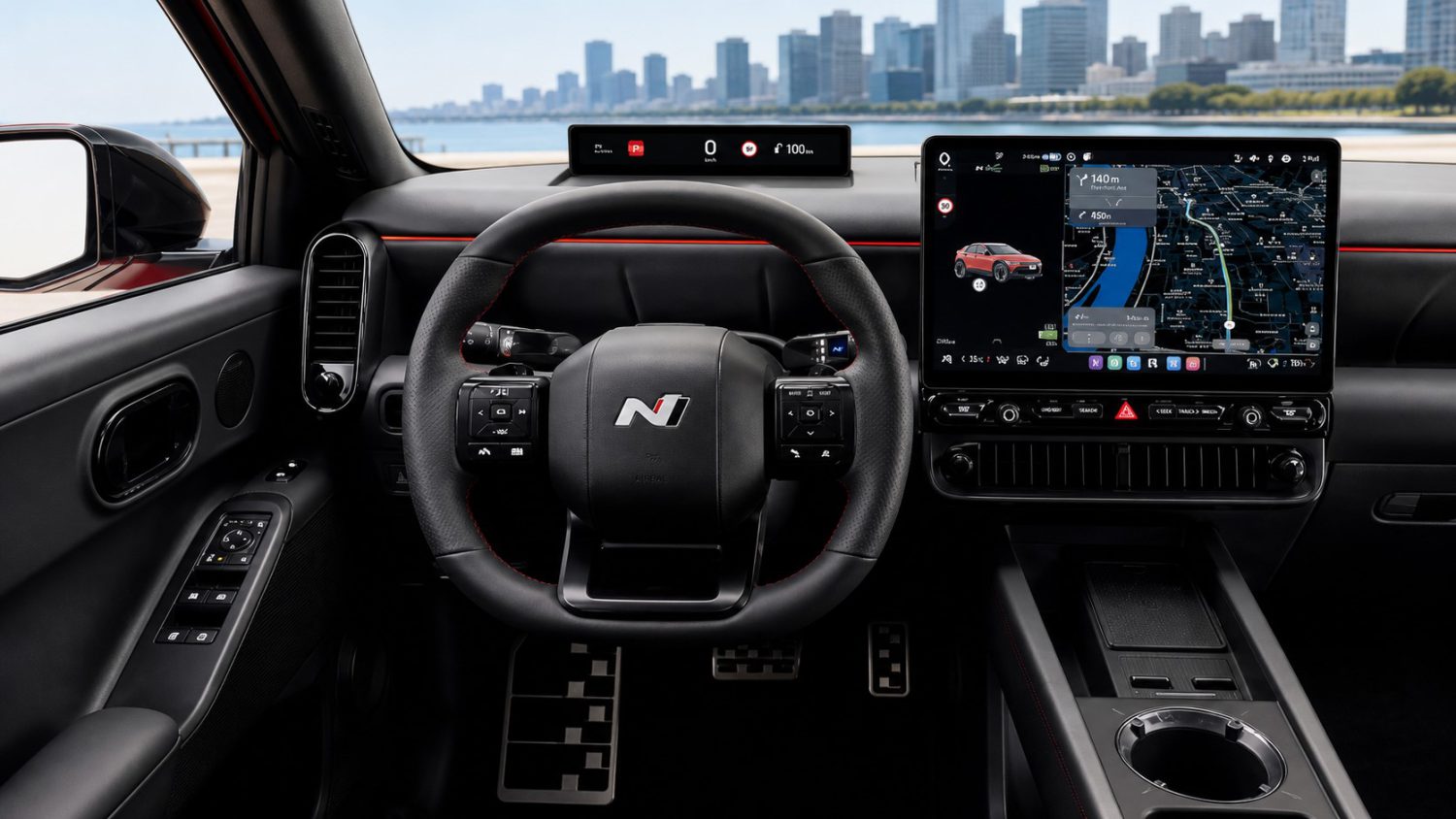
You’re configuring a new Hyundai Ioniq 3 online. The base trim comes with a 14.6-inch central touchscreen — Pleos Connect, Hyundai’s new Android Automotive-based infotainment platform — as standard. The dedicated 9.9-inch instrument cluster where your speedometer lives? That reportedly costs extra. On the Avante (sold as the Elantra outside Korea), the situation is similar. Budget buyers — the ones most likely to take the base trim without reading the footnotes — are the ones being asked to drive without a dedicated panel in front of them.
The Setup Sounds Impressive
Pleos Connect is genuinely ambitious — until you check what’s actually included.
On the flagship Grandeur, Pleos Connect delivers a 17-inch central display plus a standard 9.9-inch slim cluster mounted above the dash in the driver’s direct sightline. Physical controls for HVAC modes, fan speed, and volume survive the touchscreen takeover. Compared to rivals who’ve gone full glass cockpit with zero hard buttons, Hyundai deserves credit for restraint. The Ioniq 3 and Avante get 12.9 or 14.6-inch central screens. Solid hardware, real software ambition. Then the configurator reveals the catch:
- Avante base trim: add the 9.9-inch digital cluster for 350,000 won (~$255 USD), or skip it entirely
- UK Ioniq 3: the cluster is reportedly available only from the second trim level upward, though official spec sheets remain worth verifying before you order
- Promotional images for both models show the cluster fitted — editorial commentary suggests it may not be standard on entry configurations
- Without the cluster, driving data defaults to the central touchscreen
- Hyundai plans roughly 20 million Pleos-equipped vehicles across Hyundai, Kia, and Genesis by 2030
Motor1 commentary put it plainly: “Making buyers pay extra to see their speed and other essential information feels like the wrong place to save a few bucks.”
The Wrong Item to Put on the Options List
When a speedometer becomes a revenue lever, something has gone sideways.
Yes, some rivals have deleted the driver display entirely, leaving a single central screen to handle everything. Hyundai at least offers the cluster as an option. But “less extreme than the worst offenders” is a thin defense when you’re selling a sub-£25,000 EV to cost-conscious buyers.
It’s like a streaming service locking subtitles behind a premium tier — technically optional, practically essential, and unmistakably a choice about where to hide the margin. In the software-defined vehicle era, this logic is easy to run. When cockpit features become trim variables rather than assumed hardware, things that once shipped on every car start looking like SKUs. Readers frustrated by OEM upsells can save hundreds by knowing which add-ons to skip.
“Some things shouldn’t be optional,” as editorial commentary notes — and that sentiment reflects reader concern, not Hyundai’s official position. Hyundai had not responded to a request for comment at publication time.
What Comes Next
Twenty million vehicles is a lot of configurators to check.
Hyundai’s 2030 target puts Pleos Connect across a massive slice of the Hyundai, Kia, and Genesis lineup. If cluster-optional becomes the structural template, that same approach could follow at entry level across those brands. Whether consumer backlash or regulatory scrutiny over driver distraction corrects course first is the question worth tracking — and $255 is a small number, until it isn’t.