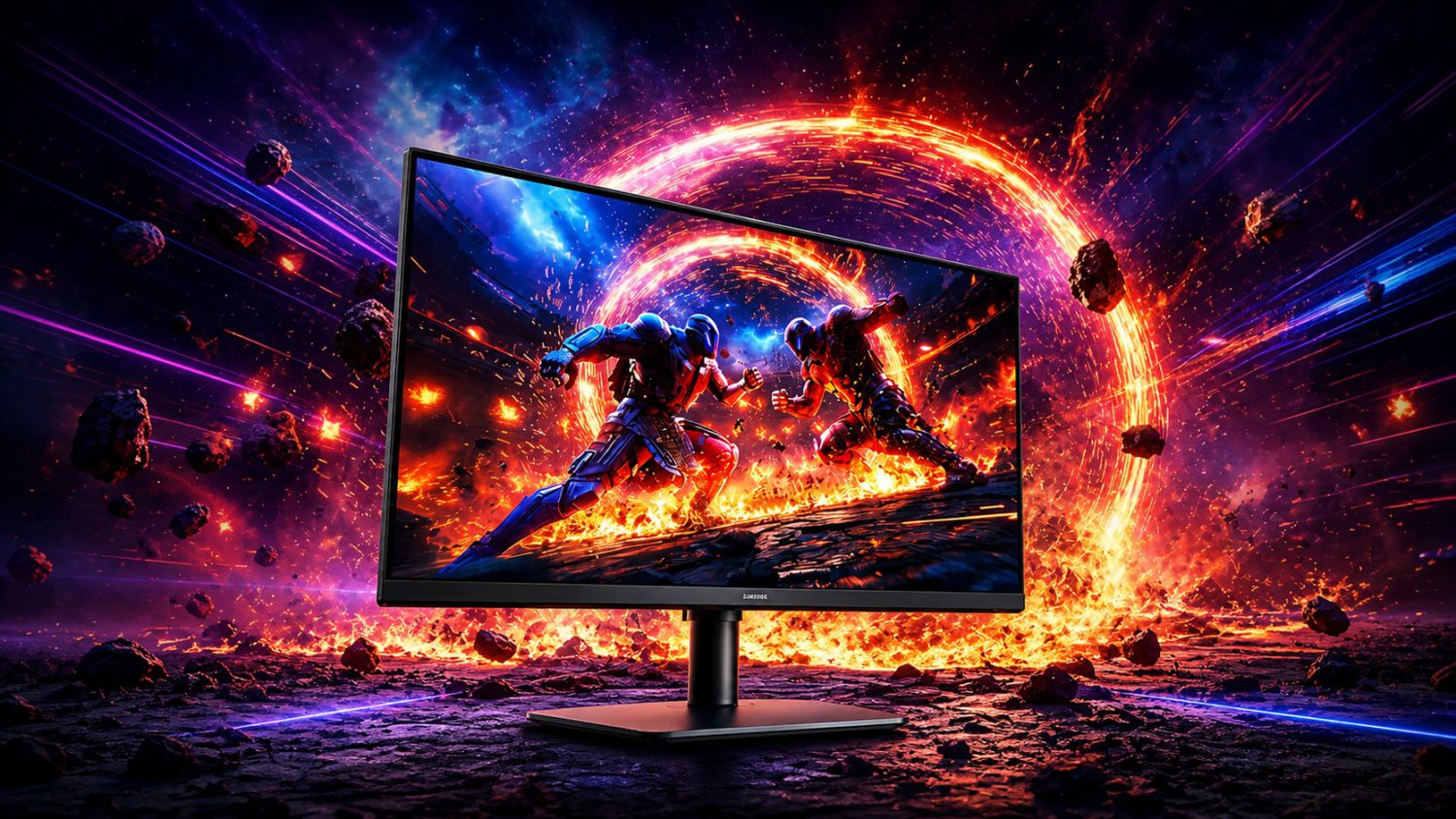
At Gamescom 2026, Samsung announced the Odyssey G6: a 27-inch Fast IPS monitor that hits 1,100Hz. Not 1,100Hz at native QHD resolution — that tops out at 600Hz. To reach four digits, the G6’s Dual Mode drops you to HD, trading 1440p clarity for a refresh rate that sits, as Engadget put it, “way beyond what the human eye is even able to perceive.” The CES 2026 prototype stopped at 1,040Hz; Samsung bumped it to 1,100Hz for retail — because apparently the number needed to clear a psychological barrier.
You are paying for frames your eyes cannot see.
That makes the spec less about vision and more about marketing geometry. Which isn’t necessarily a bad thing, depending on what Samsung is actually selling here.
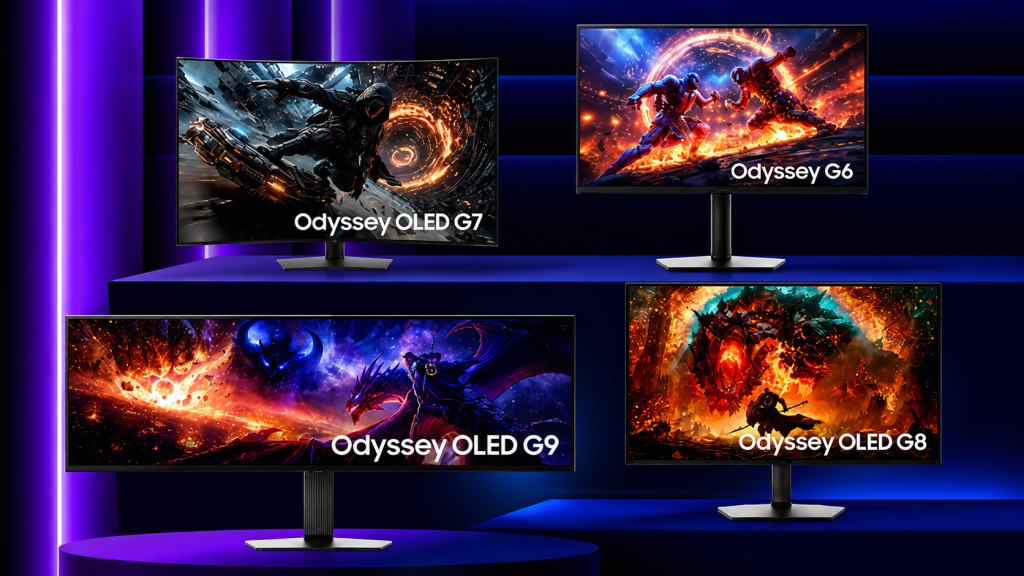
The full 2027 Odyssey lineup:
- Odyssey G6 (27″): Fast IPS, QHD/600Hz or HD/1,100Hz Dual Mode; 1ms response, HDR10/HDR10+, FreeSync Premium, G-Sync
- Odyssey OLED G8 (32″): 4K/360Hz, 1440p/520Hz, 1080p/680Hz triple mode; FreeSync Premium Pro and G-Sync, Glare Free coating
- Odyssey OLED G9 (49″): QD-OLED, DQHD 5120×1440 at 360Hz; Dual HD mode at 2560×720/720Hz; 1,300-nit peak, 0.03ms GtG response
- Odyssey OLED G7 (42″): Curved 4K OLED, 165Hz, 1000R curvature — the rational choice nobody will write headlines about
Overkill With a Purpose
Beneath the spectacle, two of these monitors make a genuinely compelling case for enthusiast buyers.
Ordering 1,100Hz is roughly equivalent to requesting a 30-course tasting menu drive-through — technically on the menu, practically absurd, deeply impressive to describe at parties. The G8’s triple-mode architecture is the more honest story for most players. Four-K at 360Hz is already staggering, and the flexibility to drop to 1080p/680Hz for competitive titles makes it a legitimately versatile OLED display. The G9’s QD-OLED Penta Tandem design targets brightness degradation and long-term panel wear — real concerns at sustained 1,300 nits — while delivering DQHD at 360Hz across 49 inches of curved screen. The G7, at 165Hz curved 4K OLED, is the one you’d recommend to a friend without smirking.
Here’s the GPU math nobody wants to do. Sustaining 1,100 fps in graphically intensive modern video games at 720p requires hardware most rigs don’t currently have. FreeSync Premium Pro and G-Sync compatibility help smooth the gap between what your GPU delivers and what the panel can accept, but four-digit frame counts remain firmly in edge-case territory for now. Pricing across the lineup is undisclosed; given QD-OLED at 49 inches and curved OLED at 42, expect flagship-tier damage to your wallet when availability arrives in the second half of 2026.
Samsung is planting a flag, not writing a prescription. The 1,100Hz number sells monitors. The 360Hz modes are where you’ll actually live.