You’re three days into a bikepacking route. No signal. Your phone died yesterday. The trail splits, the weather’s turning, and the only thing standing between you and a bad decision is whatever’s on your wrist. That’s the problem the Fenix 9 line exists to solve. Garmin’s flagship trio — Fenix 9, Fenix 9 Pro, and Fenix 9 Pro Solar — starts at $999.99 / £859.99, tackling what previous Fenix generations forced you to compromise on: screen readability, map performance, and off-grid communication.
Brighter Screen, Smarter Maps, More Room
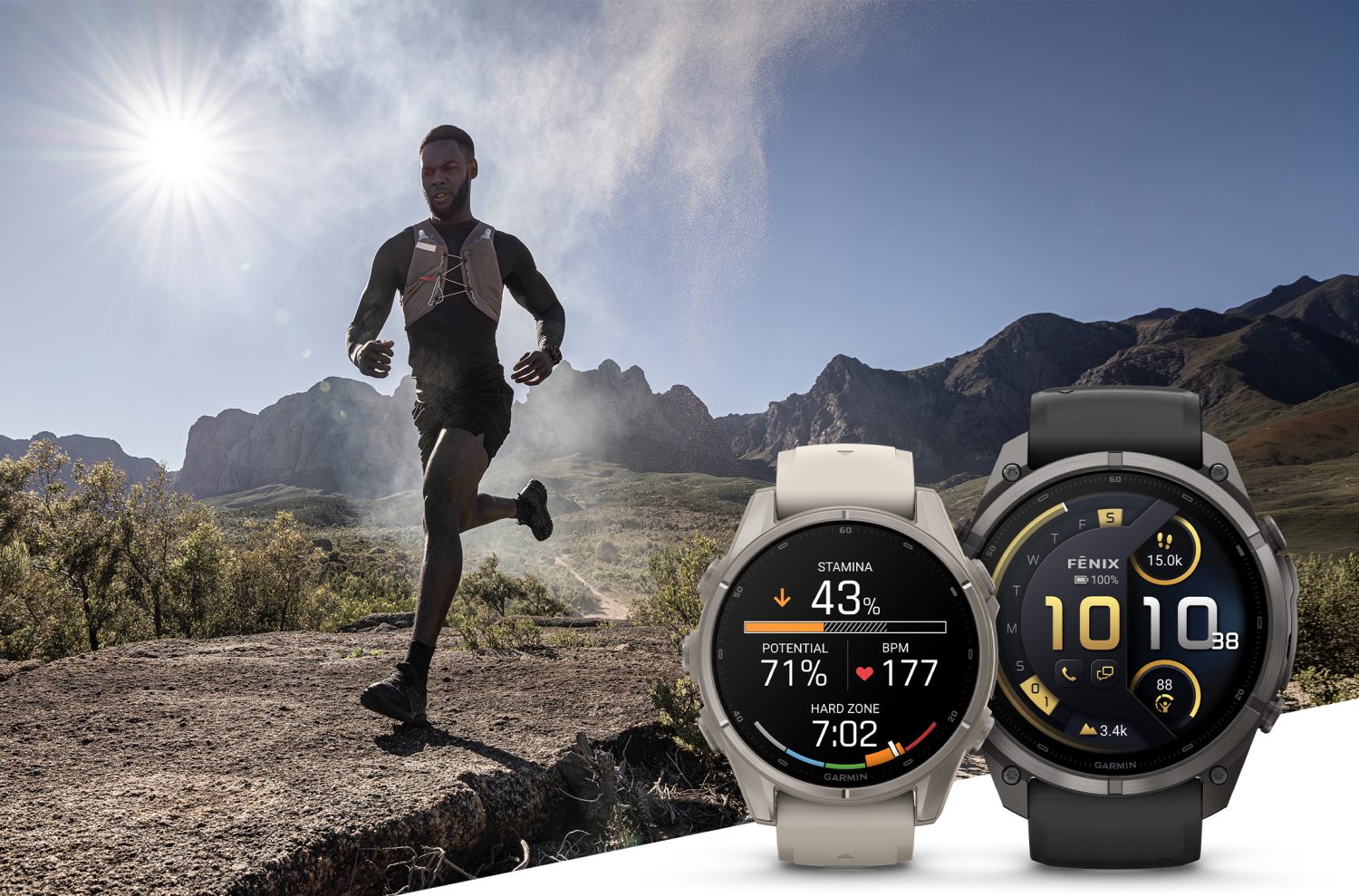
The Fenix 9 moves to AMOLED — claimed twice as bright as the Fenix 8 — while the Pro hits 3,000 nits peak, matching the Apple Watch Ultra 2 but tuned for multi-day autonomy over smartwatch convenience.
The 51mm Pro gets Garmin’s largest-ever Fenix display: a 1.5-inch screen offering roughly 15% more viewing area without growing the case. RAM is up 50% over the Fenix 8, and map panning is reportedly 30% faster, with a new perspective view showing near and far route detail simultaneously. Storage doubles to 64GB — enough for twice as many offline maps and up to 7,000 songs. For the ultra runner pre-loading weeks of terrain, running out of map tiles at mile 40 is no longer the nightmare scenario.
“Purpose-built for those who want to perform better and venture farther.” — Garmin
Safety Off the Grid – For a Price
Battery life spans 29 days to a claimed 57 days depending on model and conditions, but inReach LTE connectivity is where the Pro genuinely earns its premium.
The standard Fenix 9 (51mm) claims up to 29 days in smartwatch mode; the Pro AMOLED pushes that to 31 days. The Solar Pro reaches a claimed 57 days under specified solar exposure. Real-world numbers drop once you add always-on display, active GPS, and LTE — the 291-day energy-saving figure assumes near-ideal sun and stripped-down functionality, so treat it as a ceiling, not a promise.
What actually separates the Pro is off-grid communication. The following are now available across all three case sizes (43mm, 47mm, 51mm) for the first time:
- Phone-free voice calls
- Messaging
- SOS alerts
- Satellite weather
This requires a paid inReach subscription, and regional coverage applies — factor that into the true cost.
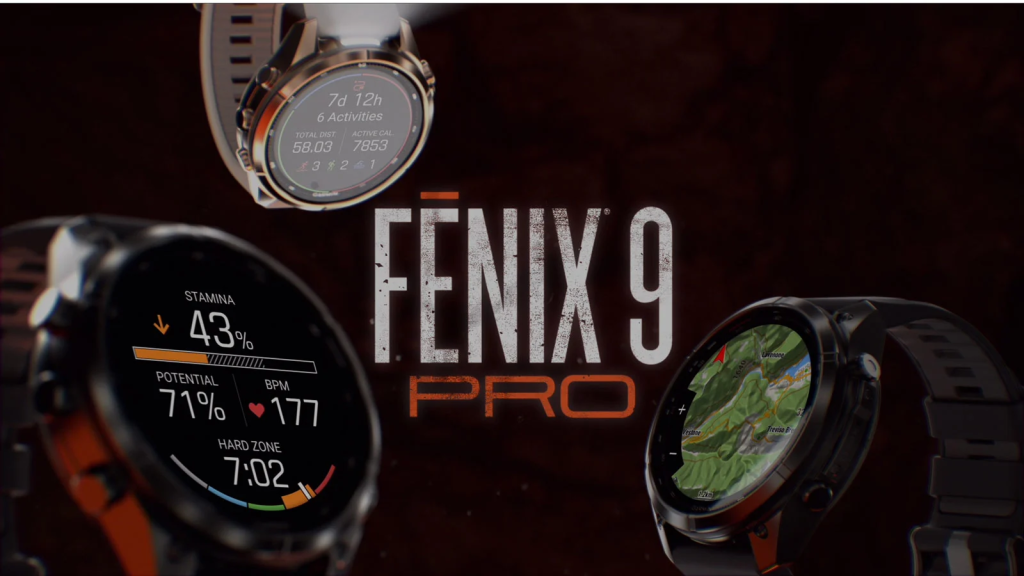
New stamina zones and a stamina curve round out the analytics suite, tracking endurance shifts over time — the detail that’ll make training nerds forget everything else.
At $999.99 to $1,199.99, this is a serious investment. For athletes who live between the mountains and the start line — needing navigation, communication, and coaching on one wrist — the Fenix 9 Pro builds a compelling case without needing to oversell itself.