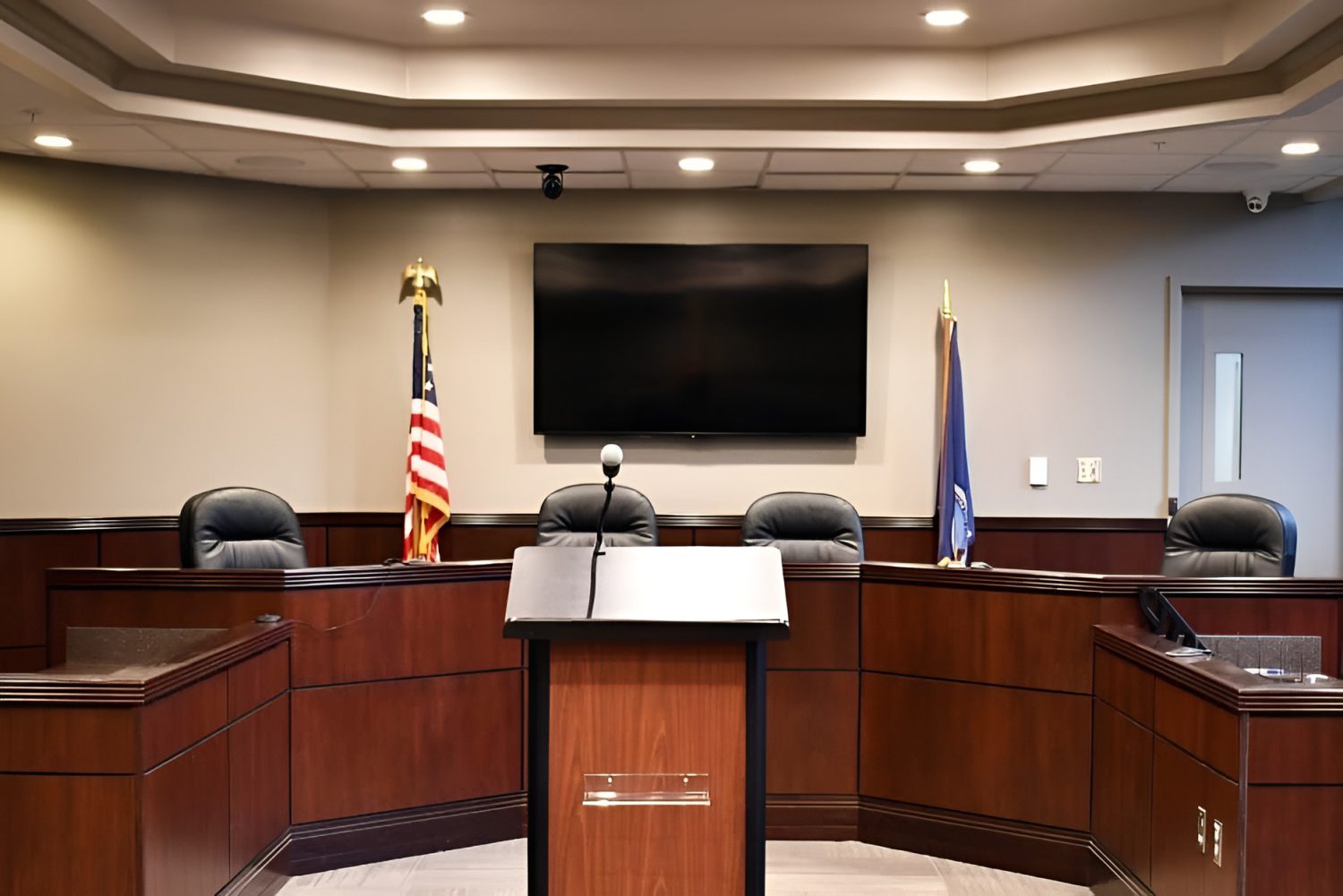
Lux Claridge, a high school physics teacher at Emporia High School, attended a July 22, 2026 city commission meeting focused on the Flint Hills Digital Campus — a proposed hyperscale data center covering roughly 1,000 acres near town. When a speaker finished their public comment against the project, Claridge clapped. Six times. Police carried them out, booked them into Lyon County Jail on charges of disorderly conduct and interference with law enforcement, and held them for approximately eight hours. Local supporters raised bail money before Claridge was released.
Hyperscale data centers — facilities built to handle massive cloud computing and AI workloads, requiring enormous land, power, and water — have become infrastructure that communities increasingly find proposed in their backyards without much warning. Emporia is now a test case for what happens when residents push back hard enough to get arrested for it.
“As far as I know, I’m in the clear unless the county is feeling froggy.” — Lux Claridge, via 404 Media
Since the arrest, the situation has moved quickly on several fronts:
- Emporia dropped its charges against Claridge and referred the case to Lyon County, where it remains unresolved.
- The city moved its August 5 and August 19 commission meetings to virtual-only format with no public comment, citing “public safety.”
- Emporia Police denied 404 Media’s request for the arrest report, calling it an active criminal investigation.
- A Lyon County District Court ordered the citizen initiative to ban high-impact data centers onto the November 2026 ballot.
“Act Like Grown-Ups”: The City’s Slow Walk-Back
Footage of a teacher being carried out of a public meeting generates exactly the kind of press no city wants — and Emporia is learning that the hard way.
Video of Claridge’s removal spread across social media, turning a local zoning dispute into a national story about civic participation. The city’s response — virtual meetings, no public comment, framed as a public safety measure — drew further scrutiny. Mayor Becky Smith eventually signaled a return to in-person meetings, saying she was “willing to give us another shot to act like grown ups,” according to Claridge’s account reported by 404 Media. That’s a striking framing from an elected official describing constituents who showed up to participate in local government.
Public comment returns September 2. An August 26 special meeting at the Civic Auditorium has none. The city has not publicly explained the dropped charges or responded to press inquiries on the matter.
“Willing to give us another shot to act like grown ups.” — Emporia Mayor Becky Smith, as quoted by Claridge via 404 Media
Why November’s Vote Is Bigger Than Emporia
A court-ordered ballot measure could give smaller towns real leverage over hyperscale infrastructure — but only if it survives judicial review.
Even if Emporia voters approve a ban on high-impact data centers in November 2026, that ordinance takes effect only after Lyon County District Court rules on whether the citizen initiative petition is legally valid. A ballot victory isn’t automatically a policy victory. If the ordinance holds, though, it becomes something more significant — evidence that smaller municipalities can block hyperscale infrastructure through direct democracy, not just slow it down through zoning fights. That outcome would sharpen siting risk calculations for data center developers eyeing similar communities nationwide.
Claridge put it plainly: the arrest is “not really deterring me from speaking out — or I guess, clapping.” That’s the story worth watching. Not one arrest in one Kansas city, but whether showing up and clapping at a public meeting is now the front line in deciding where AI infrastructure gets built — and who actually gets a say.