The administration’s priority list for U.S. Park Police includes 450 new officers, $12.8 million in equipment, body armor, tasers — and Flock Safety license plate reader cameras, listed explicitly as nonnegotiable, per reporting based on The Atlantic’s review of administration documents. Meanwhile, 56 municipalities have canceled or rejected Flock contracts in 2026 alone. LAPD walked away. A federal lawsuit argues cameras violate the Fourth Amendment. The White House, apparently, is moving in the opposite direction.
120,000 Cameras. Zero Warrants Required.
Flock’s network is vast, AI-driven, and operating largely without court oversight — and that combination is what critics find alarming.
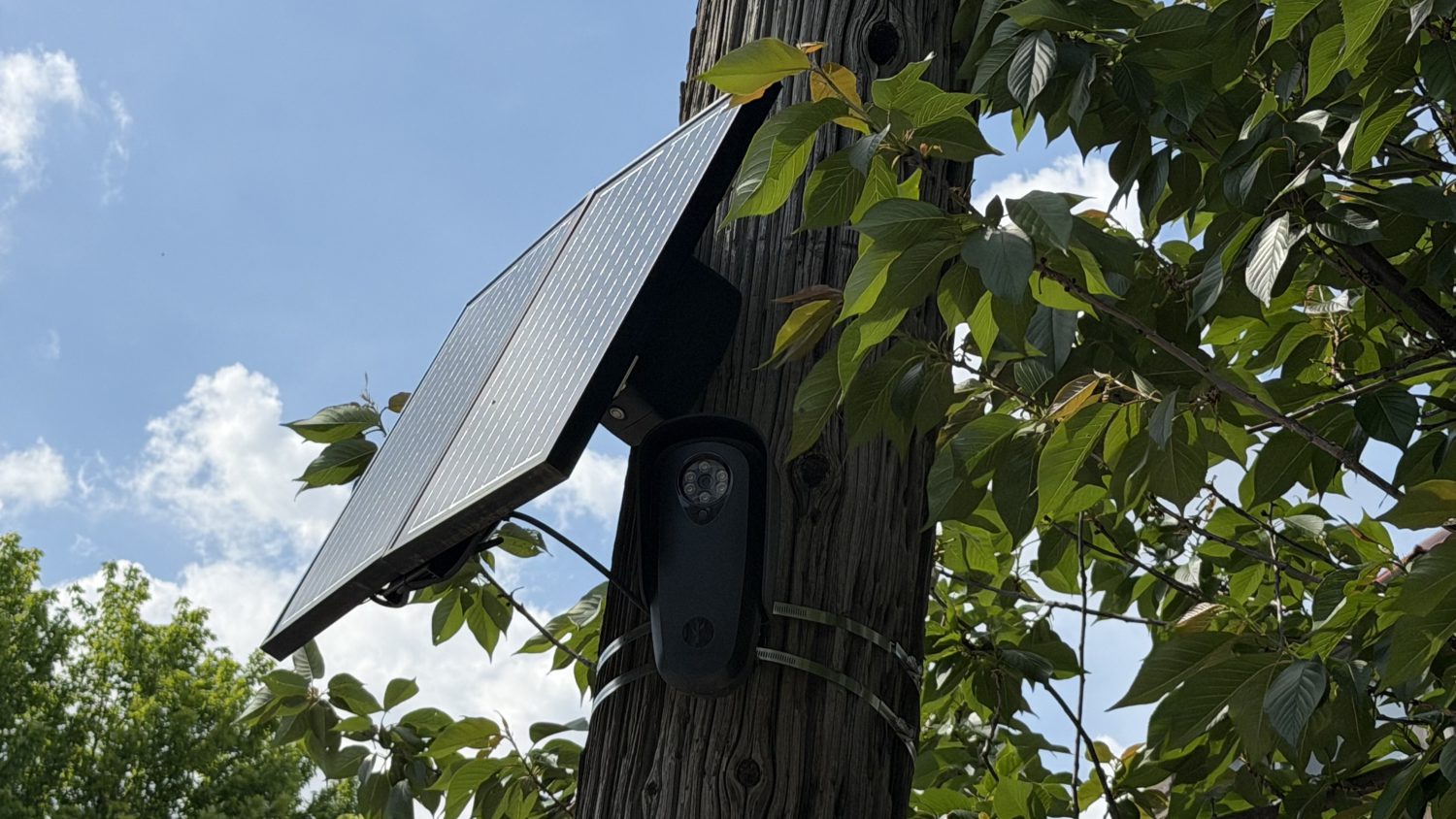
Flock Safety’s cameras photograph every passing vehicle, read the plate, and use AI to generate a “vehicle signature” — make, model, color, even your roof rack. The company operates more than 120,000 cameras across 49 states, serving roughly 5,000 law enforcement agencies. Flock insists its cameras “do not and cannot track vehicles.” Critics, including the ACLU, argue that a 120,000-camera network logging every plate without a warrant is precisely that. Both statements can be technically accurate — and that tension is exactly what civil liberties advocates find alarming.
What you need to know:
- $12.8M in Park Police equipment funding names Flock cameras as a White House priority, per reporting based on The Atlantic’s review of administration documents
- 56 municipalities canceled or rejected Flock contracts in 2026, according to advocacy organization DeFlock
- LAPD let its contract expire, with the department’s chief information officer citing “serious concerns around civil liberties and civil rights issues, particularly around privacy and the data that is being collected from these cameras”
- ICE, the Secret Service, and Navy criminal investigators accessed Flock’s nationwide network, per documents cited by Senator Ron Wyden — typically without warrants
- A Texas sheriff’s office allegedly used Flock data to track a woman suspected of seeking an abortion
Washington, D.C. Has a Protest Problem. Flock Has a Solution for That.
National parks and monuments aren’t just tourist destinations — they’re where Americans march, rally, and dissent.
National parks aren’t just where you take your kids to see monuments. They’re where you march. The Institute for Justice, currently litigating against Norfolk’s Flock deployment on Fourth Amendment grounds, frames the stakes plainly: it becomes “functionally impossible” to drive anywhere without your movements stored and searchable in an AI-assisted database. If Park Police expand Flock camera coverage across D.C.’s federal spaces, every vehicle near a demonstration could be logged. That’s not speculation about some future surveillance app-enabled state. That’s the current architecture, with a federal funding boost behind it.
The Backlash Is Bipartisan. That Should Tell You Something.
Opposition to Flock has crossed party lines — and that rare alignment reveals just how broadly uncomfortable people have become with this technology.
Rep. Thomas Massie (R-Kentucky) is drafting legislation to withhold federal funding from any agency running ALPR systems like Flock’s — a direct collision course with his own party’s White House priorities. Security researchers have exposed live Flock camera feeds accessible to outside observers who are secretly tracking users. False positives have put innocent drivers at gunpoint. And the abortion-tracking allegation out of Texas moved this well past the realm of fringe privacy concern.
The question now isn’t whether Flock cameras work. It’s who gets to decide what “working” means — and whether your drive past a national monument is anyone’s business but yours.