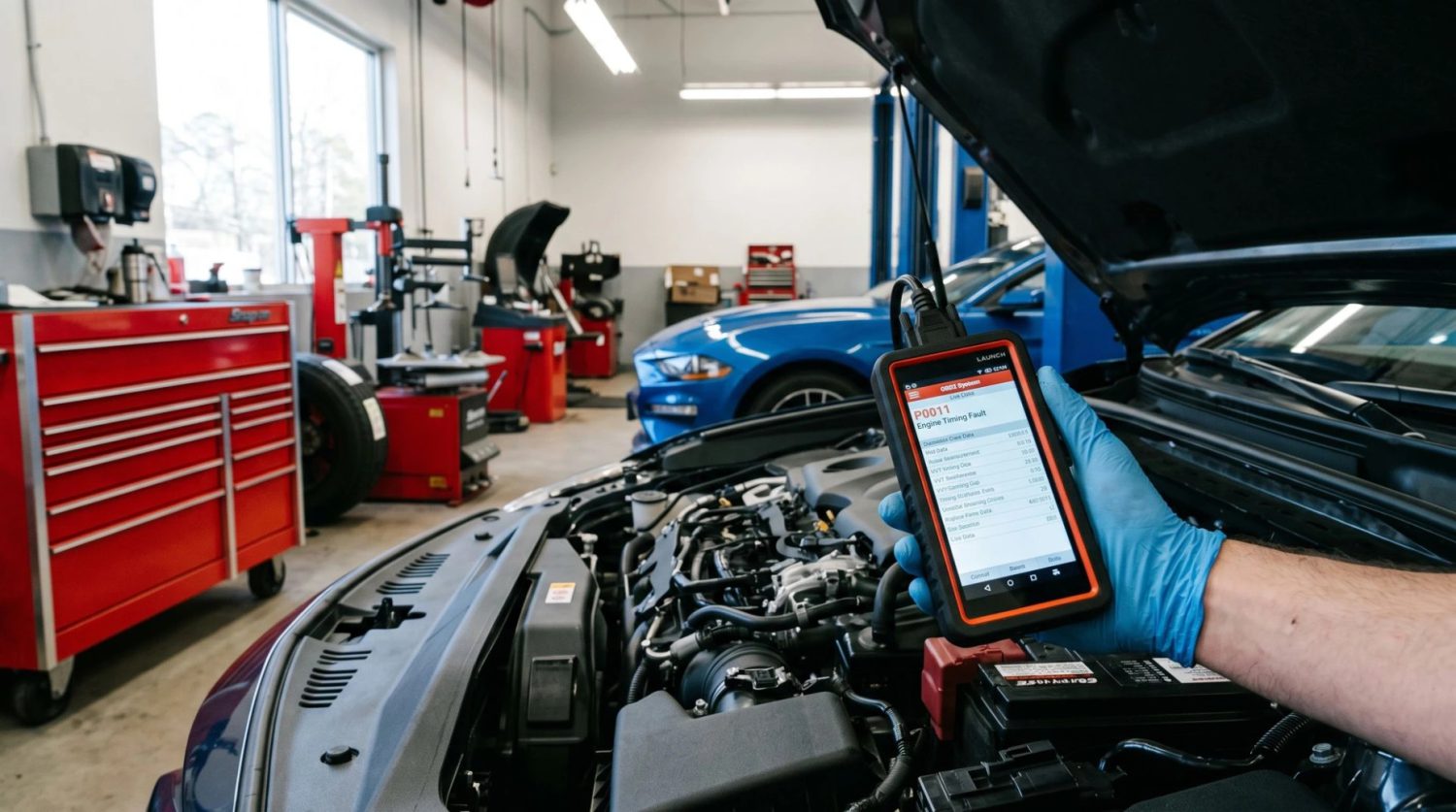
The waiting room scene is familiar: $150 spent, a printout in hand reading “P0420 — Catalyst System Efficiency Below Threshold,” and a service advisor delivering the news with the gravity of a specialist consult. Here’s what that moment quietly omits — your car already knew. It logged that exact code the moment the fault occurred. Your dashboard said “Check Engine” and waited for you to pay someone to translate.
Whether that gap reflects poor design, regulatory inertia, or something more convenient for dealerships depends on who you ask. But the gap itself is not in dispute.
Modern vehicles run on OBD-II systems — On-Board Diagnostics, second generation — that continuously monitor powertrain and emissions-related parameters and store component-level fault codes automatically. When something goes wrong, the ECU logs a specific Diagnostic Trouble Code: oxygen sensor degrading, catalytic converter underperforming, cylinder misfiring. The detail is there.
What the regulations actually require is far thinner:
- An amber Malfunction Indicator Light reading “Check Engine” or “Service Engine Soon”
- That light must illuminate when emissions-related faults occur
- The MIL “shall not be used for any other purpose,” per California Air Resources Board rules
- Nothing in those rules prevents manufacturers from displaying richer information on their infotainment screens
- A $30 Bluetooth OBD-II dongle — the kind that turns up constantly in TikTok DIY videos — can pull those same codes from your car’s port in under a minute
The regulation sets a floor. Manufacturers have consistently treated it as the ceiling.
Why the Screen Stays Blank
A documented history of restricted diagnostic access helps explain why your dashboard still shows so little.
This pattern has a paper trail. In 2002, automakers held “closely guarded diagnostic codes” and felt comfortable sharing full fault data only with dealerships “bound by franchise contracts to keep the data confidential,” according to Tampa Bay Times reporting. Independent mechanics had to push for agreements to access the same code data dealerships already controlled. Analysts covering OBD-II history have documented explicit allegations that restricting code access created a de facto repair monopoly for dealer service departments — allegations serious enough to drive policy responses.
OEMs argue that consumer confusion justifies keeping the dash simple, and that argument has some merit. Surfacing “Evap system small leak” for every driver who forgot to tighten their gas cap does carry real costs in unnecessary service visits and unnecessary anxiety. But your car also ships with a 12-inch touchscreen that streams music, plots navigation, and receives software updates wirelessly. The hardware case for omission has grown thin.
The more accurate framing, grounded in that history: the gap between what your car knows and what it displays is a design choice enabled by minimal regulatory requirements and reinforced by business structures that benefit when drivers need professional help to interpret fault data. No automaker has stated this openly — but the history of restricted access and the persistence of the generic warning light tell a consistent story.
A $30 dongle and a free OBD app already give you access to the same codes your dealership charges to read. That workaround exists because the information is technically available. Getting it has just always required an extra step — one that, for decades, only dealerships were positioned to take.