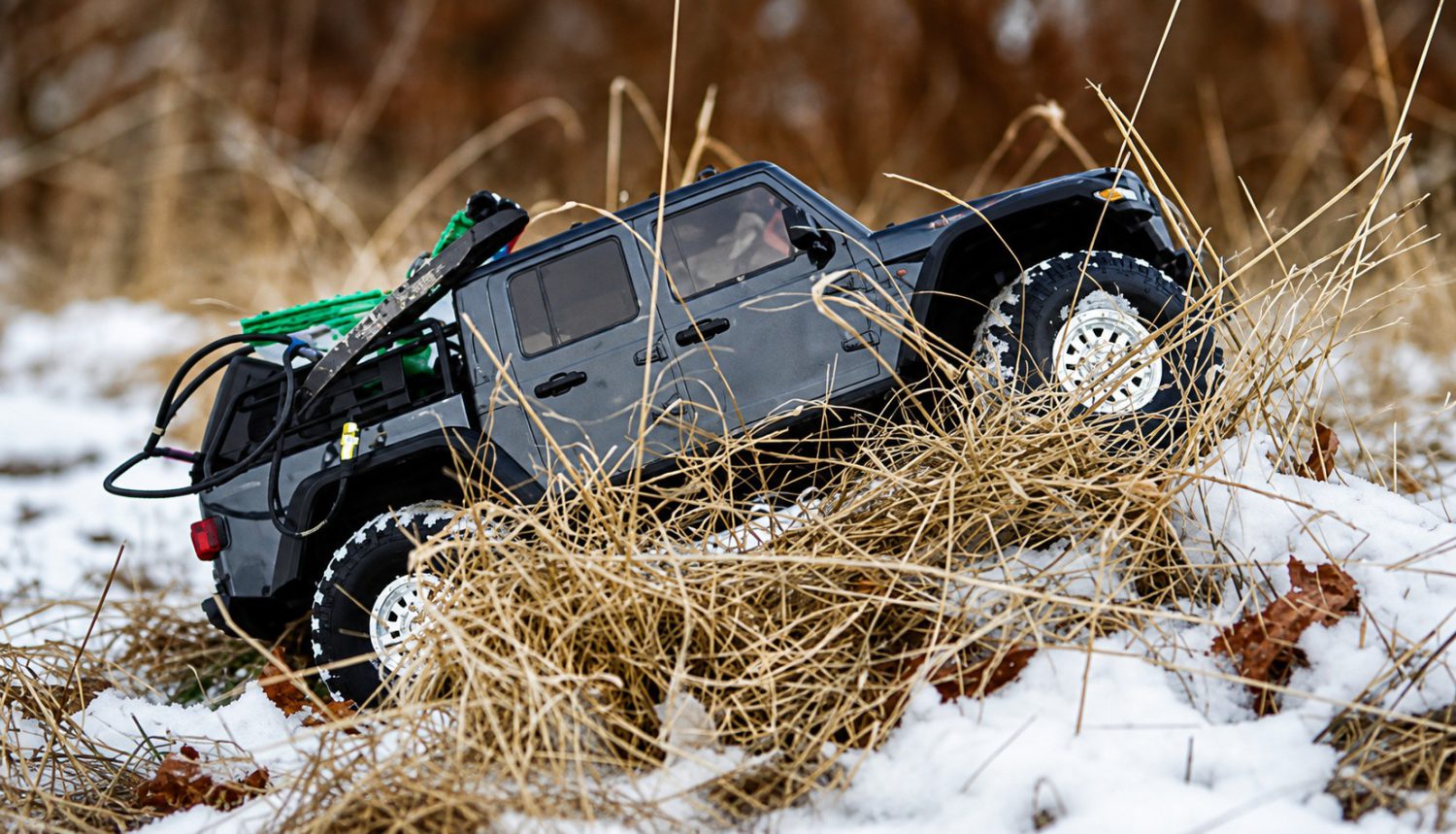
An RC car rolls into a frozen wilderness with no driver, no pre-programmed route, and one unusual navigator: Claude. YouTuber Coding with Lewis strapped a Raspberry Pi 5, a 16MP wide-angle camera on a servo mount, a 4G HAT, and a custom ESC bypass onto an RC car, handed the controls to Anthropic’s AI, and sent it into the woods. No remote. No pre-programmed route. Claude was the only thing making decisions.
The creator’s stated goal, as framed in the video “I Gave Claude a Body,” was straightforward: give Claude a body, eyes, and motion, then see what happens when it has to actually deal with the world.
The Hardware Doing the Heavy Lifting
The build isn’t magic — every component earns its place in the stack.
The Raspberry Pi 5 handles onboard processing and runs Claude Code locally. The 4G HAT keeps the system connected, routing inference calls to Anthropic’s model over the network rather than running a full frontier model directly on the car. Apple Depth Pro handles real-time depth estimation — and that matters enormously. Without it, Claude reportedly can’t distinguish a shadow from a ditch.
A PCA9685 servo driver translates decisions into physical steering. A custom “Journey Grid” system — purpose-built for this experiment — stitches together visual frames between decisions, bridging the gap from what Claude sees to where it steers. Strip any one of those pieces out, and the whole thing collapses.
Key details from the build:
- Coding with Lewis designed the system so Claude issued every steering command via an MCP server, with no remote control input
- Apple Depth Pro provided the spatial awareness Claude doesn’t natively have
- The “Journey Grid” was purpose-built to bridge vision and motion
- Processing split between the onboard Pi 5 and Anthropic’s model accessed over 4G
- None of this ships from Anthropic — Claude is a text-based assistant; this creator bolted the body on himself
What a Chatbot Learns When It Has to Steer
The gap between “can reason” and “can navigate” turns out to be enormous — and frozen.
Language models are extraordinary at reasoning through text. Frozen ground, tree roots, uneven terrain — that’s a different problem entirely. Suddenly the model needs spatial judgment, real-time course correction, and something resembling physical consequence awareness. Think of it like asking a chess grandmaster to navigate a skate park: the intelligence is real, but the environment demands entirely different skills.
This isn’t a product. It’s a stress test.
The infrastructure required — depth estimation, servo control, careful state management between every action — reveals exactly how much scaffolding frontier models still need before “can reason” becomes “can navigate.” The gap is real, and this experiment makes it visible in a way no benchmark ever could.