Zero to 800 km/h in 5.3 seconds — on a one-kilometer track, in a lab, with a controlled stop afterward. That number deserves a moment of quiet respect before anyone starts booking hypothetical tickets.
To be clear about what this reportedly is: a 1.1-tonne research vehicle at Donghu Laboratory in Hubei province, not a passenger train. Not even close. It’s purportedly a platform for stress-testing electromagnetic propulsion, magnetic levitation control, high-power energy delivery, and emergency braking — simultaneously, at speeds that have no commercial equivalent yet.
Third Record in Six Months
The engineering streak, not the headline speed, is the real story here.
This was reportedly the third time the same vehicle broke its own short-distance acceleration record since June 2025. The progression went from 650 km/h in seven seconds, to roughly 700 km/h, then 798 km/h, and now this. Each run pushes the same systems harder.
The 1.1-tonne vehicle reportedly reached 800 km/h along a one-kilometer track in 5.3 seconds, stopping within roughly 200 meters — a striking contrast to the 320–350 km/h ceiling of today’s commercial maglev services.
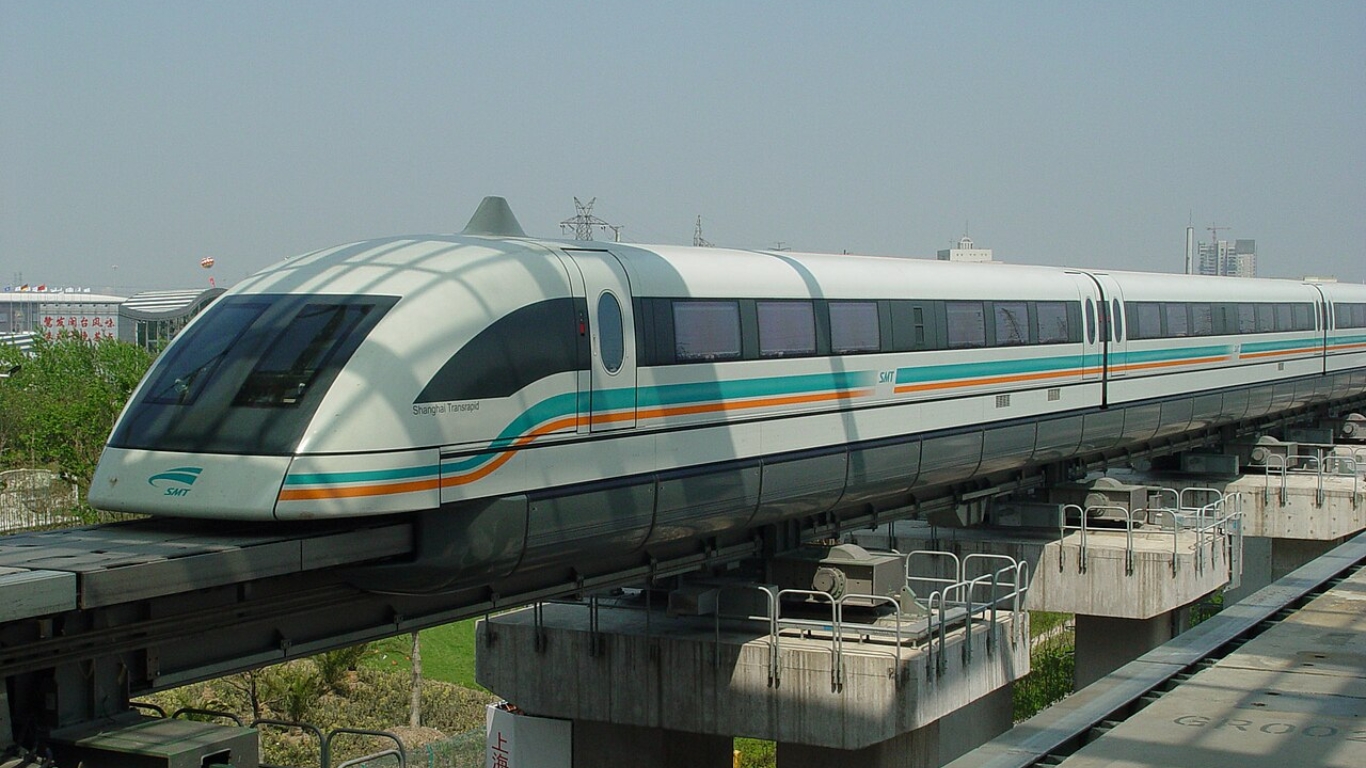
Maglev works by using magnetic force to lift the vehicle off the guideway entirely, eliminating friction, while electromagnetic propulsion drives it forward. According to Chinese state media reporting, engineers were simultaneously validating the following in a single run:
- High-power energy delivery
- Propulsion
- Levitation stability
- Emergency braking
Which, if accurate, makes this less a speed trial and more a full-system stress test.
The Gap Between a Lab Record and Your Commute
Scale, infrastructure, and cost are the harder problems — and none of them are close to solved.
The practical bottlenecks extend well beyond raw speed:
- Infrastructure costs for precision maglev track over long distances are enormous.
- Maintaining levitation control at these speeds across hundreds of kilometers — not one — remains an unsolved engineering challenge at scale.
- Safety certification for any passenger system would take years beyond that.
Researchers reportedly hope the underlying principles could eventually inform rocket launch systems or fighter jet catapults. That’s aspirational language, not a timeline. A separate Chinese team reportedly recorded a 700 km/h run in just two seconds under different test conditions, suggesting broader momentum across multiple programs.
What remains genuinely unclear is whether any of this translates into infrastructure a government would fund and a public would actually board. The physics, reportedly, works. Everything else is a much longer story.