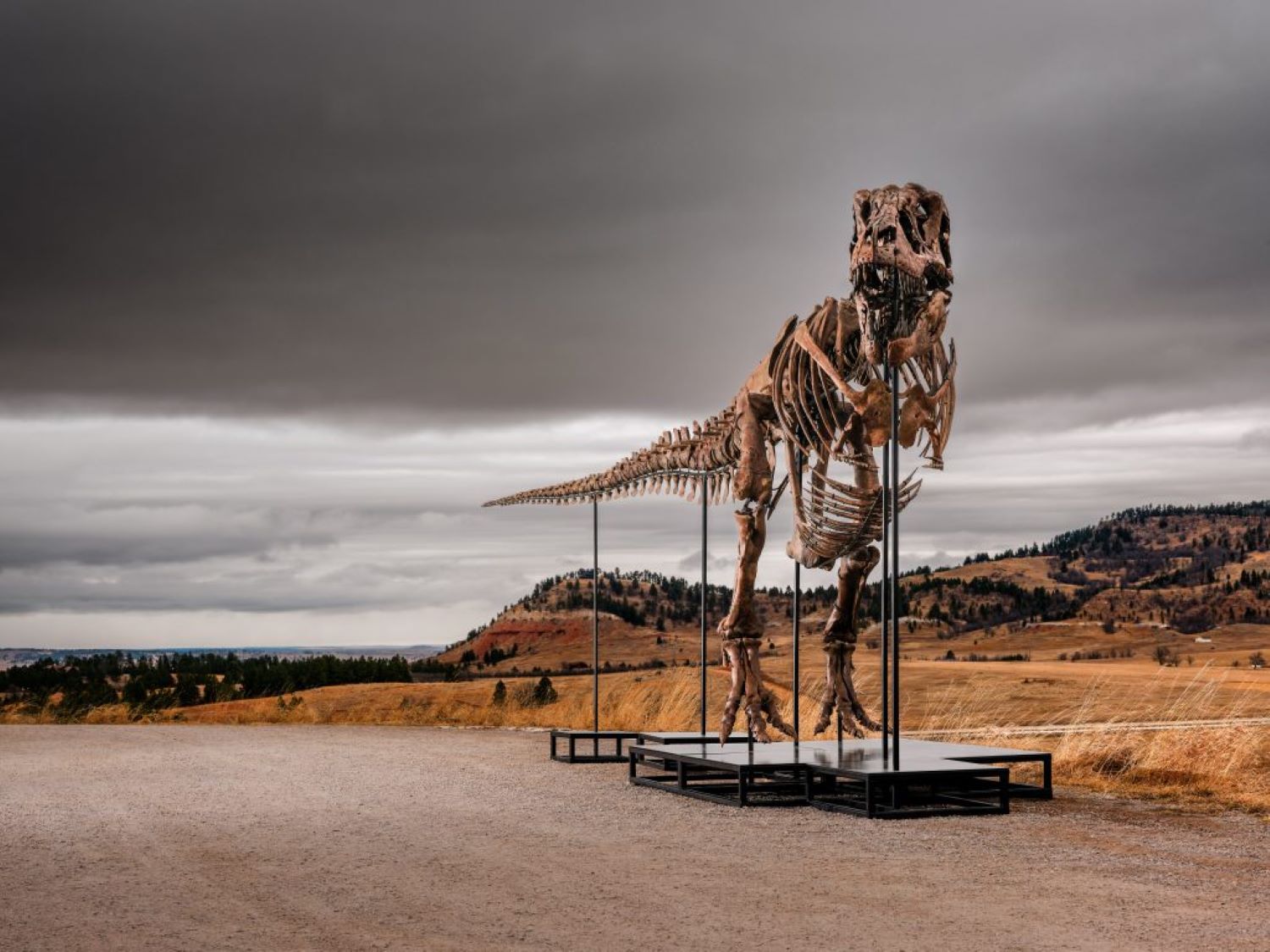
When a 67-million-year-old T. rex nicknamed “Gus” sold at Sotheby’s for US$50.1 million, it wasn’t just a headline. It was a price signal — one that travels fast to the Gobi Desert, where raiders with shovels track auction results the same way day traders track earnings reports. A Stegosaurus called “Apex” fetched US$44.6 million before that. Every record is recruitment.
A Channel 4/CNA documentary series, Bones of Contention, is now tracing just how organized this trade has become — networks moving specimens across Mongolia, the U.S., Singapore, the Philippines, and Europe. The story is leaving academic journals and entering public consciousness.
When Real Bones Get a Fake Story
The fossil black market runs on three interlocking crimes: looting, laundering, and outright fraud.
Smugglers raid protected Mongolian Gobi sites, destroying the sediment layers that give fossils their scientific meaning. That context vanishes the moment a shovel hits carelessly. Fossils then exit source countries illegally and enter destination countries legally — slipping through weak import rules or forged documents, sometimes labeled as:
- replicas
- construction materials
- gemstones
Florida dealer Eric Prokopi admitted smuggling a 70-million-year-old Tyrannosaurus bataar from Mongolia. A Utah poaching ring, according to National Geographic, shipped bones to China disguised as gemstones.
Then there are the “Franken-fossils.” Dealers assemble composites built from multiple animals — glued into convincing single skeletons — to command higher prices. Think of it as the fossil equivalent of NFT fraud: real asset, completely manufactured story. Detection requires CT scanning, UV light examination, and chemical analysis, according to academic research by Mateus et al. (2008). Visual inspection alone won’t catch sophisticated fakes.
“The trade is highly secretive — comparable in its opacity to narcotics markets.” — Paleontologist Steve Brusatte, as reported by The Sun
Franken-fossils are particularly damaging. Assembled from genuine material, they pass basic authenticity checks while misrepresenting entirely different animals as a single specimen. A collector acquires a trophy. A scientist loses access to evidence that could reshape the understanding of evolutionary history.
The legal loophole completing this chain is almost elegant in its cynicism. A fossil leaves Mongolia illegally, arrives in a jurisdiction with loose import rules, and gets laundered into legitimacy through vague provenance — “from an old private collection.” The paper trail becomes the product, according to The Sun’s reporting.
The bones end up in private storage. The sediment context is already gone. CT scanners can catch fakes, but they cannot restore what was destroyed at the source. Sotheby’s set the ceiling. The Gobi paid for it.